Encyclopedia Anachronistica

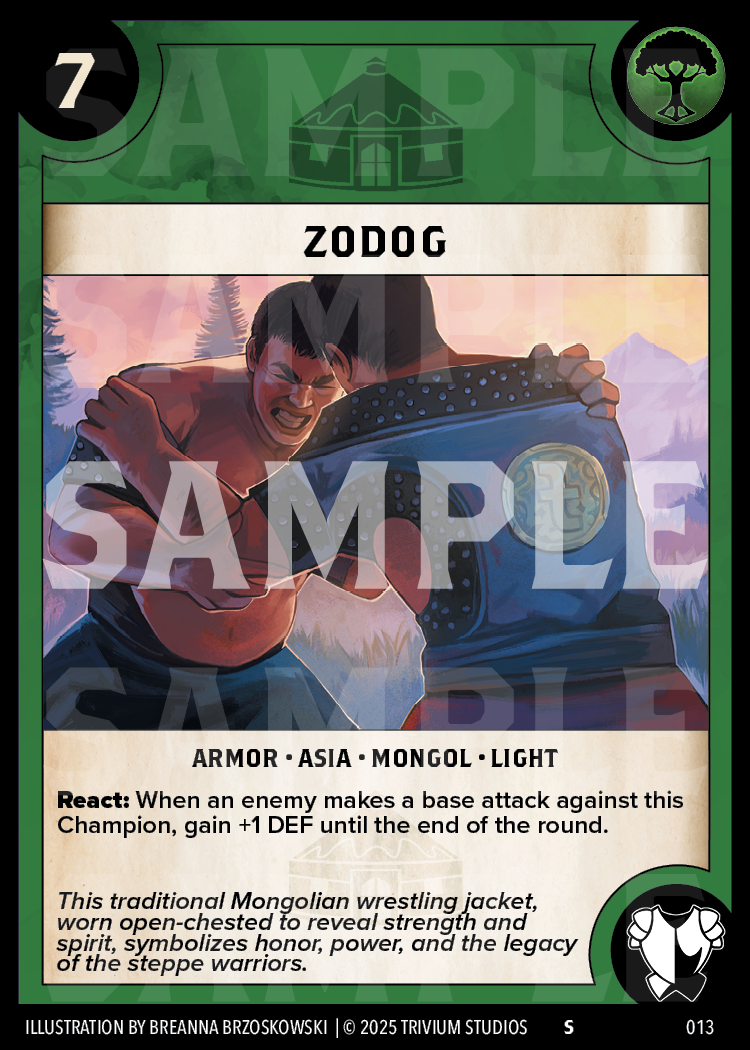
Standard
Armor
Asia
Mongol
Light
React: When an enemy makes a base attack against this Champion, gain +1 DEF until the end of the round.
This traditional Mongolian wrestling jacket, worn open-chested to reveal strength and spirit, symbolizes honor, power, and the legacy of the steppe warriors.
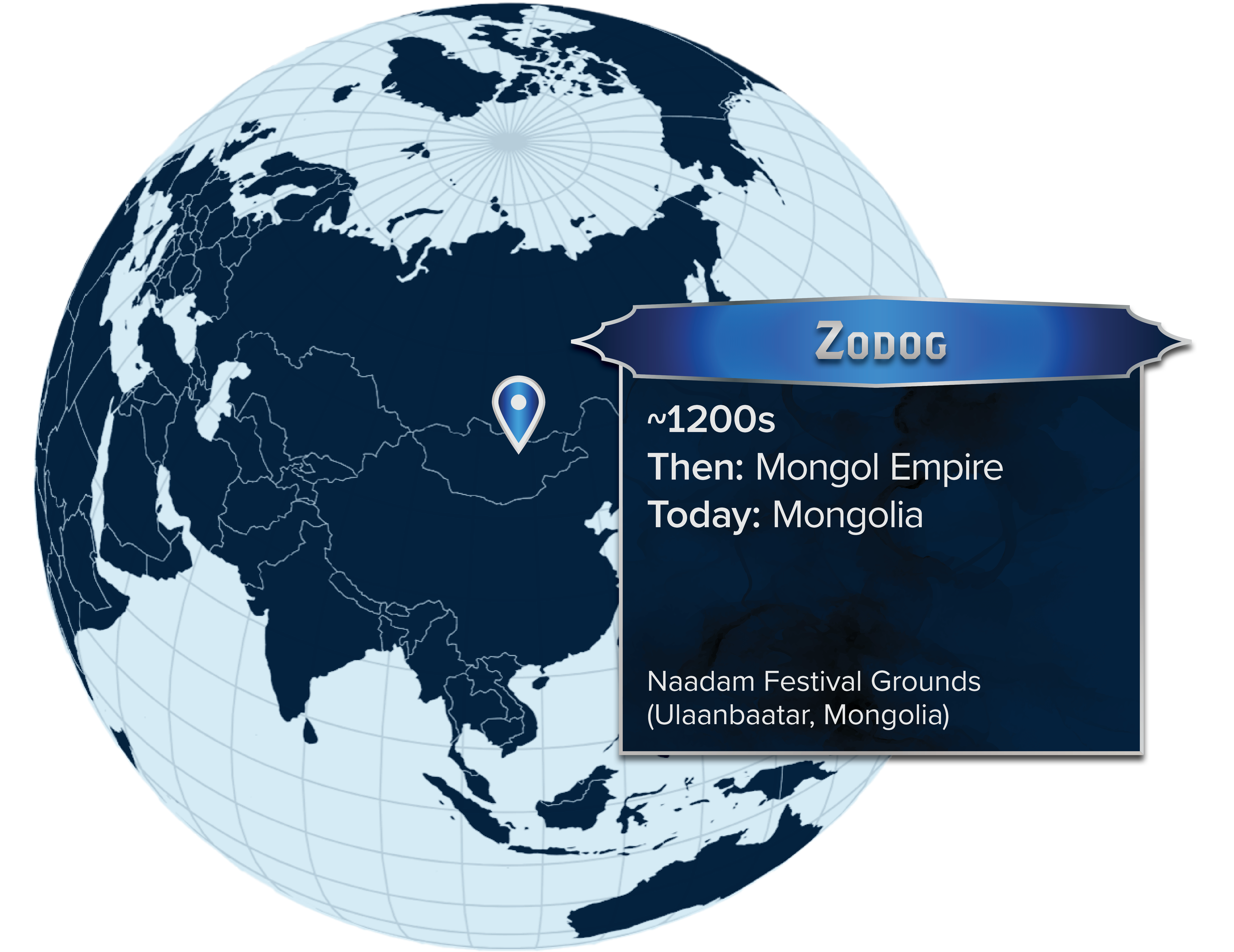
The zodog is the iconic open-chested vest of Mongolian wrestling, a garment that embodies centuries of nomadic tradition, martial symbolism, and a legendary tale of why its chest remains bare, making it one of the most distinctive uniforms in the world of combat sports.
Mongolian wrestling, known as bökh, is among the oldest martial arts still practiced today, with roots stretching back over 7,000 years. Petroglyphs and cave paintings across the steppe depict grappling figures in stances remarkably similar to those used in modern matches. By the 13th century, under Genghis Khan, wrestling had become a central feature of military festivals, used to build strength, discipline, and unity among warriors. Out of this culture emerged the wrestling uniform, consisting of the zodog (vest), shuudag (shorts), gutal (boots), and malgai (hat). The zodog, in particular, became the defining element, crafted from leather or heavy cloth to withstand the strain of gripping, pulling, and throwing.
The open chest of the zodog is not merely a stylistic flourish but rooted in legend. According to tradition, in medieval times a wrestler disguised herself as a man and defeated many opponents. After her victory, she revealed herself, humiliating the men and shocking the audience. In response, officials decreed that wrestling vests must henceforth be cut open at the chest to ensure only men competed. While women were barred for centuries, the open-chested design endured as a permanent reminder of that moment. In recent decades, women have begun to re-enter Mongolian wrestling, but the zodog’s open chest remains a powerful symbol of transparency and tradition.
Beyond legend, the zodog’s design serves practical purposes. The open chest allows maximum freedom of movement, preventing restriction during throws and holds. Wrestlers grip the shoulders, back, and arms of the vest, using it as leverage in techniques that emphasize balance and power. Some versions, especially in Inner Mongolia, are studded with metal rivets, echoing brigandine armor and offering protection against falls on rocky terrain. These jackets are often handcrafted, with hundreds of studs arranged in patterns, and over time they mold to the wrestler’s body like a second skin. Regional variations once flourished, with different cuts and materials across Mongolia, but today the “butterfly style” zodog has become the standard, its wide shoulders and open chest instantly recognizable.
The zodog is more than clothing—it is armor, heritage, and identity. To don it is to step into a lineage of warriors, emperors, and herders who tested their strength on the steppe. Its open chest tells a story of legend and regulation, while its leather and studs whisper of battles fought and festivals celebrated. In every bout of bökh, the zodog transforms the wrestler into a living emblem of Mongolia’s enduring spirit.