Encyclopedia Anachronistica

Standard
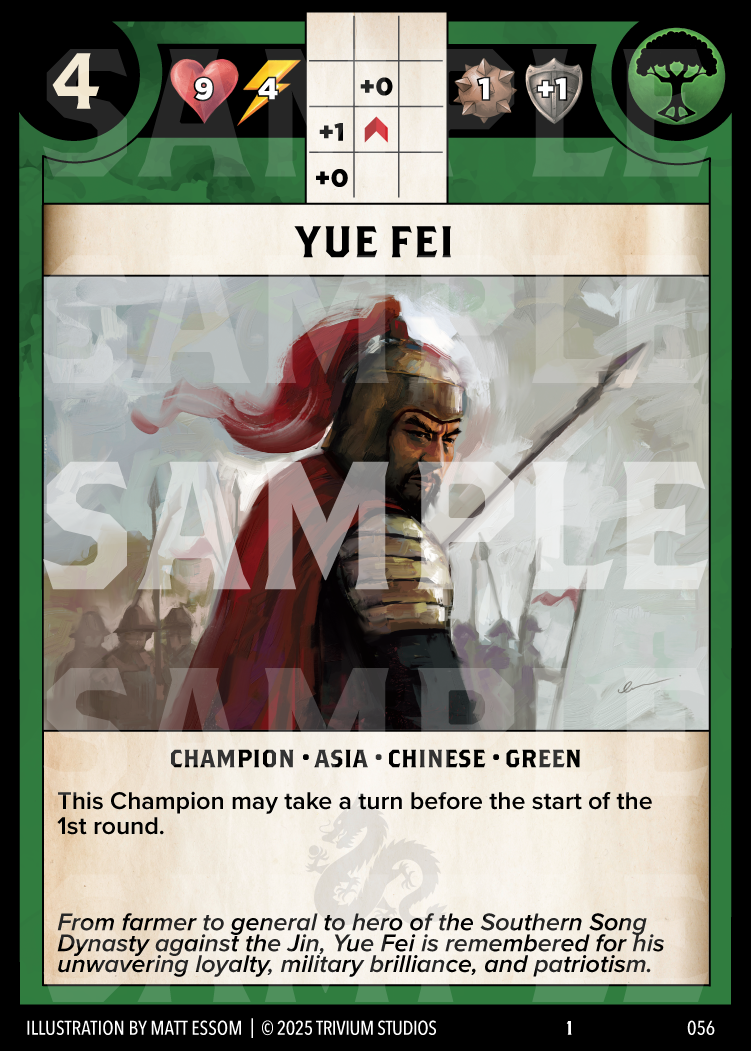
Champion
Asia
Chinese
Green
This Champion may take a turn before the start of the 1st round.
From farmer to general to hero of the Southern Song Dynasty against the Jin, Yue Fei is remembered for his unwavering loyalty, military brilliance, and patriotism.
Yue Fei isn’t just a Chinese national hero; he is the Chinese national hero. And since China is a 4,000-year-old giant of history, that’s saying something.
Born in 1103 to a poor tenant-farmer family in Tangyin, Henan Province, Yue Fei rose from a common soldier to become Overall Commander of the Imperial Forces of the Southern Song dynasty. Legends credit him with creating martial arts styles, mastering the bow (some tales claim he could draw a 300- to 400-pound bow and hit nine of ten bullseyes at impossible distances), and wielding every one of the Eighteen Weapons of War. Folklore says he fought in more than a hundred battles and never lost, though this flawless record is considered legendary rather than historical fact. He also wrote poetry that thundered with patriotism and defiance.
Stories say Yue’s father was once visited by the Daoist sage Chen Tuan in disguise, who gave cryptic instructions about protecting the infant. Another tale claims that when the Yellow River flooded, baby Yue survived in a clay jar while the waters swept away the village. These myths marked him as destined for greatness.
The Song dynasty collapsed under corruption and foreign invasion when Yue joined the army in 1122. The story that he killed a prince in a duel during the military exams is legendary embellishment, but what is true is that Yue distinguished himself quickly in the wars against the Jurchen-ruled Jin dynasty. He rose through the ranks, commanding the famous Yue Family Army, known for its discipline: “Freezing to death without breaking formation, starving without plundering.” His men adored him, and even enemy soldiers were said to defect to his banner.
One of the most enduring images of Yue Fei is the tattoo across his back: “Serve the country with the utmost loyalty” (精忠报国). Tradition says his mother inscribed it with a needle to remind him of his duty. Whether literal or symbolic, it became his personal creed.
Yue Fei’s relentless victories threatened the court faction led by the traitorous minister Qin Hui, who wanted peace with the Jin at any cost. Emperor Gaozong, whose own throne depended on not rescuing the captive former emperors, sided with Qin Hui. Just as Yue was on the verge of reclaiming the north, he was recalled by imperial order—famously said to have been sent twelve times on golden plaques. Stripped of command, Yue was imprisoned on trumped-up charges and executed in 1142, at only 38 years old.
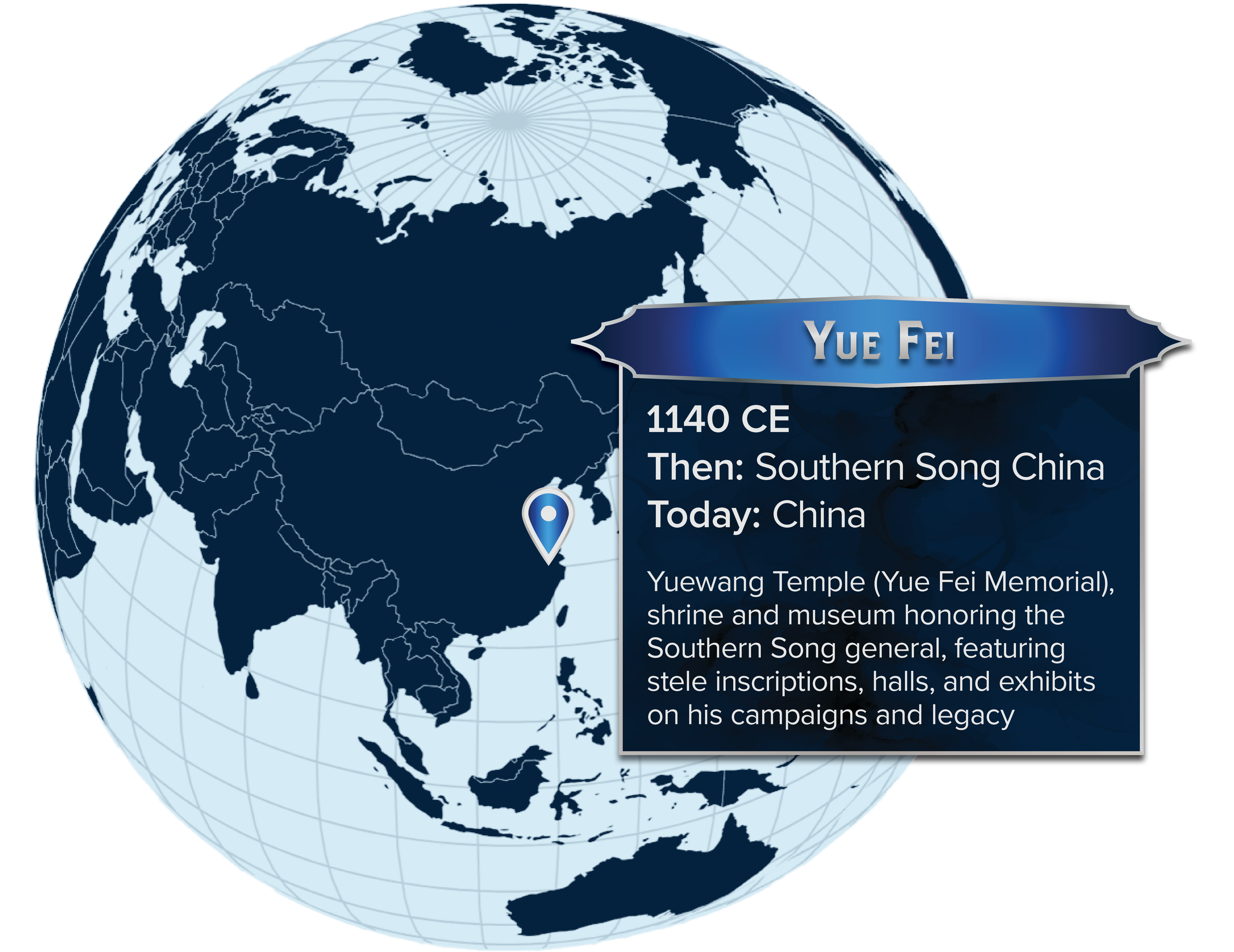
The outrage was immense. Yue was posthumously rehabilitated, enshrined as a paragon of loyalty, and worshipped as a folk hero. At the Yue Fei Temple in Hangzhou, visitors still spit on the statues of Qin Hui and his wife—placed there specifically for public contempt.
So, while the tales of Yue Fei’s flawless record of 100-plus victories are legendary rather than strictly historical, his reputation as China’s ultimate symbol of loyalty and martial valor is very real.