Encyclopedia Anachronistica

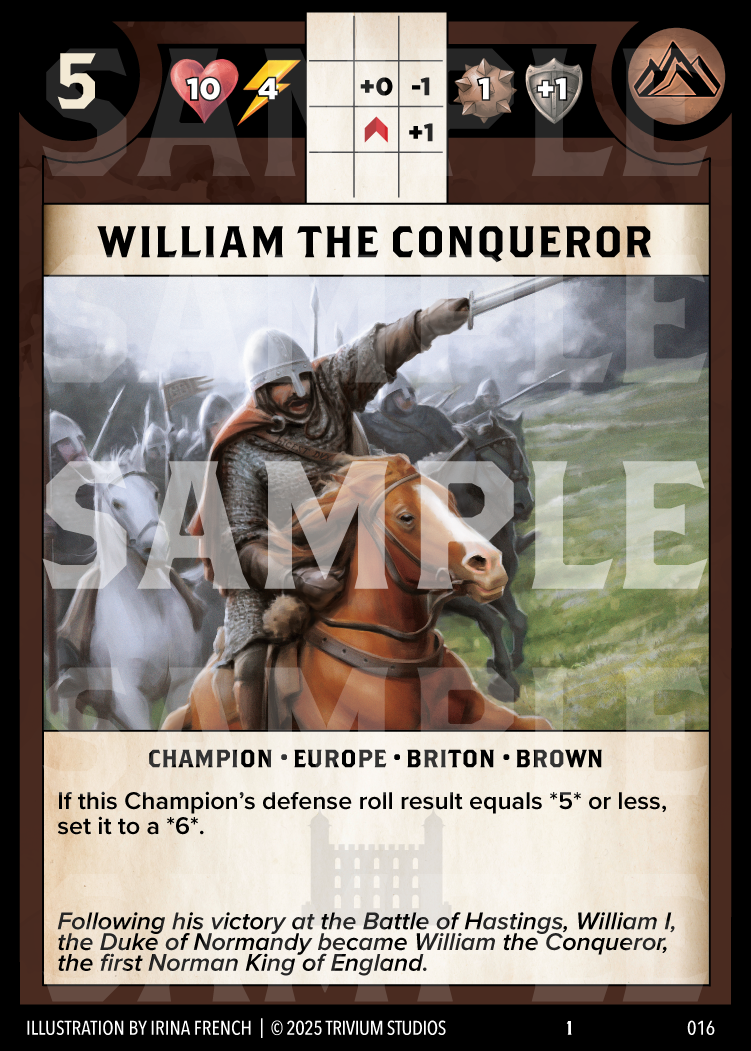
Standard
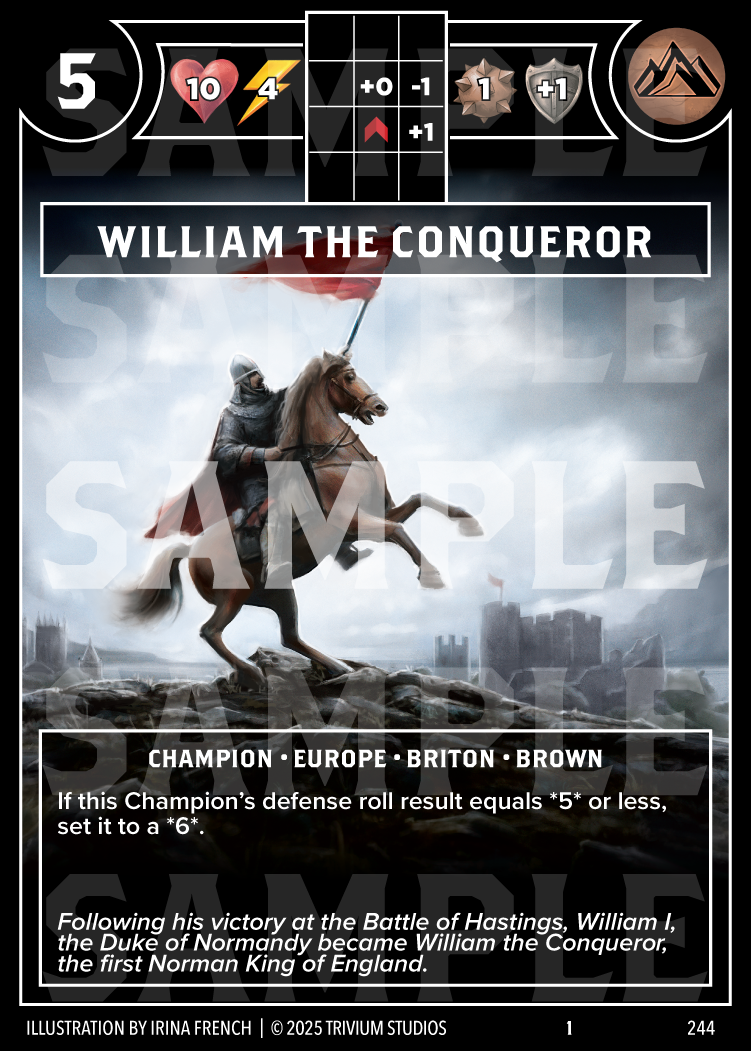
Champion
Europe
Briton
Brown
If this Champion's defense roll result equals *5* or less, set it to a *6 *.
Following his victory at the Battle of Hastings, William I, the Duke of Normandy became William the Conqueror, the first Norman King of England.
William the Conqueror— born of contested lineage—didn’t just change England. He detonated a thousand-year ripple effect that reshaped Europe, rewired power structures, and gave future empires their playbook. Born in Normandy to Viking bloodlines, William grew up in a world where betrayal was breakfast and survival meant breaking skulls before someone broke yours.
After crushing rival Norman lords and stacking churches with loyal clergy, William built an army that could punch through kingdoms. Good thing, too—because in 1066, King Edward the Confessor died without an heir. Three contenders stepped up: Harold Godwinson, the Anglo-Saxon warlord; Harald Hardrada, the Viking king of Norway; and William, who claimed Edward had promised him the throne years earlier. Bloodshed was inevitable.
Harald Hardrada struck first, invading England and wrecking Harold Godwinson’s forces at Fulford. But Godwinson rallied and crushed the Norwegians at Stamford Bridge—just in time for William to land in Sussex with 700 ships and thousands of knights, archers, and infantry. Godwinson’s army was battered but still dug in at the top of Senlac Hill near Hastings.
William’s cavalry couldn’t climb the slope. His archers couldn’t get a clean shot. His left flank collapsed. His horse was killed, and he hit the dirt. Panic spread—until William stood up, ripped his helmet off, and roared that he was alive. He rallied his troops, baited the English into chasing a fake retreat, then turned and annihilated them. Godwinson was killed—either hacked apart by knights or shot through the eye, depending on which legend you like best.
William marched onto London. No one dared stop him. On Christmas Day 1066, he was crowned King of England. Then he got methodical. To control his new realm, he created the Domesday Book in 1086—a brutal ledger of every landowner, property, serf, ox, and pig in the kingdom. It wasn’t just a census. It was a war map. If William needed troops or taxes, he knew exactly where to go.
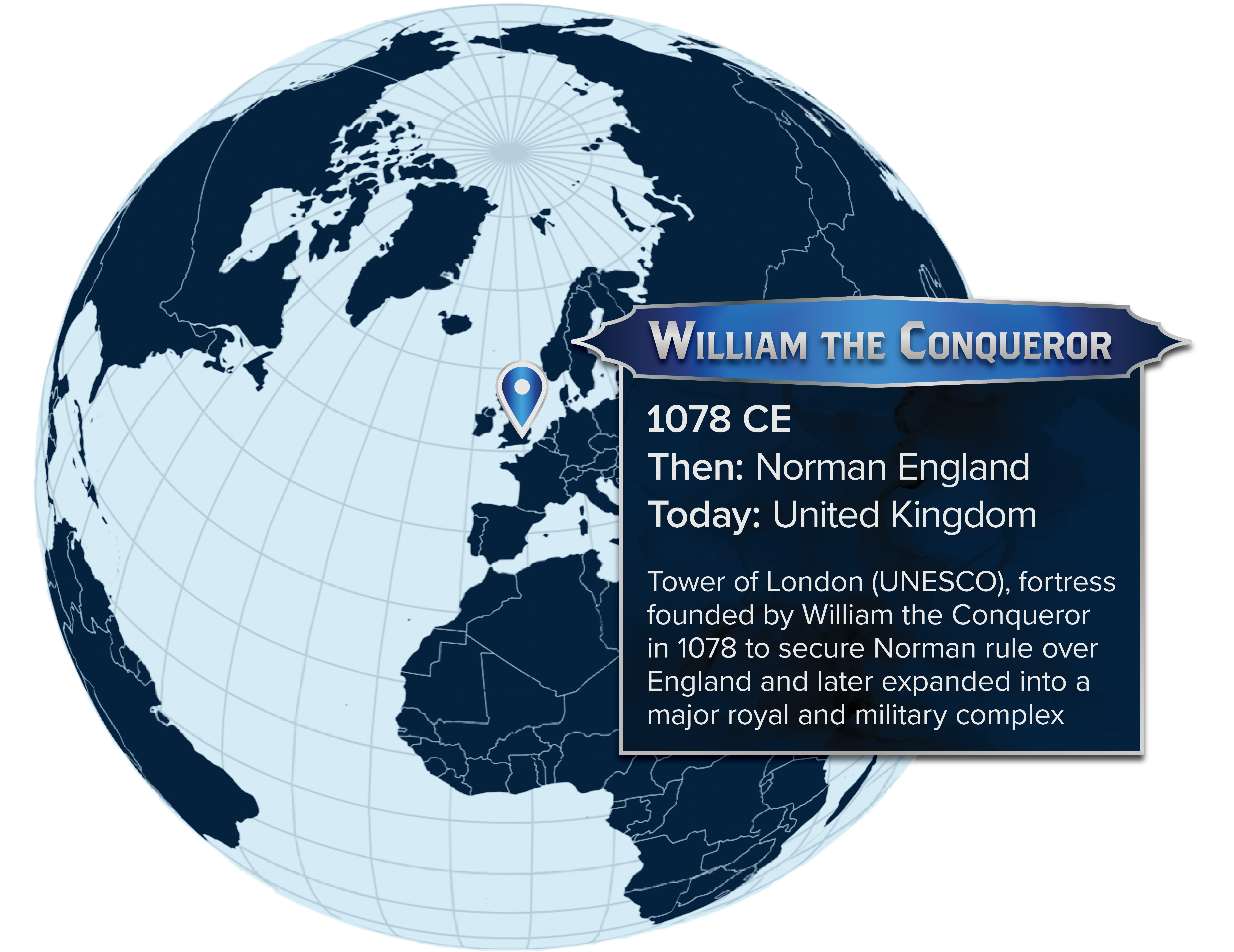
And he didn’t stop at paperwork. William built castles as towering symbols of dominance—stone fortresses planted across England to make it unmistakably clear who held power. Motte-and-bailey fortresses sprang up in every corner, each one a launchpad for suppression, taxation, and domination. He turned feudalism into a weapon, made loyalty a currency, and rewrote the rules of kingship. William the Conqueror didn’t just conquer England—he reforged it.