Encyclopedia Anachronistica


Standard
Special
Asia
Chinese
Cavalry
Push: When this Champion deals damage with a weapon attack, move the defender one space east or west.
Stallions from the Ferghana Valley, known as "Heavenly Horses," were prized by Emperor Wu for their speed, strength and stamina. Legend says they could run for days.
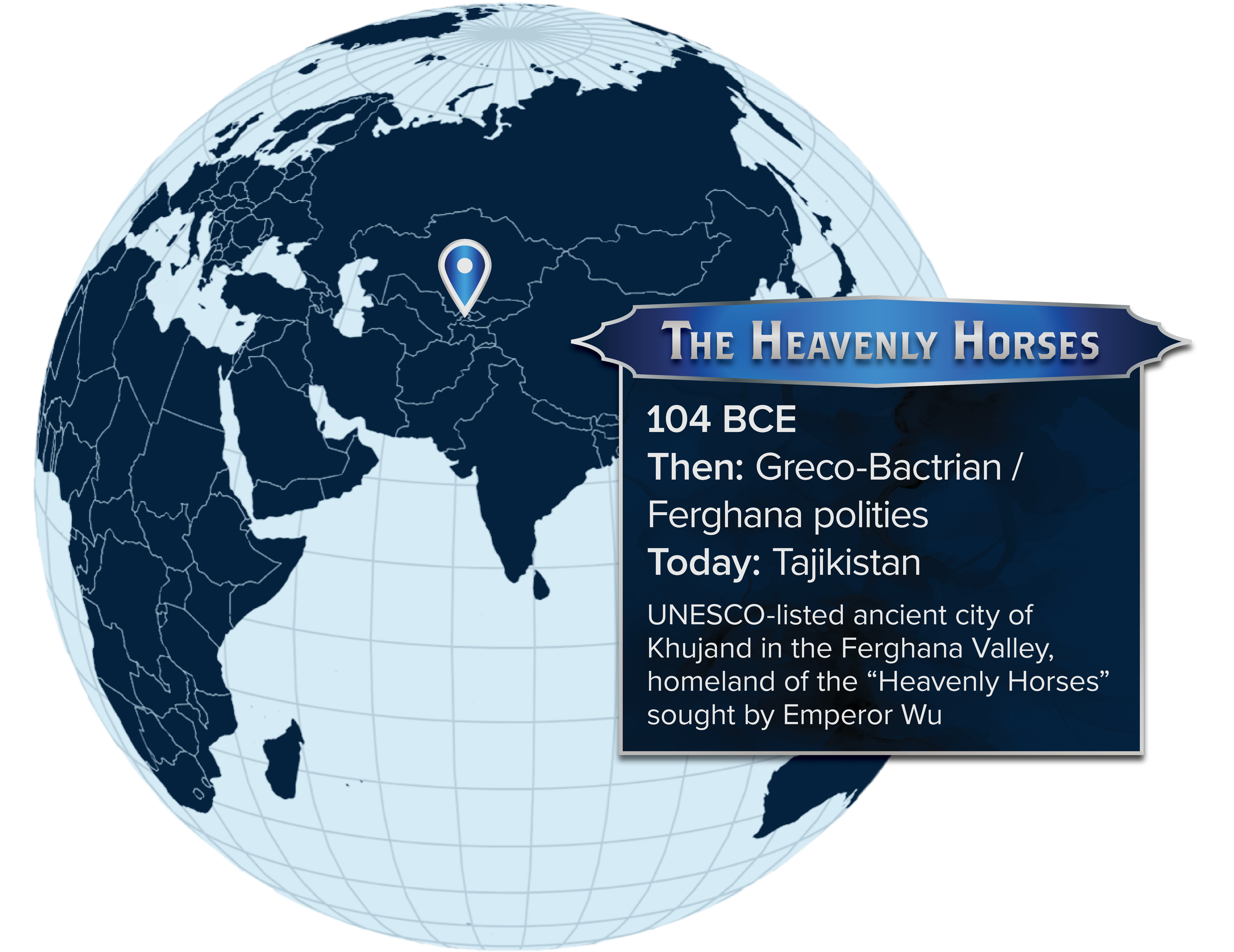
The “Heavenly Horses” — the famed Ferghana horses of Central Asia — were among the most coveted animals in ancient China. Known in Chinese sources as 天馬 (tiānmǎ), or “blood-sweating horses,” they were celebrated for their speed, endurance, and perceived divine qualities. The “blood-sweating” phenomenon, once thought mythical, is now attributed either to burst capillaries during intense exertion or to a parasitic infection (Parafilaria multipapillosa) common on the Central Asian steppe.
Emperor Wu of Han regarded these horses as essential to his military ambitions. Chinese cavalry, though increasingly important, suffered from inferior native breeds. When diplomatic attempts to acquire Ferghana horses failed — and Han envoys were killed — Emperor Wu launched the War of the Heavenly Horses (104–102 BCE). After a costly campaign, the Han secured a small number of elite Ferghana stallions and thousands of lesser horses, along with lucerne (alfalfa) seed to improve Chinese pastures. These acquisitions transformed Han cavalry and contributed to later victories against the Xiongnu.
The Heavenly Horses also carried symbolic weight. Court poets and historians described them as creatures of divine origin, capable of carrying the emperor’s mandate across the world. Their arrival was interpreted as a sign of Heaven’s favor for Emperor Wu’s expansive, martial reign. Artistic depictions from the Han and Tang dynasties show powerful, compact horses with arched necks and muscular bodies — a visual shorthand for imperial strength.
Today, the story of the Heavenly Horses remains one of the most dramatic episodes in Sino-Central Asian history. Archaeological finds, including terracotta horse statues and gilded horse fittings, illuminate the cultural and military importance of these animals. Modern scholarship continues to explore their genetics, origins, and role in shaping early Eurasian exchange. The Ferghana horse endures as a symbol of the Silk Road’s interconnected world and the ambitions of one of China’s most influential emperors.