Encyclopedia Anachronistica


Chrono
Special
Europe
Norse
Shield
Reveal: This Champion may rotate. At the start of this Champion's turn, if this Champion has a revealed 1-handed metal or water weapon, deplete this card and move up to one space.
These reinforced, circular, softwood shields with a metal dome in the center were used as battering rams, part of a shield wall, and protection from the elements.
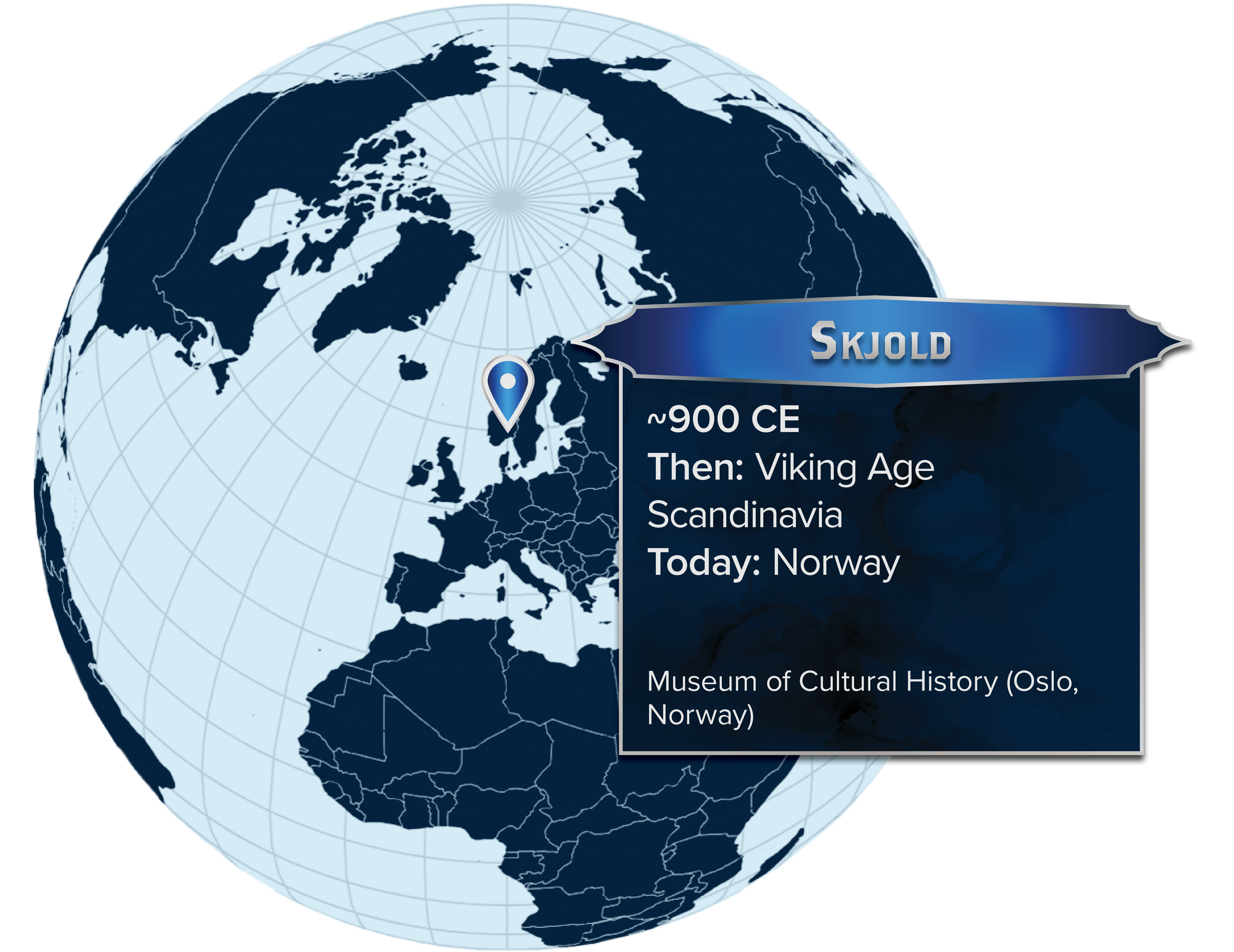
It wasn’t the sword that made a Viking feared. It was the shield.
The skjöldr—round, scarred, and silent—was the Viking’s first defense and final defiance. It was his wall, his weapon, and his will made wood. When the war horns sounded and the sea wind howled through the longships, the first sound to answer wasn’t the clash of blades—it was the thunder of shields locking edge to edge.
Forged not from iron but from cunning, the skjöldr was crafted from soft, living wood: fir, pine, linden. To outsiders, it looked fragile. To those who knew, it was deadly. The wood’s give wasn’t weakness—it was a trap. When an enemy’s sword came down, the shield bit back, its grain gripping the steel like a hungry wolf. One twist of the wrist, and the Viking could tear the weapon free, leaving his foe disarmed and terrified.
At the center glimmered the iron boss, a blunt, brutal counterpunch. Warriors slammed it into faces, throats, and bone, turning defense into assault. Around the edge, leather and hide bound it tight, painted in bold spirals, crosses, or beastly sigils. In sunlight, a Viking shield wall shimmered like dragon scales.
When they fought in formation—the skjaldborg—the skjöldr became more than wood and iron. It became a living creature: each man a scale, each shield a breath. Arrows broke, blades stuck, enemies fell. The sagas said that when “the shields met,” the gods themselves listened.
Even in peace, the shield was never idle. It lined the sides of longships, a ring of color and menace across the waves. And when its bearer died, it followed him to the grave, sometimes scorched, sometimes splintered, always honored. Excavations at Gokstad and Trelleborg have unearthed their blackened remains—proof that these shields weren’t decorations, but survivors of the storm.
Every Viking owned one, rich or poor. The sword was a symbol of status, the axe a tool of war, but the shield—that was the soul. It didn’t just protect the body; it proclaimed the courage behind it.
The skjöldr wasn’t passive. It was predatory. It was the silent oath of every Norse fighter: Stand your ground, and let the world break upon you.