Encyclopedia Anachronistica

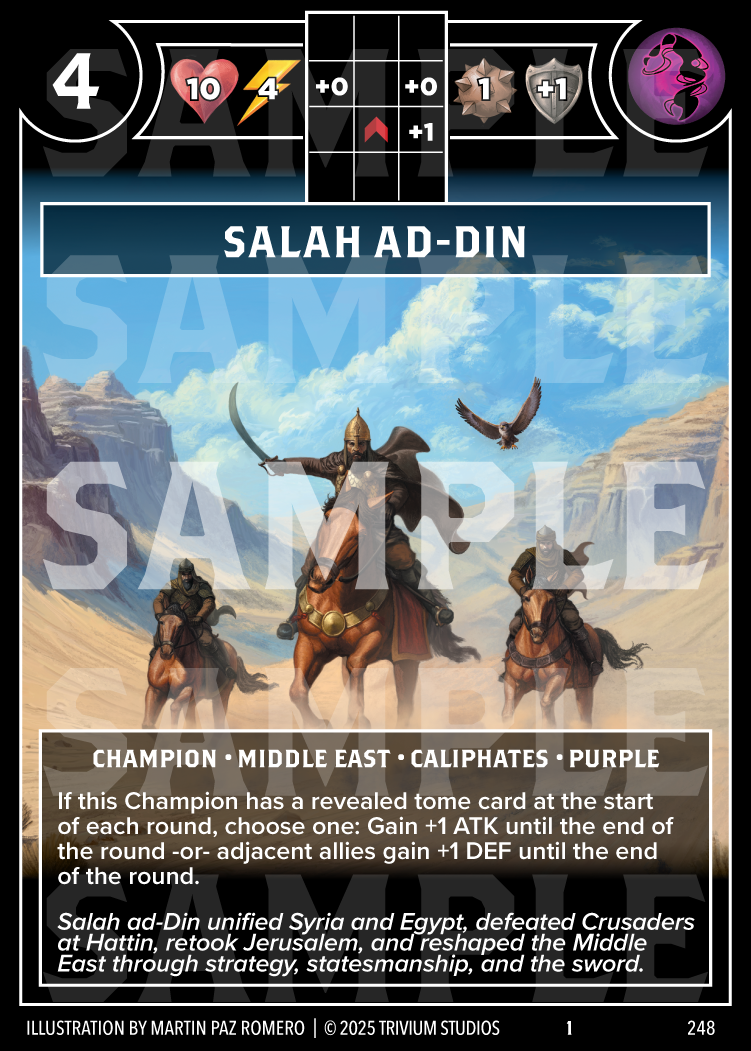
Alt Art
Champion
Middle East
Caliphates
Purple
If this Champion has a revealed tome card at the start of each round, choose one: Gain +1 ATK until the end of the round -or- adjacent allies gain +1 DEF until the end of the round.
Salah ad-Din unified Syria and Egypt, defeated Crusaders at Hattin, retook Jerusalem, and reshaped the Middle East through strategy, statesmanship, and the sword.
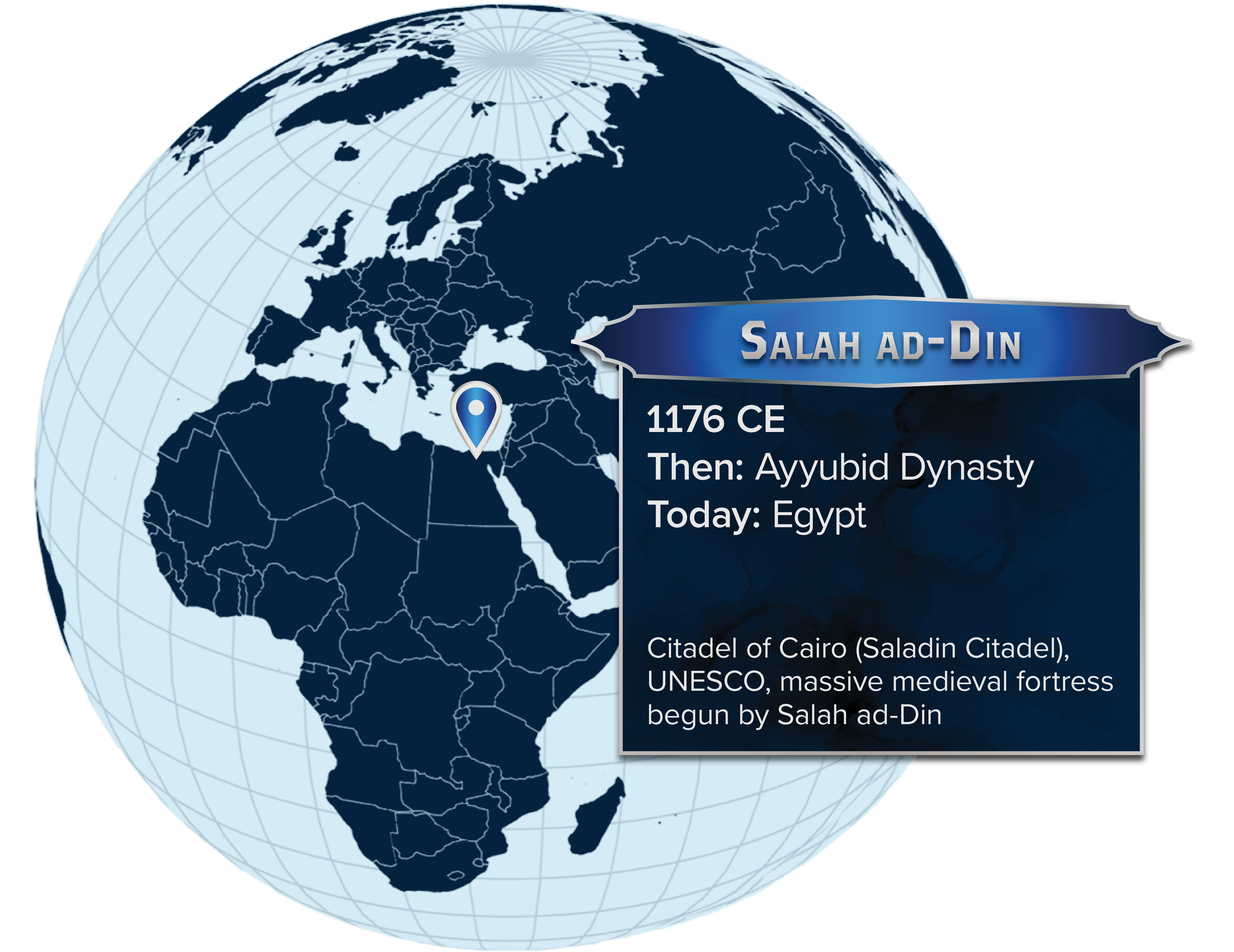
Have you ever seen a fighter demolish their opponent and then help them get back up? History’s cleanest example might be Salah ad-Din—Saladin—the warrior-sultan who could crush armies and still be the most respected man in the room. A devout Muslim by heart, Saladin probably would’ve preferred a quiet life as a scholar. But the world around him was burning, and innocent people were getting hurt. So, he saddled up and started righting wrongs, freeing captives, ending feuds, and delivering beatdowns so honorable that even his enemies admired him.
Born into a Kurdish military family, Saladin rose through the ranks and founded the Ayyubid dynasty. He became the first sultan of Egypt and Syria, unified the Muslim Near East, and led the charge to liberate Jerusalem from Crusader control. His reputation wasn’t just built on battlefield brilliance—it was built on mercy. One story says he sent his personal doctor and a horse to an injured enemy commander. Another tells of a woman whose baby had been stolen and sold. Saladin found the child, bought him back with his own money, and gave the mother a horse to ride home. Despite ruling an empire, Saladin died nearly penniless, having given away most of his wealth to charity.
His military career kicked off when he was appointed vizier of Egypt in 1169. From there, he fought battle after battle to unify Muslim territories, all while dodging assassination attempts from the infamous Order of Assassins. Instead of retaliating, Saladin brokered peace with them—turning potential enemies into allies and isolating the Crusaders from support. His strategic masterpiece came at the Battle of Hattin in 1187, where he annihilated a Crusader army and personally executed Raynald of Châtillon, a knight infamous for murdering pilgrims and breaking truces. Saladin then captured Jerusalem and invited Jews to return and settle there—a move unheard of in the previous Crusader regime.
This victory triggered the Third Crusade and one of the most legendary rivalries in history: Saladin vs. Richard the Lionheart. Despite being on opposite sides of a holy war, the two leaders respected each other deeply. They exchanged gifts, negotiated through envoys, and even floated marriage alliances between their families. On the battlefield, Richard’s knights were armored battering rams, but Saladin’s forces were faster, more agile, and used the desert itself as a weapon—keeping just out of reach while the Crusaders baked in the sun and ran out of water.
In the end, Saladin guaranteed safe passage for Christian pilgrims to Jerusalem. Richard returned to Europe, and Saladin’s legacy was sealed. Muslim and Christian chroniclers alike praised his honor, mercy, and brilliance. Centuries later, scholars from both worlds still agree: Saladin wasn’t just a good guy—he was a legend of grace and chivalry.