Encyclopedia Anachronistica

Alt Art
Champion
Asia
Indian
Cyan
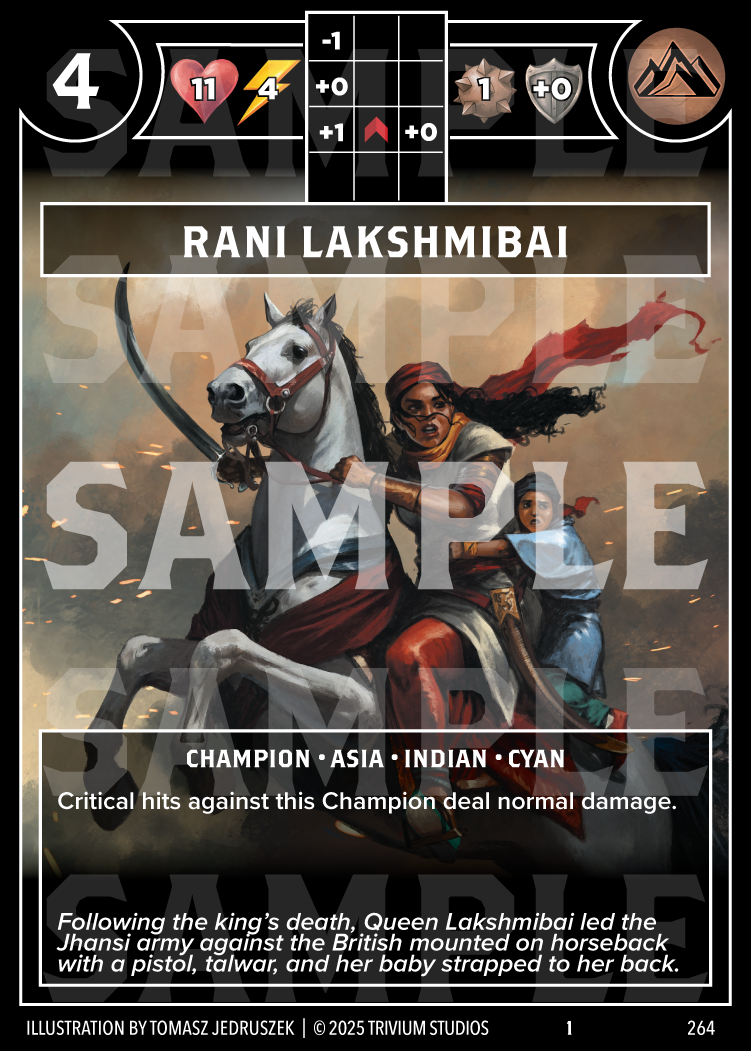
Critical hits against this Champion deal normal damage.
Following the king's death, Queen Lakshmibai led the Jhansi army against the British mounted on horseback with a pistol, talwar, and her baby strapped to her back.
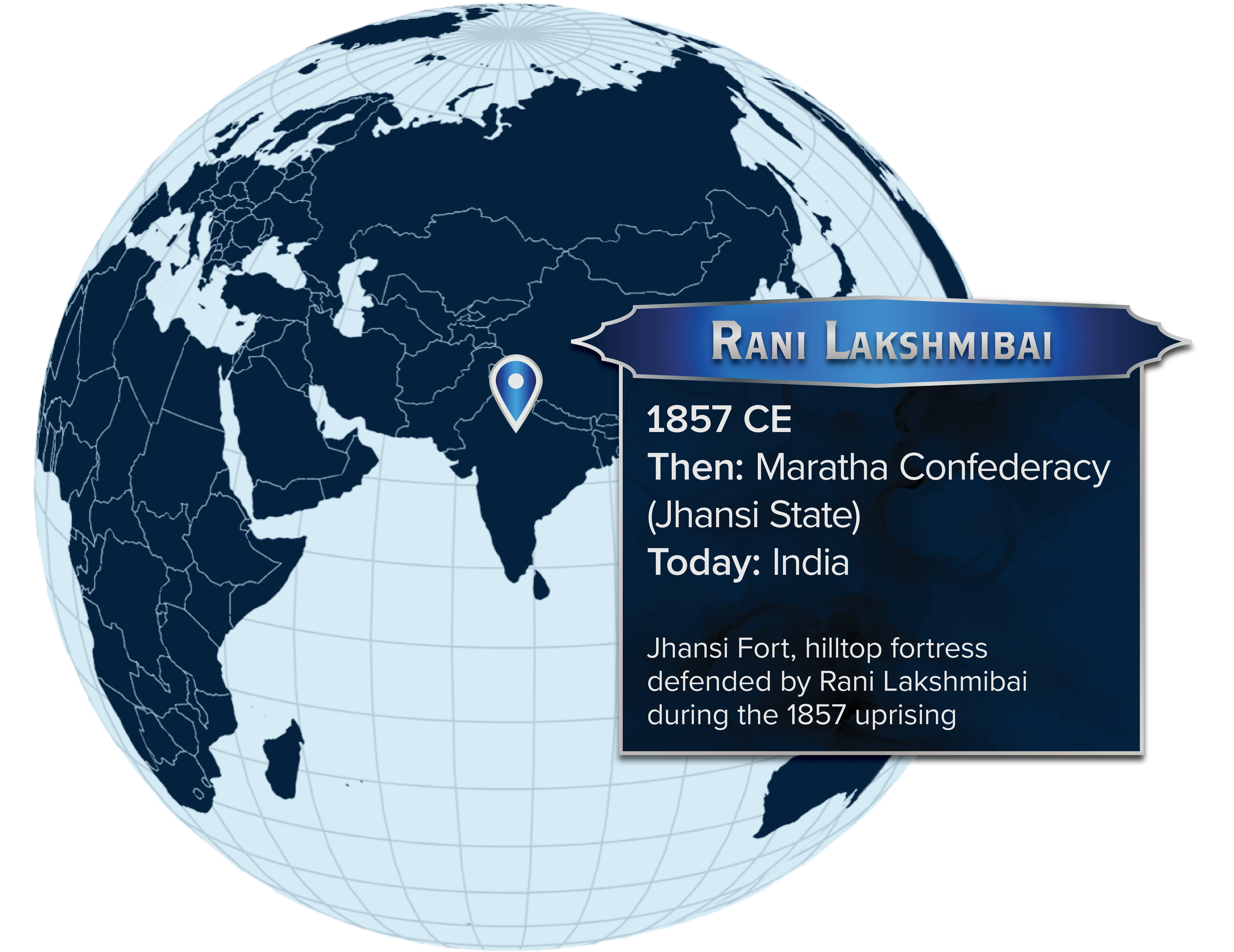
Ever wonder where modern movies get their fiercest women warriors? Try Rani Lakshmibai of Jhansi—India’s answer to every cinematic heroine who rides into battle with fire in her eyes and steel in her fists. Born Manikarnika Tambe, she lost her mother young and was raised by her father in the court of the Peshwa of Bithoor, trained like a son. She mastered swordplay, musketry, horseback riding, elephant handling, and fencing. Then she trained her handmaidens into a lethal squad of bodyguards, the Durga Dal—beautiful, brilliant, and battle-ready.
She married the Maharaja of Jhansi, Gangadhar Rao, and after their infant son died, adopted a boy named Damodar Rao. But the British East India Company—England’s corporate Darth Vader—had other plans. They invoked the Doctrine of Lapse, a bogus rule that let them annex any kingdom that did not have a biological male heir. Despite support from local British officers, her petition to rule was denied. The courts were rigged. Jhansi was stolen.
Then came the Indian Rebellion of 1857. Rani offered to govern Jhansi while the British handled the chaos. They agreed—until they didn’t. British forces began massacring civilians, rebels or not. Rani snapped. She armed herself with a sword and twin pistols, commissioned cannons, and cleared the trees around her fort to trap the besieging British in the blistering Indian heat. Her forces held them off for weeks.
Rani Lakshmibai didn’t just fight battles—she waged psychological warfare. She cast new cannons inside the Jhansi fort, including the infamous Kadak Bijli, which tore through enemy ranks with thunderous precision. Her defenses held for ten brutal days against Major General Hugh Rose’s siege until a traitor opened the gates. She escaped on horseback, sword in one hand, pistol in the other, reins in her teeth, her son tied to her back, jumped the British lines to then rally rebel leaders like Tantya Tope and Rao Saheb at Kalpi. Though outnumbered and outgunned, she refused to yield, leading charges, commanding troops, and defying every expectation of a queen.
She didn’t stop. She fought her way across Bundelkhand, punishing collaborators and British forces alike. Camels and elephants collapsed in the heat while Rani’s forces kept moving. She reached Gwalior, where Scindia fled and his army joined her. When the British attacked, one warrior stood out—fighting savagely, shot in the back, ran through with a sword, still fighting until they fell. Only then did the British realize they’d been cut down by Rani Lakshmibai herself.
Her death on June 18, 1858, became legend. In World War II, the Indian National Army named its first all-female infantry unit the Rani of Jhansi Regiment in her honor. She wasn’t just a queen. She was a revolution on horseback.