Encyclopedia Anachronistica


Standard
Champion
N. Africa
Egyptian
Silver
Gain +1 ATK while each revealed card in this Champion's loadout shows a different element. Gain +1 DEF while an enemy has a revealed aether or void card in their loadout.
Considered the greatest pharaoh of the New Kingdom, Ramses ruled Egypt for 66 years. He is best known for his military campaigns and massive building projects.
Ramesses II. Aka Ramesses the Great. Aka Ozymandias. Aka the Son of Ra. What. A. Total. Titan. Where do you even start with a guy like this? You know all those pharaohs—Seti, Thutmose, Tut, Khufu? One of the few names famous enough to survive history before the Rosetta Stone unlocked Egyptian hieroglyphs was Ramesses.
This guy ruled Egypt longer than almost anyone, had countless wives and concubines, sired more children than any other pharaoh, built more monuments than anyone, lied about his victories better than anyone (perfecting propaganda), signed the world’s first known peace treaty, and, in modern times, was even issued an Egyptian passport so his mummy could travel abroad for preservation work!
For 66 years Ramesses II ruled Egypt during its height of power and glory. He came to the throne as a teenager, co-ruling with his father Seti I before taking full power around age 24. His greatest early test came at the Battle of Kadesh against the Hittites. Ramesses fell for false intelligence from enemy spies and nearly lost the battle when ambushed. Only the timely arrival of reinforcements saved him. Back home, he had the story carved into temples across Egypt, showing himself single-handedly crushing the Hittites. It was one of the earliest and most famous examples of state propaganda, and it worked.
Despite the spin, the battle ended in a stalemate, and years later Ramesses and the Hittite king Hattusili III signed the world’s first surviving peace treaty, a copy of which hangs today at the United Nations. To seal the deal, Ramesses married a Hittite princess, adding her to a wife list that already included the legendary queen Nefertari.
Ramesses then turned his armies south against Nubia, west against Libyans, and against pirates in the Mediterranean. He reasserted Egyptian control in Canaan and Syria, though his claims of sweeping victories are often exaggerated. He surrounded Egypt with treaties and buffer states, securing its borders.
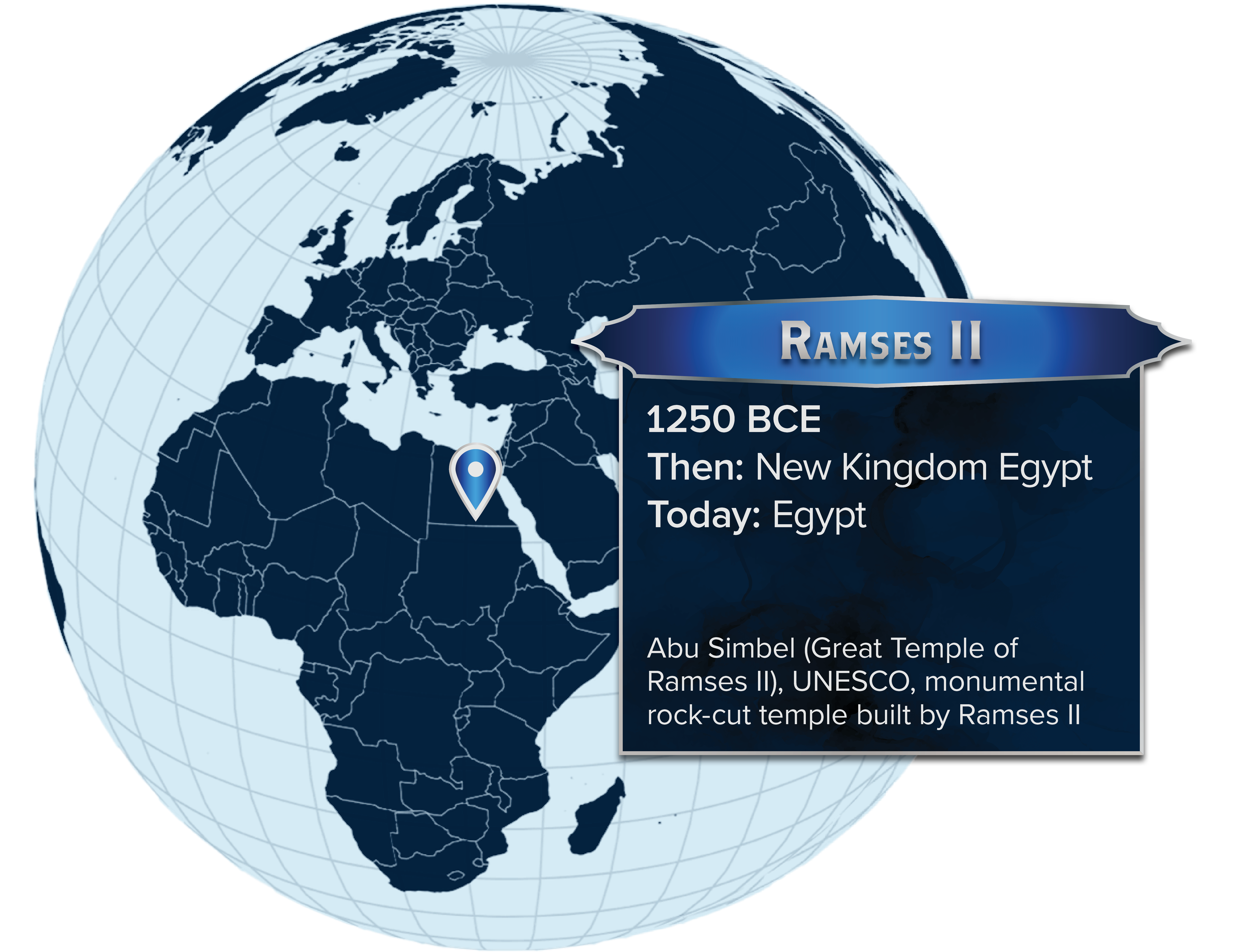
Meanwhile, he built like no other pharaoh. He founded Pi-Ramesses as a new capital, raised colossal statues of himself, and covered Egypt with temples, palaces, and inscriptions. The Ramesseum, his mortuary temple, was legendary in the ancient world. At Abu Simbel, he carved 60-foot statues into the cliffs, monuments so massive they still awe visitors today.
Ramesses lived into his 90s, outliving many of his children, and celebrated more Sed festivals (royal jubilees) than any other pharaoh. When he died in 1213 BCE, Egypt had been ruled by him for so long that most of his subjects had never known another king. His name and image were everywhere, ensuring his fame would echo across millennia. That was Ramesses, Mr. Epic-Egypt himself.