Encyclopedia Anachronistica

Standard
Inspiration
Asia
Japanese
Event
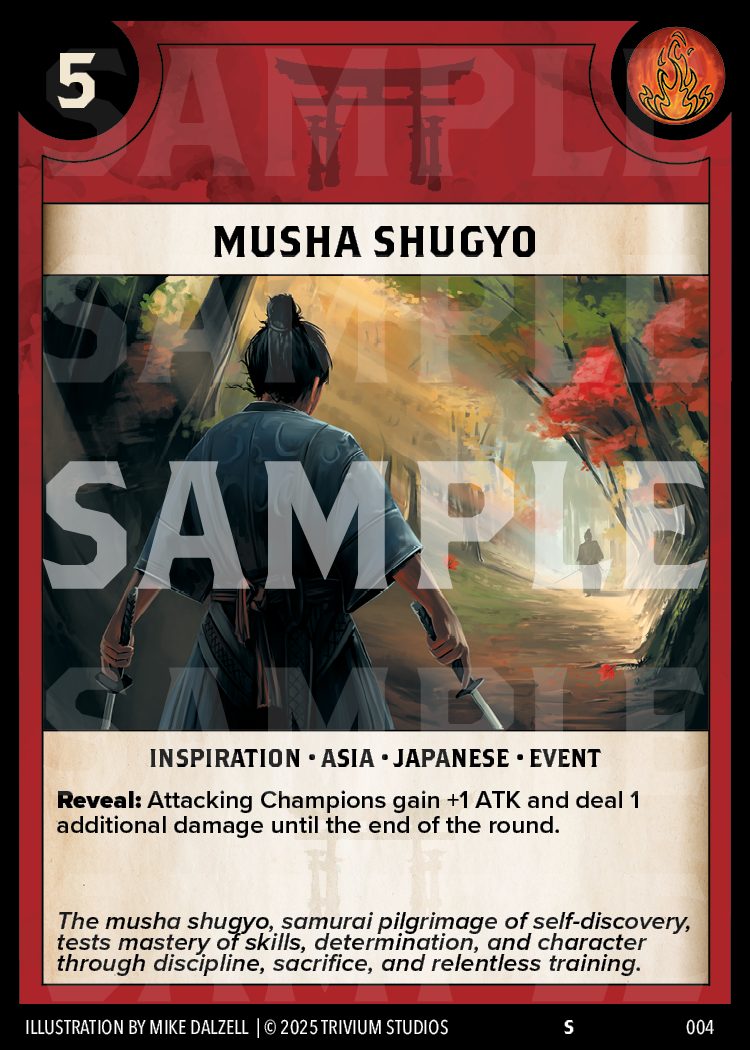
Reveal: Attacking Champions gain +1 ATK and deal 1 additional damage until the end of the round.
The musha shugyo, samurai pilgrimage of self-discovery, tests mastery of skills, determination, and character through discipline, sacrifice, and relentless training.
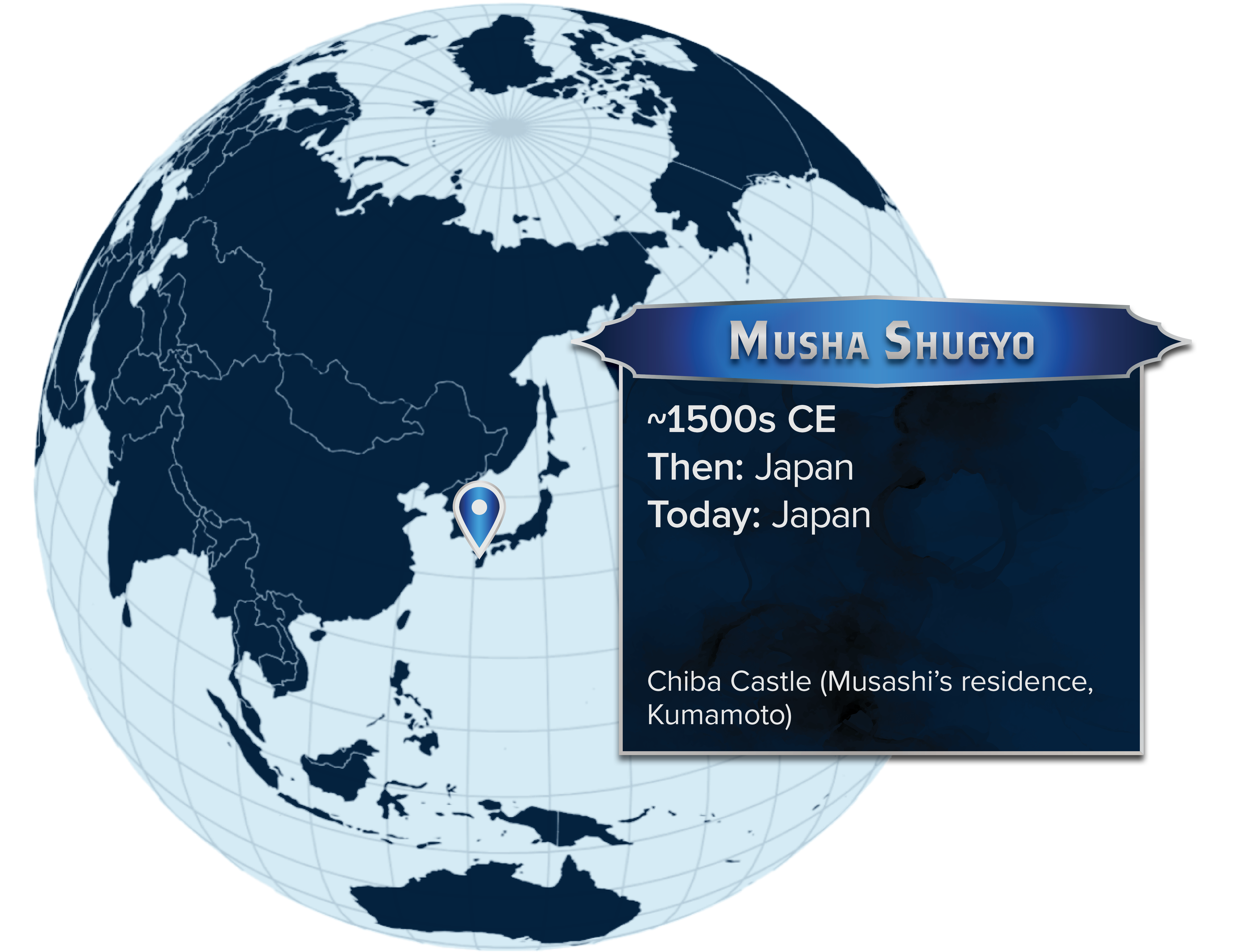
Musha Shugyō, the warrior’s pilgrimage, wasn’t just a training regimen—it was a crucible of fire, solitude, and swordsmanship where legends were forged and fear was left behind. In feudal Japan, this brutal and beautiful tradition called samurai to abandon the safety of their schools, families, and lords to wander the land alone. Their goal? To sharpen their skills, test their spirit, and earn the right to be called master—not by title, but by trial.
The term Musha Shugyō (武者修行) translates to “training in warriorship,” and it was inspired by the ascetic wanderings of Zen monks, known as angya. These monks walked the countryside in search of enlightenment, and samurai—ever hungry for both martial and spiritual mastery—adopted the practice. Thus was born a warrior’s rite of passage: a solitary journey through danger, duels, and discipline.
The originator of Musha Shugyō isn’t a single name etched in stone, but the spirit of the practice crystallized in figures like Miyamoto Musashi, the undefeated duelist and author of The Book of Five Rings. Musashi’s life was one long Musha Shugyō—he roamed Japan, challenging the best swordsmen he could find, often defeating them with brutal efficiency and unconventional tactics. He fought over 60 duels, many to the death, and never lost. His journey wasn’t just about combat—it was about philosophy, perception, and the art of strategy. Musashi didn’t just walk the path; he paved it.
A samurai on Musha Shugyō was called a shugyōsha. These warriors trained at rival schools, tested their techniques in real combat, and sometimes worked as bodyguards or mercenaries. They lived off their wits and their blade, seeking not comfort but confrontation. Every duel was a lesson. Every defeat, a scar of wisdom. Every victory, a step closer to mastery.
This wasn’t just physical training—it was spiritual warfare. The shugyōsha faced isolation, hunger, and the constant threat of death. But in that crucible, they refined not just their swordsmanship, but their soul. Musha Shugyō was a journey toward satori—a flash of enlightenment earned through sweat, blood, and silence.
Though the samurai era ended in 1868, the spirit of Musha Shugyō lives on. It echoes in martial artists who train alone in the woods, in creators who chase mastery beyond convention, in anyone who dares to walk the hard road without applause. It’s not about being taught—it’s about being tested.
So if you ever feel the call to push past limits, to seek truth through trial, remember: Musha Shugyō isn’t just history. It’s a challenge. And it’s waiting.