Encyclopedia Anachronistica

Chrono
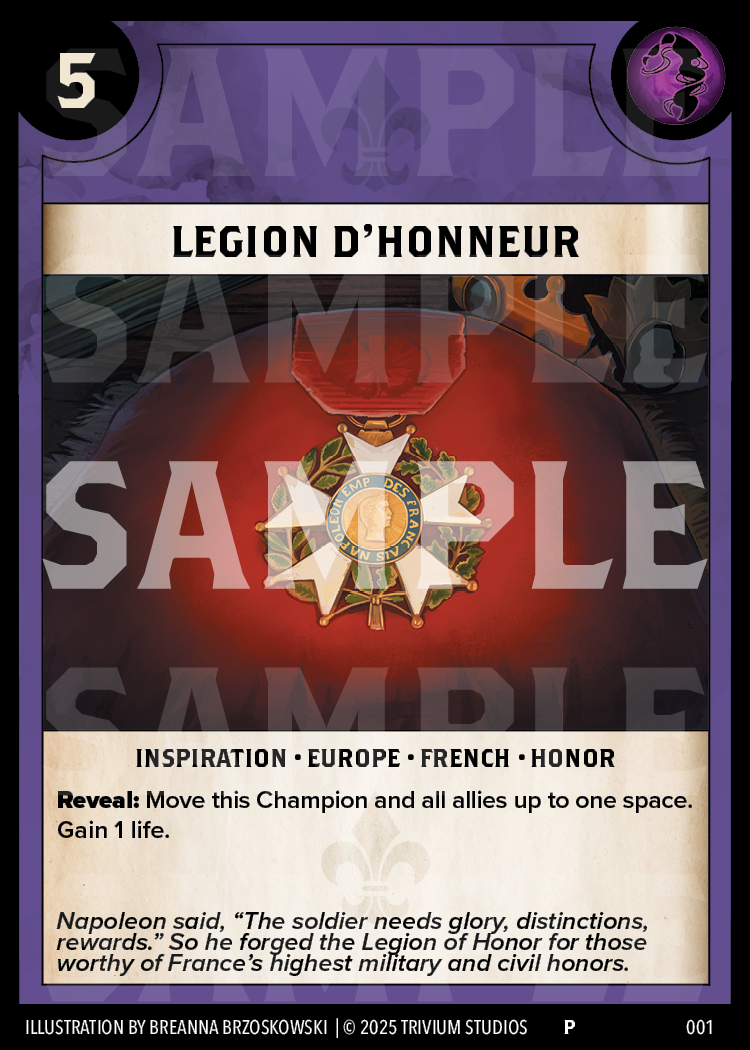
Inspiration
Europe
French
Honor
Reveal: Move this Champion and all allies up to one space. Gain 1 life.
Napoleon said, "The soldier needs glory, distinctions, rewards." So he forged the Legion of Honor for those worthy of France's highest military and civil honors.
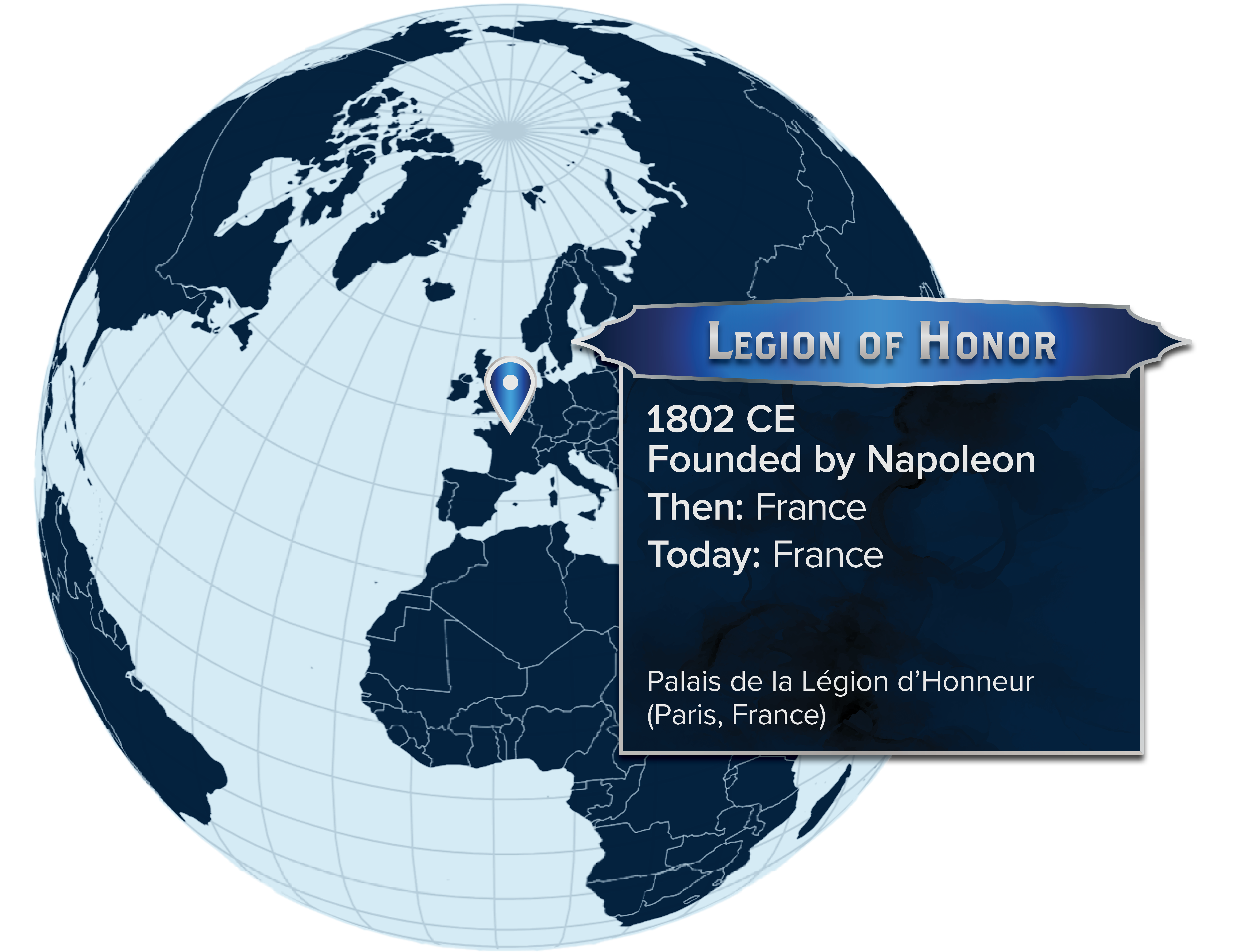
In the wake of revolution and war, when Europe’s old orders lay shattered and a new age of merit beckoned, one symbol rose above all others: the red-ribboned badge of the Legion of Honor. Established by Napoleon Bonaparte on 19 May 1802, this medal was born not of birthright or bloodline, but of achievement—civil or martial—and it bore the promise that even the humblest citizen could rise to greatness.
The badge itself was a masterpiece of symbolism and craftsmanship: a white-enameled, five-armed Maltese cross, set with a green laurel-and-oak wreath between its arms, the face bearing the image of the Republic and surrounded by the words République Française.
On the reverse glowed the crossed tricolour flags and the motto Honneur et Patrie—“Honour and Fatherland”.
From the crimson ribbon it hung, pinned over the heart of the worthy.
This wasn’t just a decoration—it was a court of steel and fire. It said: “You dared. You triumphed. You served.” The soldier who stormed the ramparts, the engineer who unlocked new power, the teacher who lifted minds—all could clutch this badge and feel the weight of France’s gaze. And it didn’t whisper—it thundered.
Under Napoleon’s vision the Legion of Honor was egalitarian to a degree unseen before—regardless of birth or faith, merit alone could elevate one into its ranks.
Its very structure echoed the Roman legion-concept, a new fraternity of devotion and duty.
Yet the badge carried history in its form. The wreaths recalled victory; the white enamel glowed like promise; the red ribbon pulsed like blood. Wear it for bravery on the battlefield, for industry in peace, for the unyielding will to excel. Every time the little cross brushed a chest or glinted in candlelight, it declared: “You stand with France.”
Over the decades, regimes changed, crowns rose and fell; yet the Legion’s badge kept its fire. Its design evolved—once an imperial eagle, later a female representation of the Republic—but the essence remained singular: merit honored, service exalted.
To wear the badge is to carry France’s legacy. To be awarded it is to join its vanguard. The crimson ribbon is more than silk—it’s blood, sweat, sacrifice. The badge is not safe—it demands. It demands courage. It demands fidelity. It demands greatness.
And for those who answered—this red cross marked them; the world recognized them; history remembered them.