Encyclopedia Anachronistica

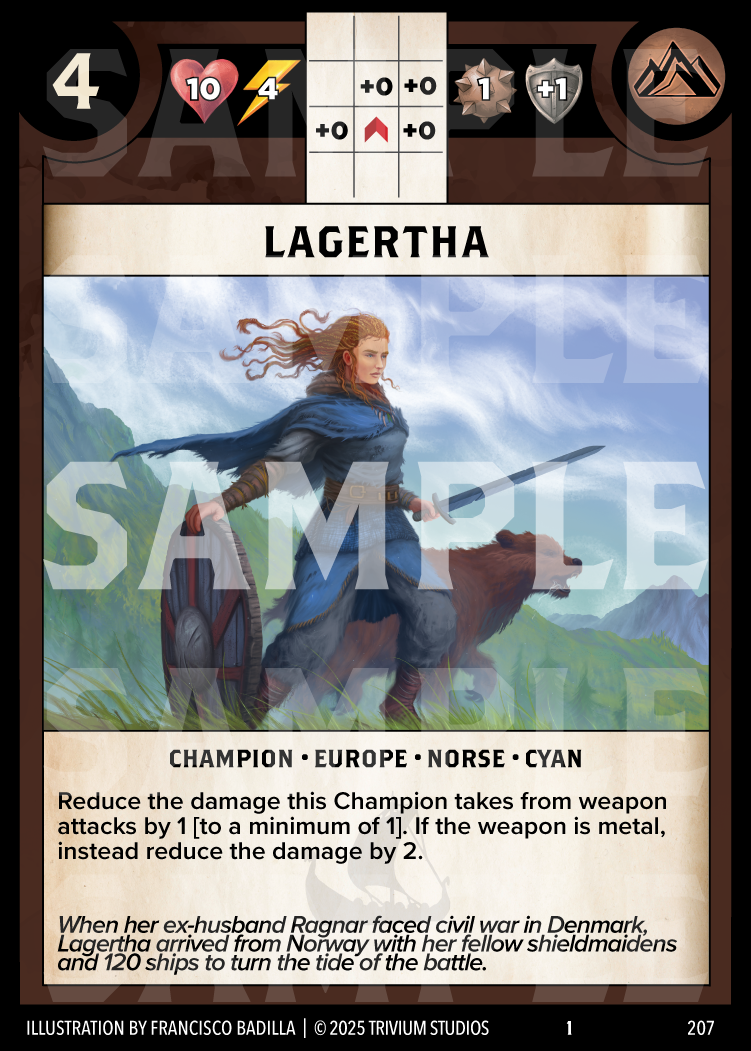
Chrono
Champion
Europe
Norse
Cyan
Reduce the damage this Champion takes from weapon attacks by 1 [to a minimum of 1]. If the weapon is metal, instead reduce the damage by 2.
When her ex-husband Ragnar faced civil war in Denmark, Lagertha arrived from Norway with her fellow shieldmaidens and 120 ships to turn the tide of the battle.
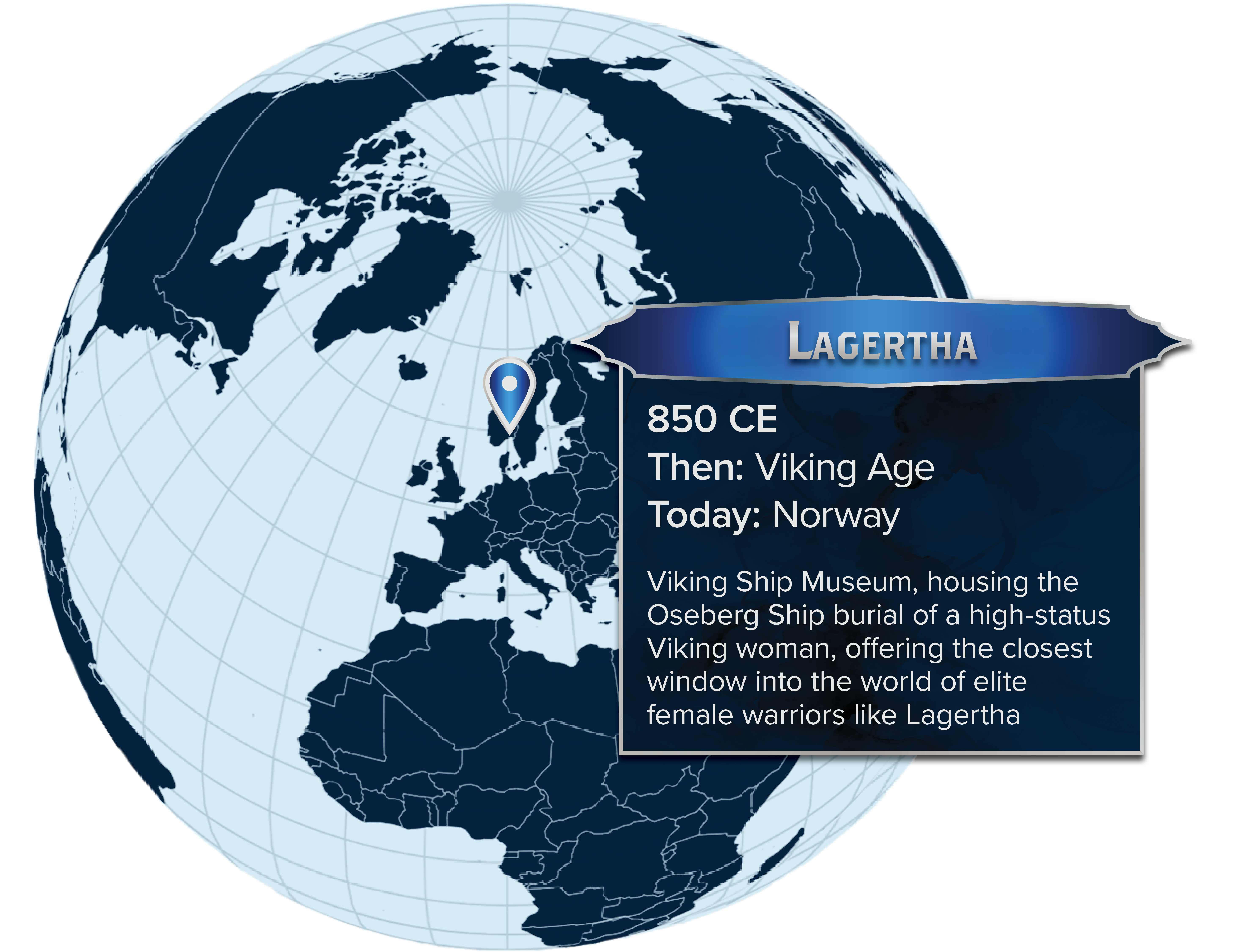
Before she was a legend, Lagertha was a warrior. Not a metaphor. Not a poetic flourish. A literal axe-swinging, spear-hurling, enemy-crushing shieldmaiden of Viking lore. Her story comes to us from Saxo Grammaticus, a 12th-century Danish historian who wrote Gesta Danorum, a chronicle so wild it makes Game of Thrones look like a weather report.
Lagertha first appears during a civil war in Norway. The king, Frø, had killed the previous ruler and forced his female relatives into servitude for humiliation. Lagertha was one of those women. But instead of breaking, she armored up. When Ragnar Lodbrok came to avenge the fallen king, Lagertha joined his army—leading from the front, cutting down enemies, and turning the tide of battle. Saxo writes that “her courage was matchless,” and that she fought “with flying hair and bare arms.” That’s not just battlefield grit. That’s mythic branding.
Ragnar was impressed. He proposed. She agreed. They married. But Lagertha wasn’t done being a beast. When Ragnar later divorced her (classic Viking drama), she didn’t fade into the fjords. She ruled her own territory in Norway, commanded her own troops, and kept her own power.
Years later, Ragnar found himself in trouble again—this time in Denmark, fighting a rebellion. He sent for help. Lagertha answered. She sailed into battle with 120 ships and personally saved Ragnar’s forces from collapse. Saxo says she “flew about” the battlefield, slaying enemies with a spear and rallying the troops. Ragnar survived. Lagertha didn’t ask for thanks.
Then, in one of the most Viking plot twists ever, Lagertha’s second husband tried to challenge her authority, so she killed him with a spear hidden in her dress and took control of his kingdom. Saxo’s explanation? “She thought it better to rule without a husband than to share power with one.” That’s not just independence. That’s a mic drop in chainmail.
Modern historians debate whether Lagertha was real, a composite of multiple women, or pure legend. But her story endures because it hits every mythic beat: vengeance, loyalty, betrayal, triumph, and total refusal to be sidelined. She’s become a symbol of female strength in Viking culture, inspiring everything from operas to TV shows.
She wasn’t a queen waiting in a hall. She was the reason the hall still stood. She didn’t just survive humiliation. She turned it into fury. And when the saga needed saving, Lagertha showed up with longships spilling over with screaming Vikings.