Encyclopedia Anachronistica

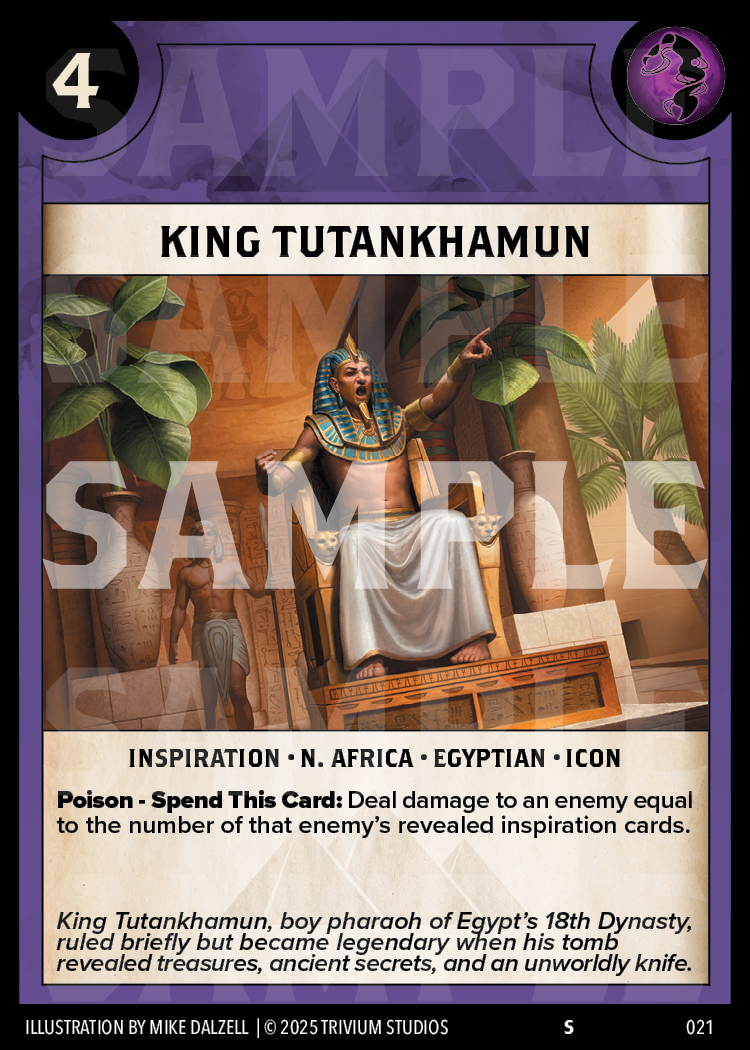
Chrono
Inspiration
N. Africa
Egyptian
Icon
Poison - Spend This Card: Deal damage to an enemy equal to the number of that enemy's revealed inspiration cards.
King Tutankhamun, boy pharaoh of Egypt's 18th Dynasty, ruled briefly but became legendary when his tomb revealed treasures, ancient secrets, and an unworldly knife.
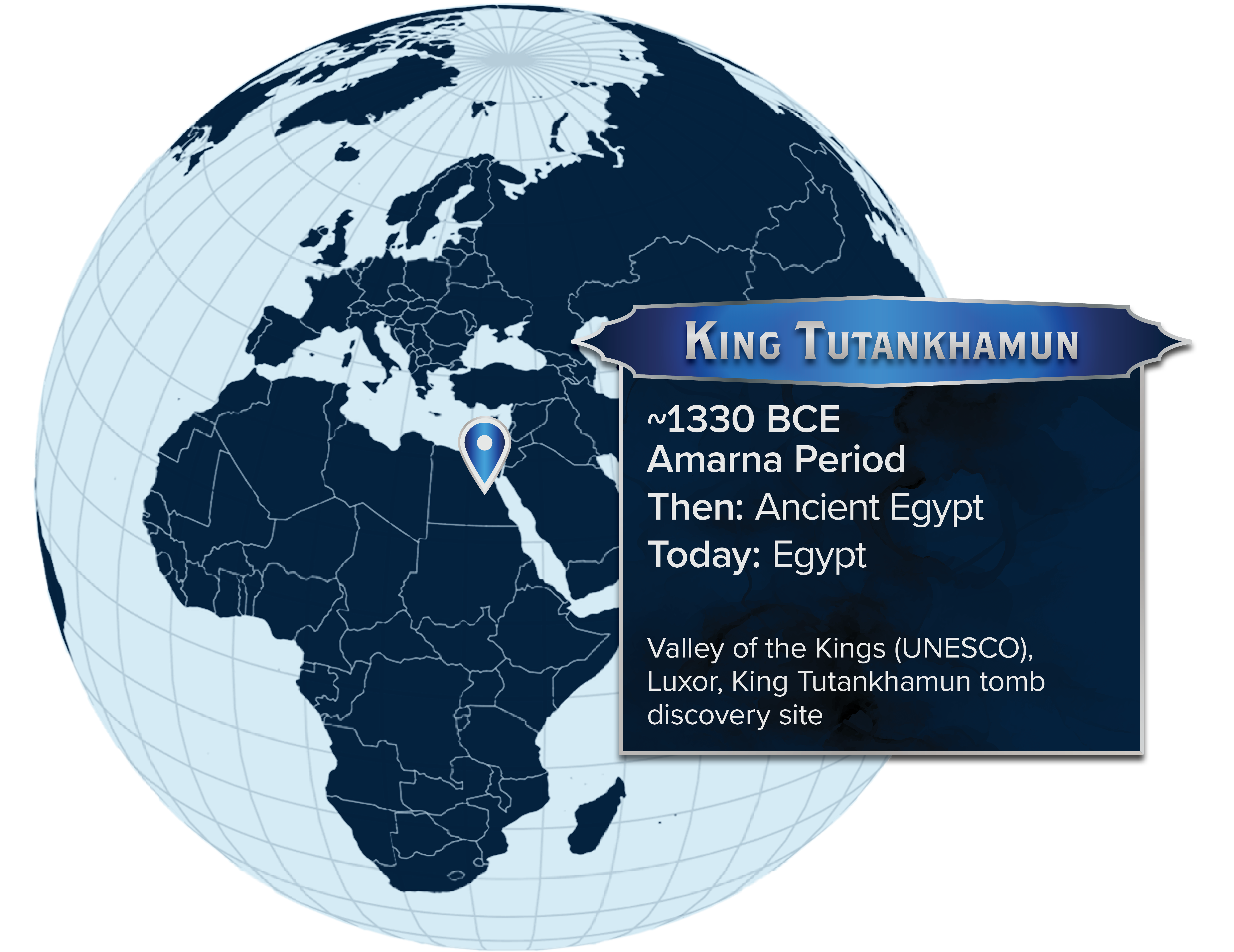
King Tutankhamun, the Boy King of ancient Egypt, continues to captivate the world—not just for his golden tomb, but for the mysteries that still swirl around his short, dramatic life. His fame exploded in 1922 when British archaeologist Howard Carter uncovered his nearly intact tomb in the Valley of the Kings. The treasures inside—golden shrines, chariots, jewelry, and the iconic death mask—sparked a global Egyptomania that still echoes today, inspiring generations of archaeologists, artists, and armchair explorers alike.
Tutankhamun ascended the throne around 1333 BCE, likely at the tender age of nine. Born Tutankhaten, he was the son of the heretic pharaoh Akhenaten, who had upended centuries of Egyptian tradition by promoting the worship of a single sun god, Aten. But young Tut reversed course. He changed his name to Tutankhamun—“Living Image of Amun”—and restored the old gods, temples, and priesthoods. In doing so, he became a symbol of religious and political restoration, even if he was more figurehead than ruler.
Yet beneath the glittering gold lay a frail young man. Recent CT scans and DNA analyses have revealed a startling truth: Tutankhamun had a clubbed left foot. This congenital deformity, along with evidence of bone necrosis and malaria, paints a picture of a pharaoh plagued by health issues. His tomb contained over 130 walking sticks—some worn from use—suggesting he relied on them daily. Far from the dashing warrior once imagined, Tut may have limped through life, his body weakened by inbreeding and disease.
His death remains a mystery. Some theories suggest a chariot accident, others a genetic disorder or infection. What’s clear is that he died suddenly around age 18 or 19, before his tomb was ready. He was hastily buried in a modest chamber, likely intended for someone else. Ironically, that may have preserved his fame: had he been buried in a grander tomb, it might have been looted like so many others.
Today, King Tut is more than a mummy in a golden mask. He’s a window into the splendor and fragility of ancient Egypt—a boy caught between gods and politics, tradition and upheaval, glory and pain. And thanks to modern science, we’re still unwrapping his story, one bone at a time—each discovery adding new layers to his legend.