Encyclopedia Anachronistica

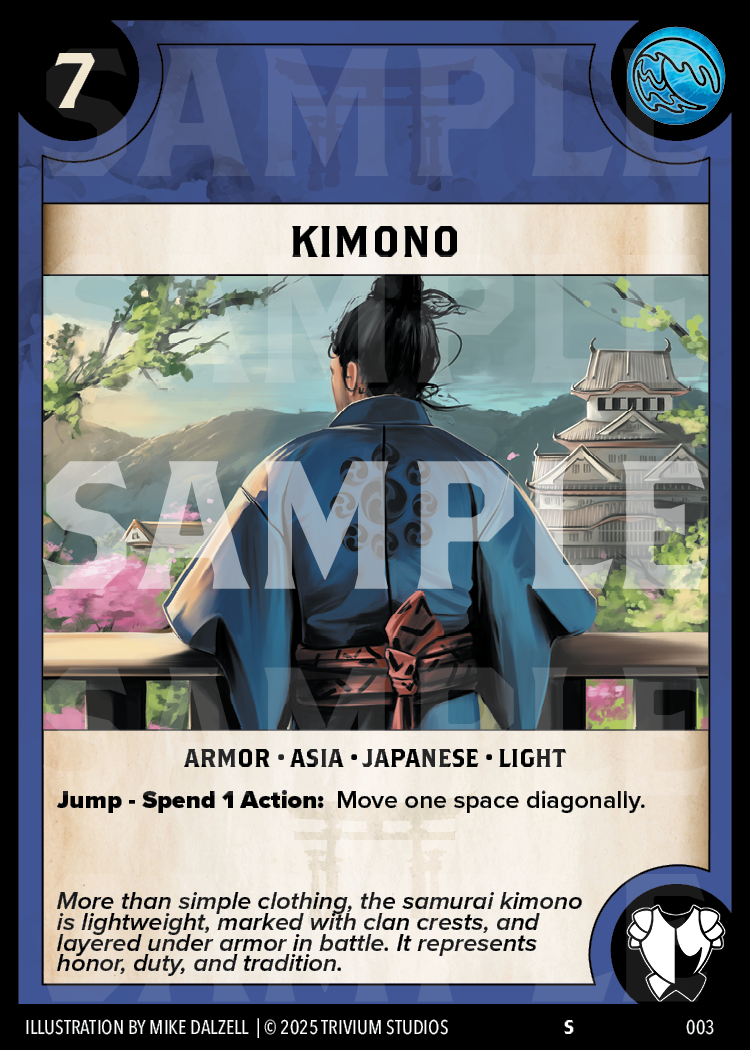
Standard
Armor
Asia
Japanese
Light
Jump - Spend 1 Action: Move one space diagonally.
More than simple clothing, the samurai kimono is lightweight, marked with clan crests, and layered under armor in battle. It represents honor, duty, and tradition.
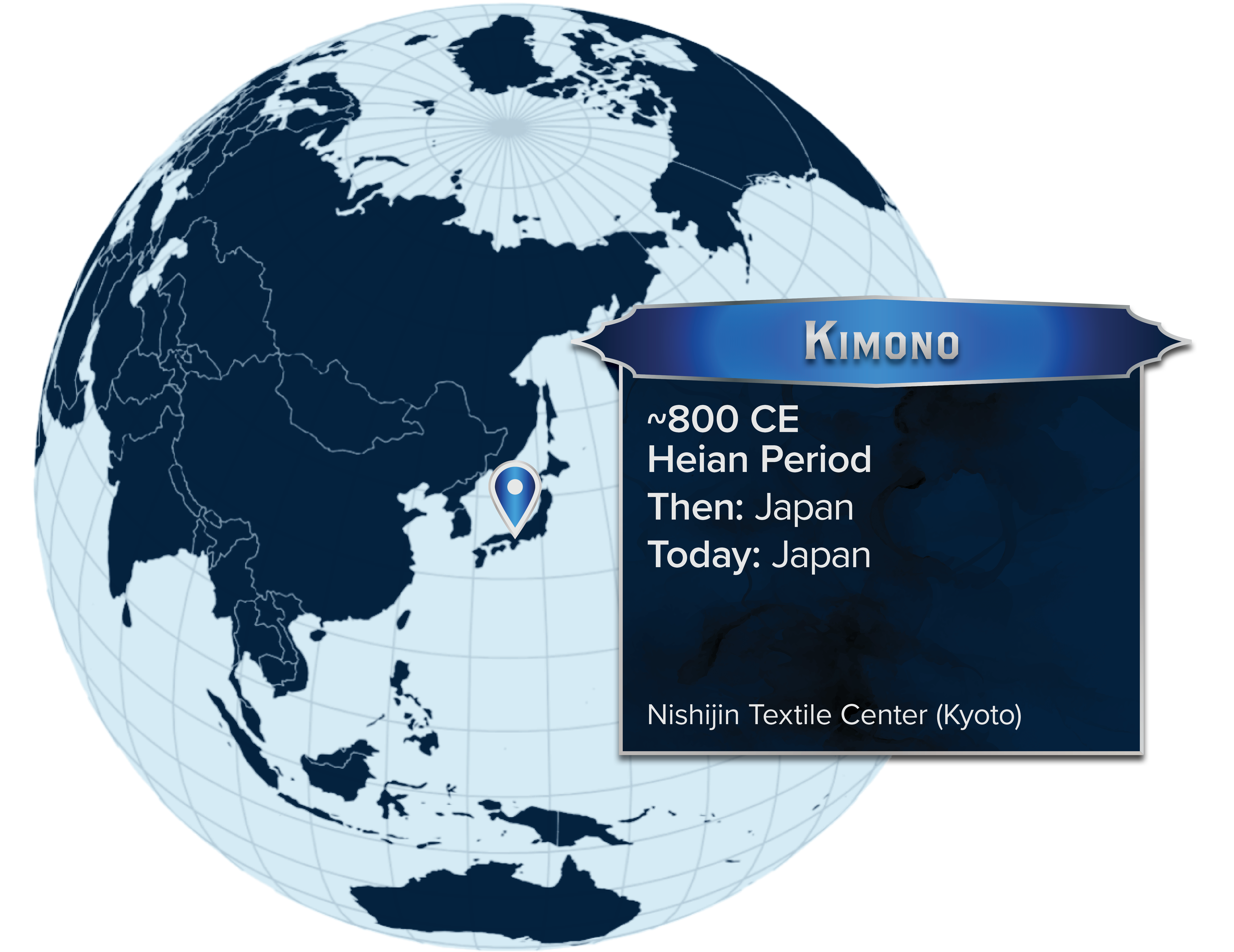
The samurai’s kimono was more than elegant attire—it was a tactical garment, a badge of honor, and a battlefield signature that fused speed, symbolism, and deadly intent. Worn beneath armor or on its own in duels and formal settings, the kimono was tailored for movement, designed for resilience, and steeped in meaning.
Unlike the modern image of the kimono as ceremonial wear, the samurai version—often a hitatare or kamishimo—was built for action. Wide sleeves, split hems, and a loose fit allowed for rapid motion, whether drawing a blade, mounting a horse, or pivoting mid-strike. In indoor combat or peacetime duels, where armor was impractical or forbidden, the kimono became the warrior’s primary gear: light, fast, and unencumbered.
The fabric was typically silk or hemp, chosen for durability and breathability. In battle, simpler weaves and darker dyes helped conceal sweat and blood, while in court or ceremonial contexts, samurai might wear layered robes with stiff shoulder panels and elaborate patterns. But even the most ornate kimono retained a sense of readiness—no buttons, no buckles, just a sash, a blade, and resolve.
One of the most striking features of the samurai kimono was the kamon, or clan crest. These stylized emblems—often circular and inspired by plants, animals, or celestial motifs—were emblazoned on the back, chest, and sleeves. They served as battlefield identifiers, allowing allies and enemies to recognize each other instantly amid the chaos. The triple hollyhock of the Tokugawa, the six coins of the Sanada, the diamond rhombuses of the Takeda—each symbol carried centuries of loyalty, legacy, and pride.
During the Sengoku period, when Japan was fractured by civil war, kamon became essential for both strategy and morale. Samurai banners, armor, and kimono bore these crests like medieval heraldry. Even in peacetime, the kimono’s kamon marked social rank and family honor. To wear it was to carry the weight of one’s ancestors—and to be seen failing in it was a disgrace.
The kimono’s design also reflected the samurai ethos. Its layered structure mirrored the warrior’s dual nature: refined yet ruthless, composed yet lethal. In Edo-period duels, samurai often removed their outer kimono before drawing their sword, revealing a simpler underlayer. This act wasn’t just practical—it was theatrical, signaling intent and stripping away pretense.
Today, the samurai kimono remains iconic—graceful, symbolic, and battle-ready. It’s a reminder that true power doesn’t always wear armor. Sometimes, it wears silk and moves like wind.