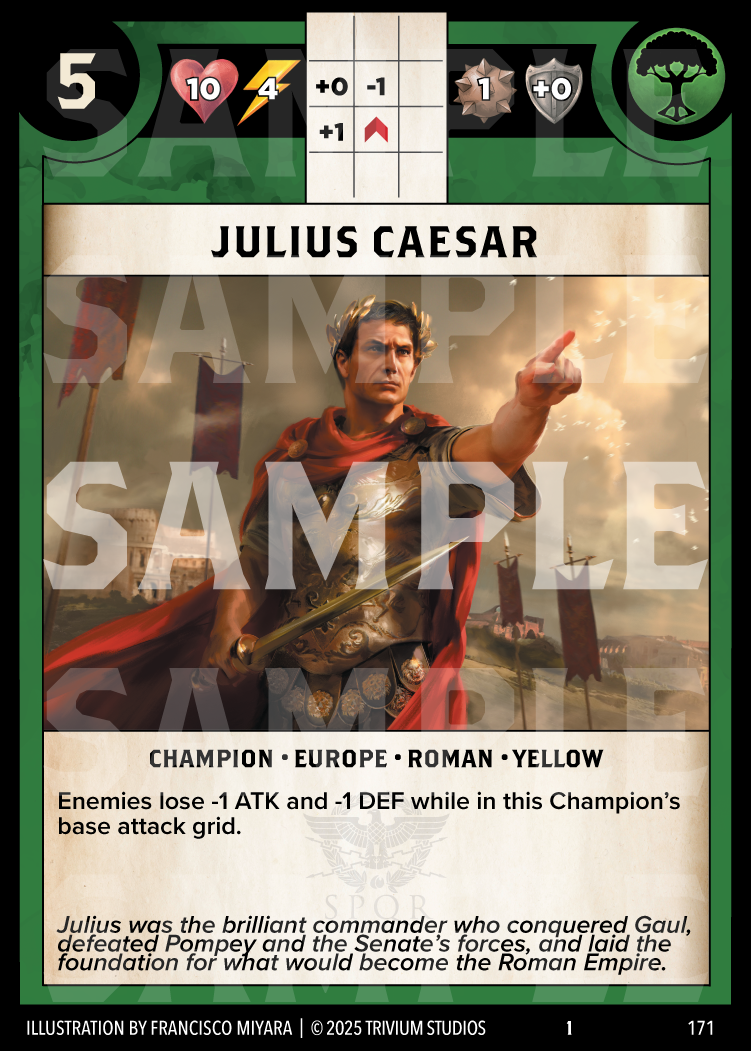
Encyclopedia Anachronistica


Alt Art
Champion
Europe
Roman
Yellow
Enemies lose -1 ATK and -1 DEF while in this Champion's base attack grid.
Julius was the brilliant commander who conquered Gaul, defeated Pompey and the Senate's forces, and laid the foundation for what would become the Roman Empire.
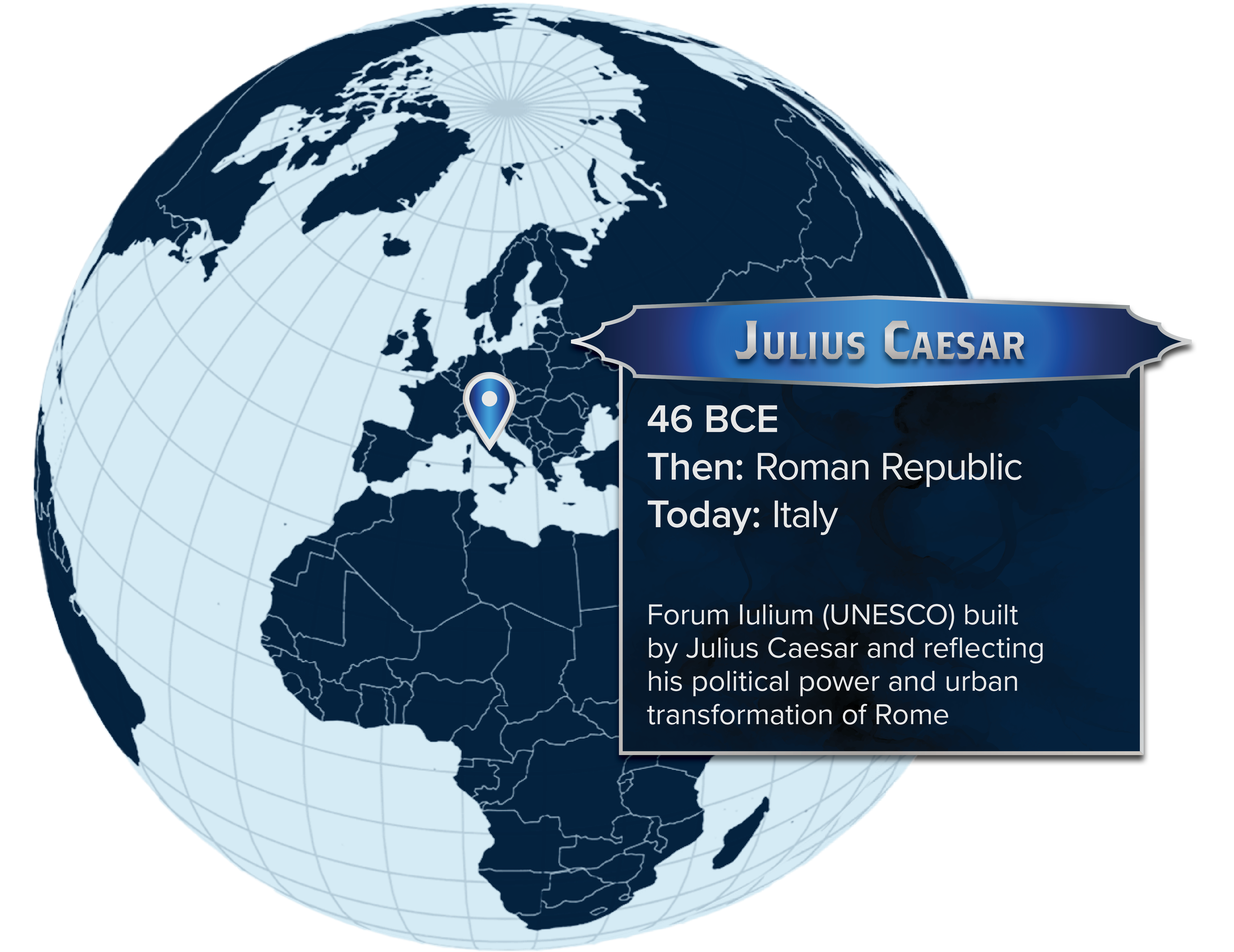
Normally we talk about blood-soaked battles in terms of tens or even hundreds of thousands killed. Julius Caesar introduced the word millions.
Caesar became head of his family at 16 when his father died, and almost immediately had to flee the dictator Sulla, who was purging opponents by execution and confiscation. His family intervened to spare him, but Caesar lost his priesthood and inheritance. He joined the army, proved himself in Asia Minor, won the Civic Crown for bravery, and rose to staff officer before returning to Rome as a celebrated lawyer and orator.
Here’s where things get good. While traveling to Greece in 75 BCE, Caesar was captured by pirates. They treated him well, but when they demanded 20 talents ransom, Caesar mocked them, insisting he was worth at least 50. He joked that he would crucify them after his release. The pirates laughed—until Caesar raised the ransom, was freed, raised a fleet, hunted them down, and crucified them. Out of a sense of grim mercy, he reportedly ordered their throats cut first.
Back in Rome, Caesar climbed the political ladder: Pontifex Maximus (chief priest), praetor, and then governor of Hispania Ulterior. There he campaigned against tribes, marched to the Atlantic, and won the loyalty of his troops. Returning to Rome, he struck a deal with Pompey and Crassus—the First Triumvirate—and pushed through land reforms and popular measures that made him beloved by the masses.
Elected governor of Gaul in 58 BCE, Caesar unleashed a decade of conquest. He subdued tribe after tribe, claimed to have captured over 800 settlements, and in his own Commentaries boasted of killing or enslaving over a million people. He even personally rallied a routed legion by charging into the fray himself, inspiring his men to annihilate an enemy force of tens of thousands. By 51 BCE, Gaul was Roman.
When the Senate ordered him to disband his army, Caesar instead crossed the Rubicon in 49 BCE, igniting civil war. Pompey fled to Greece, then to Egypt, where he was assassinated. Caesar pursued, entered Alexandria, and began both a military campaign and a famous romance with Cleopatra. He secured Egypt, then added more victories in Africa, the Middle East, and Spain.
Back in Rome, Caesar rewrote laws, expanded citizenship, restructured debts, and packed the Senate with loyalists. He ruled as dictator, championing the people while concentrating power in himself. His reforms and conquests reshaped Rome forever, even as his growing dominance terrified the Senate into plotting his assassination.