Encyclopedia Anachronistica


Alt Art
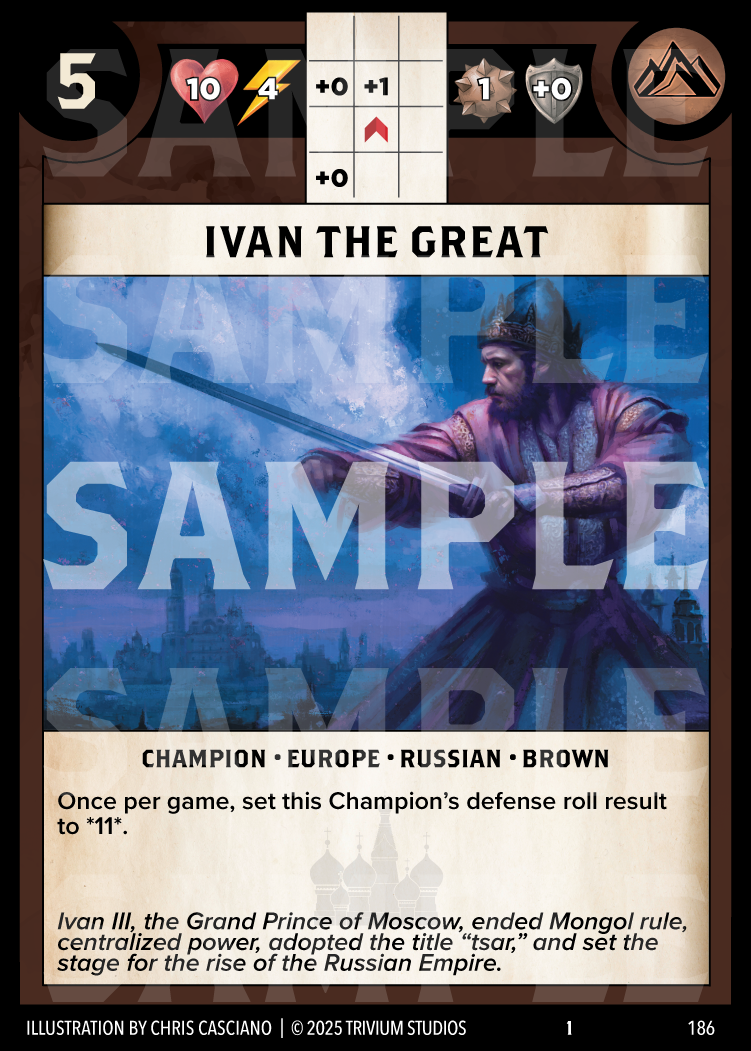
Champion
Europe
Russian
Brown
Once per game, set this Champion's defense roll result to *11 *.
Ivan III, the Grand Prince of Moscow, ended Mongol rule, centralized power, adopted the title "tsar," and set the stage for the rise of the Russian Empire.
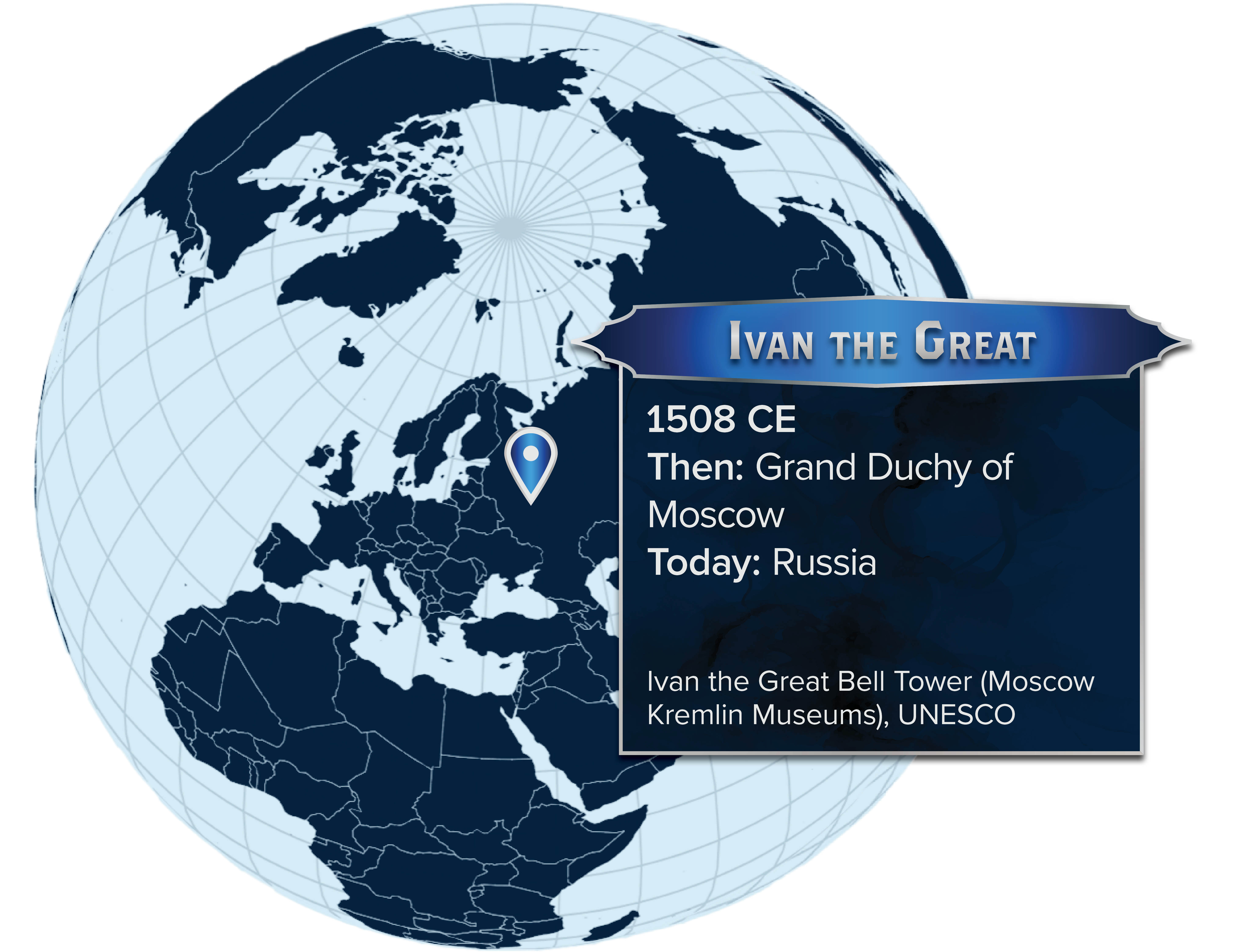
Golden Hordes don’t last forever, and Ivan the Great was the one who permanently kicked them out of Russia. He did this with one hand while using the other to unite and expand the Russian lands through shrewd diplomacy, relentless warfare, and a politically explosive marriage. Ivan rolled with it—and steamrolled over it.
Ivan got an early start on the ruling game. At age six he was promised to the daughter of the Grand Prince of Tver, betrothed to her at twelve, and got married a few years later. Meanwhile, his father, Grand Prince Vasily II of Moscow, was blinded in a coup attempt, making young Ivan co-regent before he was even a teenager. His childhood was a crash course in ruthless politics: born into a court riven by civil war, he witnessed his father’s blinding during a coup, and was thrust into co-regency before reaching adolescence. By eighteen, Ivan was already leading campaigns against the Tatars, showing the ferocity that would define his reign.
At twenty-two, his father died and Ivan inherited the throne. His first wife soon died—possibly poisoned—and Ivan remarried. This time, it was a masterstroke: Sophia (Zoe) Palaiologina, niece of the last Byzantine emperor. Their marriage was both a love match and a political coup. Sophia brought Byzantine prestige, symbols, and ambition into Moscow, inspiring Ivan to style his realm as the “Third Rome.”
Ivan consolidated power by absorbing the lands of his brothers, defeating their rebellions with calculated aggression. To the north, he relentlessly pressed Novgorod until it submitted, tripling the size of his domain. Then came his defining move: he refused to pay tribute to the Golden Horde. In 1480, Khan Ahmed marched his army to the Ugra River to confront Ivan. The two forces faced each other for weeks, but the Horde suddenly withdrew without battle—the symbolic end of Mongol dominance over Russia.
Ivan’s rule was as transformative as his conquests. He centralized authority in Moscow, reducing the independence of boyar nobles and rival princes. He issued the Sudebnik of 1497, the first comprehensive legal code of Moscow, which standardized laws across his expanding realm. He rebuilt and fortified the Kremlin with Italian architects, turning it into both a military stronghold and a symbol of Moscow’s rising power. By adopting the Byzantine double-headed eagle as his emblem and using the title “tsar” in foreign correspondence, Ivan projected Moscow as the rightful heir to Rome and Byzantium. His 43-year reign laid the foundations of a unified Russian state and elevated Moscow into a true European power.