Encyclopedia Anachronistica

Standard
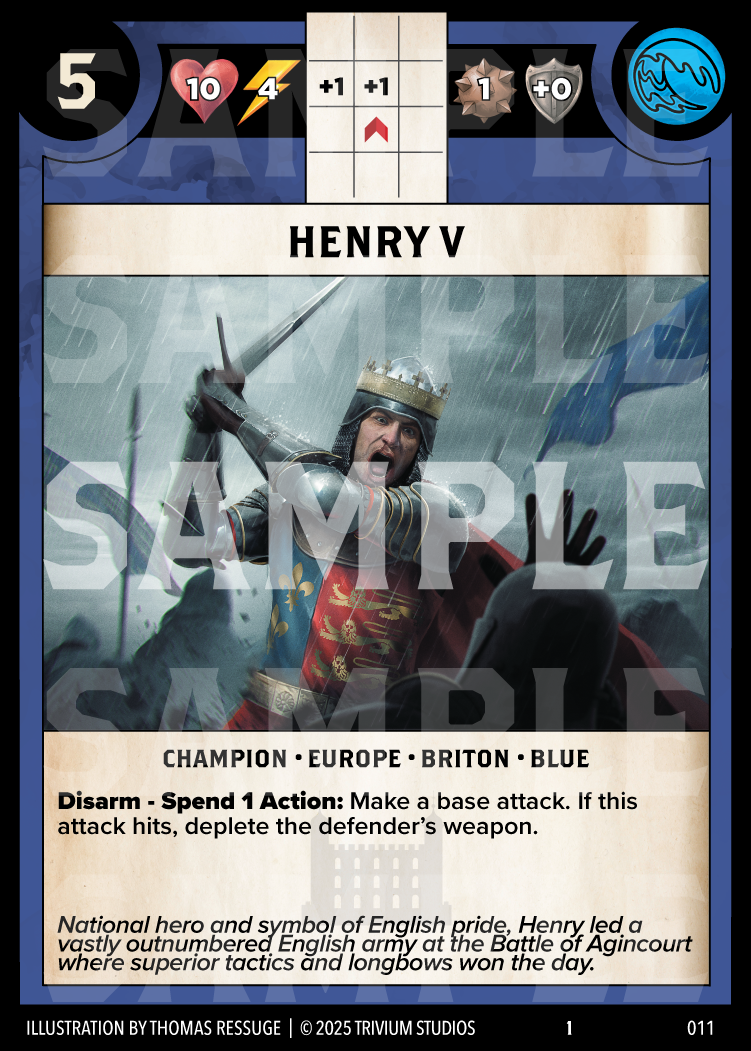
Champion
Europe
Briton
Blue
Disarm - Spend 1 Action: Make a base attack. If this attack hits, deplete the defender's weapon.
National hero and symbol of English pride, Henry led a vastly outnumbered English army at the Battle of Agincourt where superior tactics and longbows won the day.
Henry V was about the nastiest case of trial by fire in history. At just sixteen while leading his dad’s troops in battle, he took an arrow to the face at the Battle of Shrewsbury in 1403. The iron head lodged six inches deep in his skull, just beside his nose. It took England’s top surgeon, John Bradmore, twenty days of honey-soaked probes and custom screw-tipped tongs to extract it. Henry survived, scarred and hardened, and never looked back.
In just nine years as king, he transformed England from a middling European player into the dominant force of the English Channel. His first move: crush the Welsh rebellion led by Owain Glyndŵr. Though Glyndŵr had once ruled most of Wales and even summoned a parliament, Henry’s campaigns drove him into hiding by 1415, ending any serious Welsh independence efforts.
After his father’s death in 1413, Henry took the throne and offered pardons to rebellious lords—if they’d fall in line. Some didn’t. First came the Lollards, a religious reform movement led by Sir John Oldcastle, once Henry’s close friend. They tried to seize London, but Henry was ready. Oldcastle escaped but was captured years later and burned alive for heresy and treason.
Next came the Southampton Plot of 1415. Conspirators tried to convince Edmund Mortimer, 5th Earl of March, to claim the throne. Mortimer, loyal to Henry, exposed the plot. Henry had the ringleaders—Richard of Conisburgh, Henry Scrope, and Thomas Grey—beheaded just days before sailing for France.
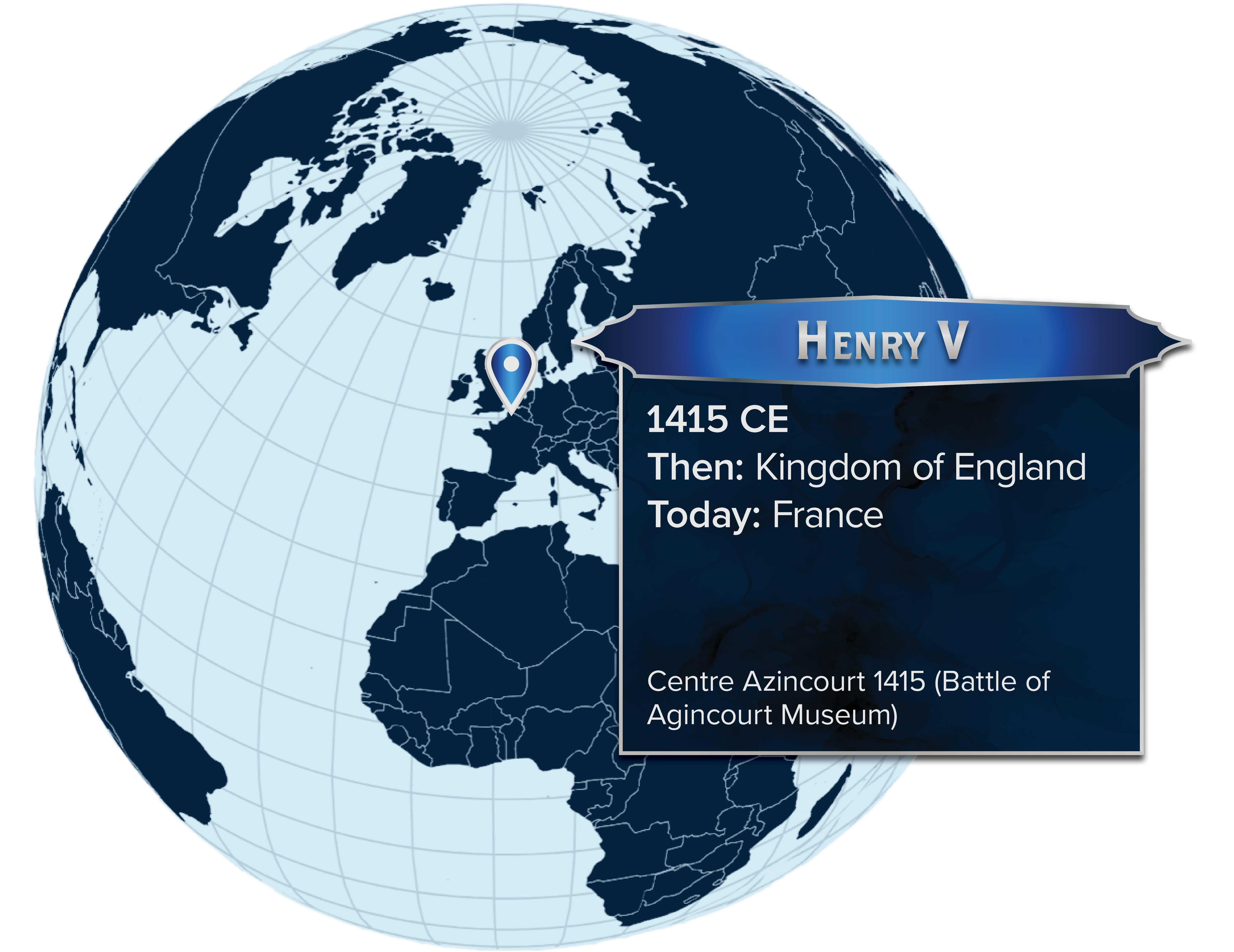
Then came Agincourt. After capturing Harfleur with about 7,000 troops, Henry’s army faced a French force of 15,000–25,000. The battlefield was a muddy funnel, perfect for the English longbow. French infantry slogged through the muck while English archers shredded them. Armored knights fell with their horses and couldn’t rise—easy prey for English blades. Henry lost around 600 men. The French lost 6,000, mostly nobility. Henry ordered the execution of wounded and captured French soldiers to prevent a counterattack.
With France reeling, Henry returned, took Paris, married Catherine of Valois, daughter of Charles VI, and signed the Treaty of Troyes in 1420. The treaty named Henry heir to the French throne and regent of France. He was now king of two realms and immortalized in Shakespeare’s Henry V.
Henry’s legacy wasn’t just military, it was mythic. He became the model of the ideal warrior king: decisive, pious, ruthless when needed, and deeply respected by allies and enemies alike. His victories at Agincourt and beyond reshaped European politics and gave England a foothold in continental affairs that would echo for generations. Though he died young in 1422, his legend endured, inspiring monarchs, playwrights, and military tacticians for centuries.