Encyclopedia Anachronistica


Chrono
Special
Oceania
Pacific Islander
Terrain
Deploy: Place this card in an unoccupied center space in the Arena.
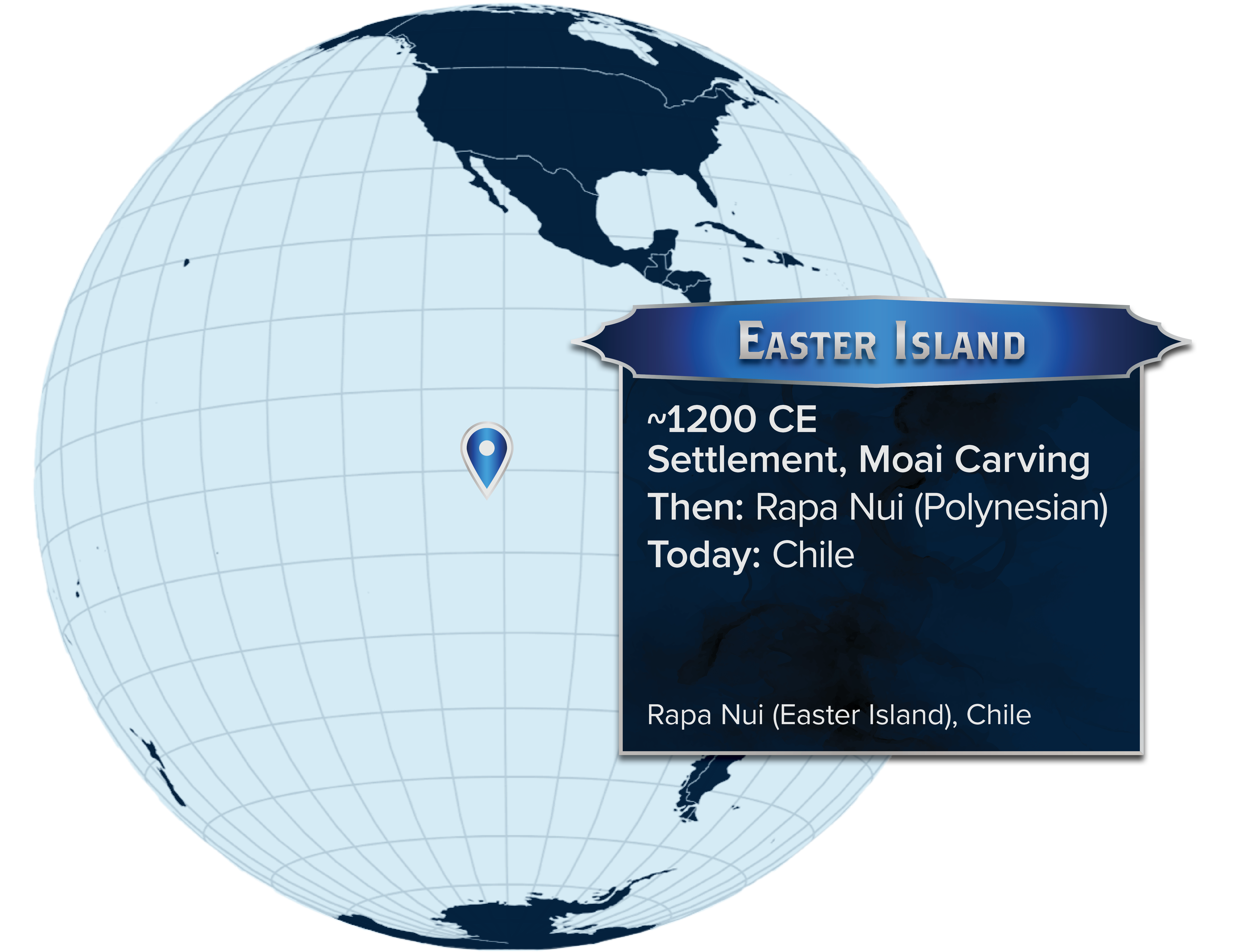
Isolated in the southeastern Pacific, 3500 kilometers off the coast of Chile, the Moai statues with coral and obsidian eyes watch over Easter Island and the Rapa Nui people.
Towering across the windswept plains and coastal ridges of Rapa Nui (Easter Island), nearly 900 moai stand—or lie toppled—etched from volcanic tuff between 1250 and 1500 CE. These monolithic figures, some over 30 feet tall and weighing up to 82 tons, were carved by the Rapa Nui to honor deified ancestors. Their massive heads, elongated noses, and solemn pouts reflect Polynesian sculptural traditions that emphasized the sanctity of the head. But it’s the eyes—those deep sockets once inlaid with white coral and polished obsidian or red scoria—that transformed the moai from stone to spirit.
The eyes weren’t just decoration. They were believed to activate the statue’s mana, a supernatural force that linked the living to the dead. When the eyes were inserted, the moai “awoke,” becoming a conduit of ancestral power. Facing inland, not toward the sea, they watched over clan lands, villages, and ceremonial platforms called ahu. Their backs to the ocean symbolized protection, not isolation—the moai were guardians of the people, not of the island’s edge.
Most moai were quarried at Rano Raraku, a volcanic crater that still holds dozens of unfinished statues frozen mid-carve. From there, they were transported—somehow—across rugged terrain to their final resting places. Theories abound: log rollers, sledges, or even a “walking” method using ropes and coordinated rocking. However they moved, the feat remains one of the great engineering mysteries of the ancient world.
The coral eyes were rediscovered in the 1970s, when archaeologists found fragments beneath toppled statues. One particularly striking find at Ahu Nau-Nau revealed a white coral eye with a central socket for a red scoria iris—a design that matched oral traditions and wooden Rapa Nui carvings. Today, restored moai like the one at Ahu Ko Te Riku in Tahai wear replica eyes, giving visitors a glimpse of how these statues once gazed across the island with supernatural presence.
Why were they toppled? By the late 18th century, many moai had been deliberately brought down—possibly due to tribal conflict, resource scarcity, or the destabilizing effects of European contact. The loss of the eyes, and the mana they symbolized, marked a spiritual rupture. Yet the moai endured, buried in soil and memory, until modern restoration efforts began in the 20th century.
To stand before a moai today is to feel the weight of centuries. These statues are not relics—they are witnesses. With coral eyes gleaming once more, they continue to watch, reminding the world that the Rapa Nui carved not just stone, but legacy.