Encyclopedia Anachronistica

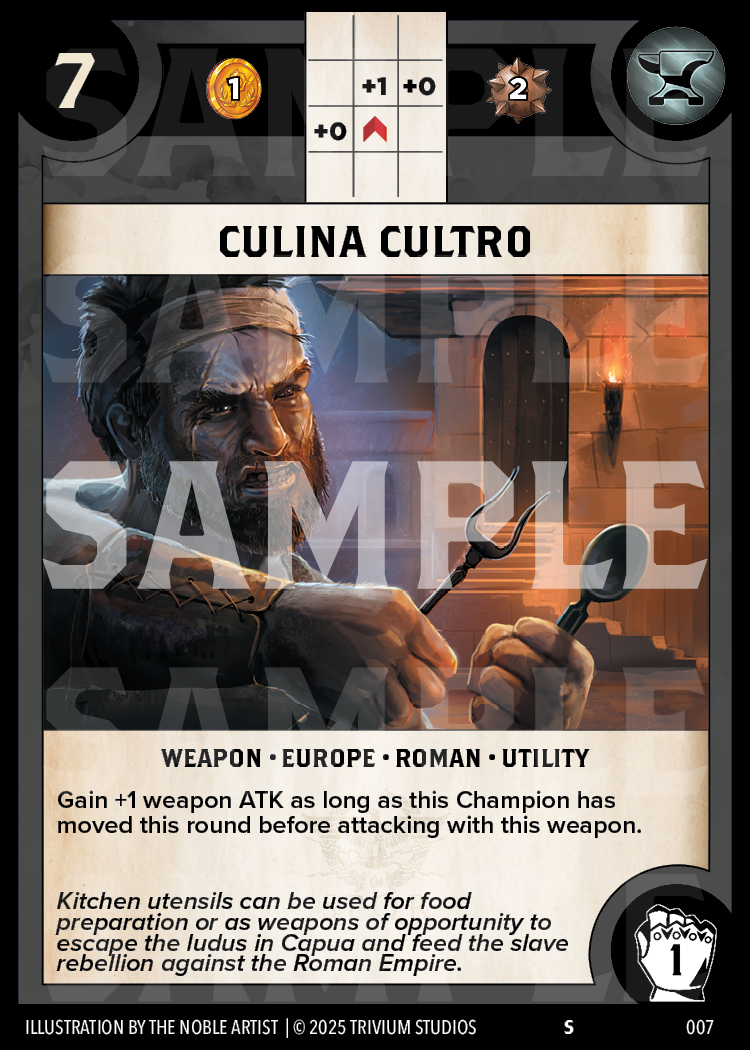
Standard
Weapon
Europe
Roman
Utility
Gain +1 weapon ATK as long as this Champion has moved this round before attacking with this weapon.
Kitchen utensils can be used for food preparation or as weapons of opportunity to escape the ludus in Capua and feed the slave rebellion against the Roman Empire.
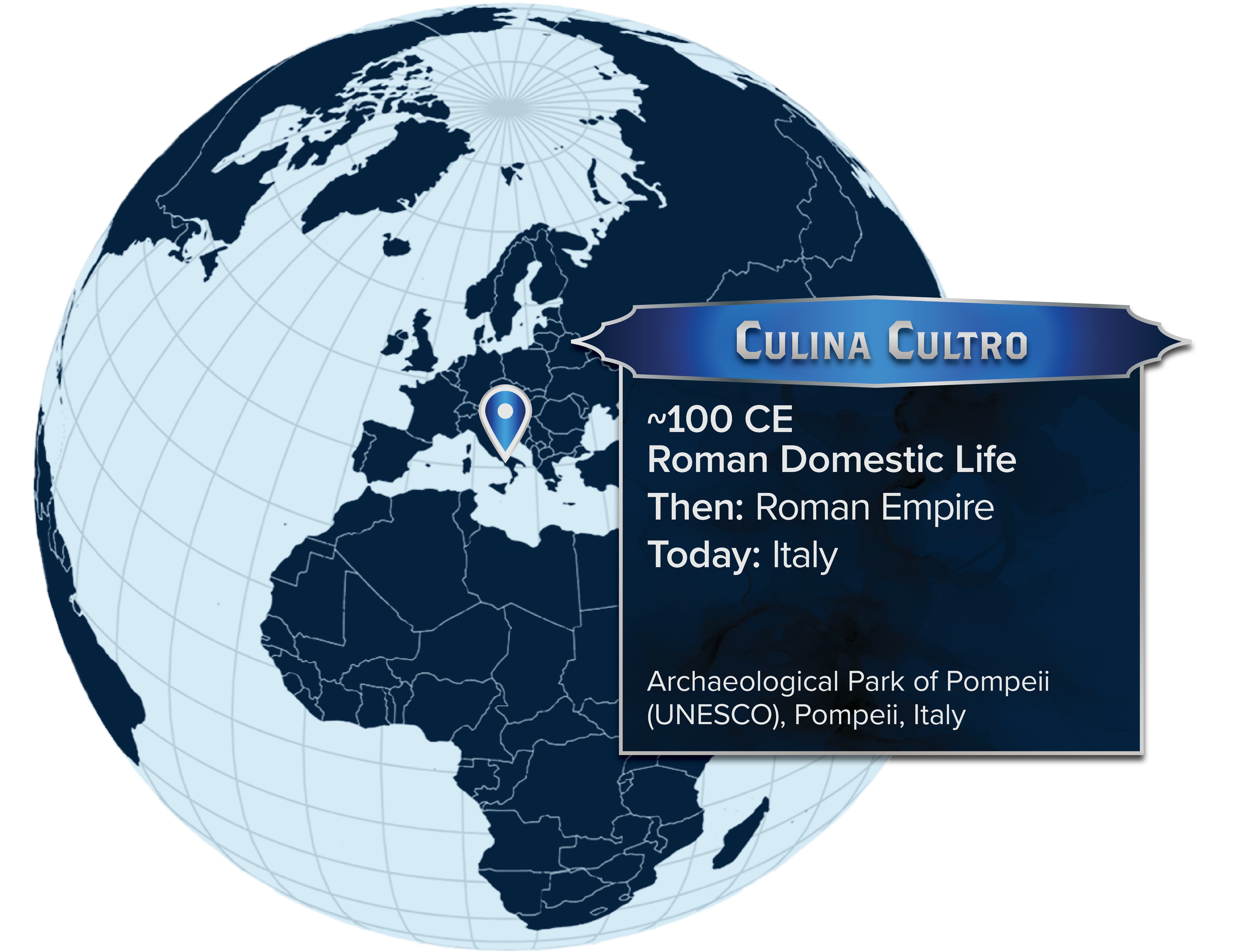
Spartacus and his fellow gladiators used kitchen utensils as improvised weapons to launch a daring breakout from the ludus in Capua in 73 BCE, igniting the largest slave revolt in Roman history.
The revolt began in the gladiator training school (ludus) of Capua, a city in southern Italy known for its amphitheater and gladiatorial culture. Spartacus, a Thracian who had once served in the Roman army, was enslaved and trained as a gladiator in this facility. The ludus housed dozens of fighters, many of whom were seasoned warriors forced into combat for Roman entertainment. Among them were two Gauls—Crixus and Oenomaus—who would become key leaders in the uprising.
The plan to escape was hatched in secret by a small group of gladiators, reportedly fewer than 100 men. Their access to weapons was tightly controlled, and the armory was locked. But the kitchen was not. When the moment came, they seized what they could: cleavers, skewers, spits, and carving knives—tools meant for preparing meals, not warfare. These makeshift weapons were wielded with deadly intent, as the rebels overwhelmed the guards and stormed the armory. Once inside, they armed themselves with proper gladiatorial weapons and Roman military gear.
The breakout was swift and violent. The rebels fought their way out of the ludus and into the streets of Capua. Roman authorities, caught off guard, scrambled to respond. Spartacus and his followers did not flee blindly; they regrouped and chose to head toward Mount Vesuvius, a strategic location with natural defenses, shedding their hated gladiator gear at the first chance. Along the way, they repelled a small Roman force sent to intercept them, further emboldening their cause.
At Vesuvius, Spartacus was elected leader alongside Crixus and Oenomaus. The group grew rapidly as escaped slaves and disaffected freemen joined their ranks. Within weeks, the rebel force swelled from a few hundred to thousands. The Romans initially underestimated the threat, sending a militia under Praetor Gaius Claudius Glaber to contain them. Glaber’s forces camped at the base of the mountain, believing the rebels were trapped.
But Spartacus used his military experience to outmaneuver them. He and his men rappelled down the steep, unguarded side of Vesuvius using vines, launching a surprise attack that routed Glaber’s forces. This victory marked the beginning of the Third Servile War, a conflict that would rage for two years and shake the foundations of Roman society.
The use of kitchen utensils in the escape symbolized both desperation and ingenuity, highlighting the brutal conditions of gladiatorial life. Spartacus’s breakout from Capua stands as one of history’s boldest acts of resistance. Sometimes, freedom begins with a fork and a dream.