Encyclopedia Anachronistica

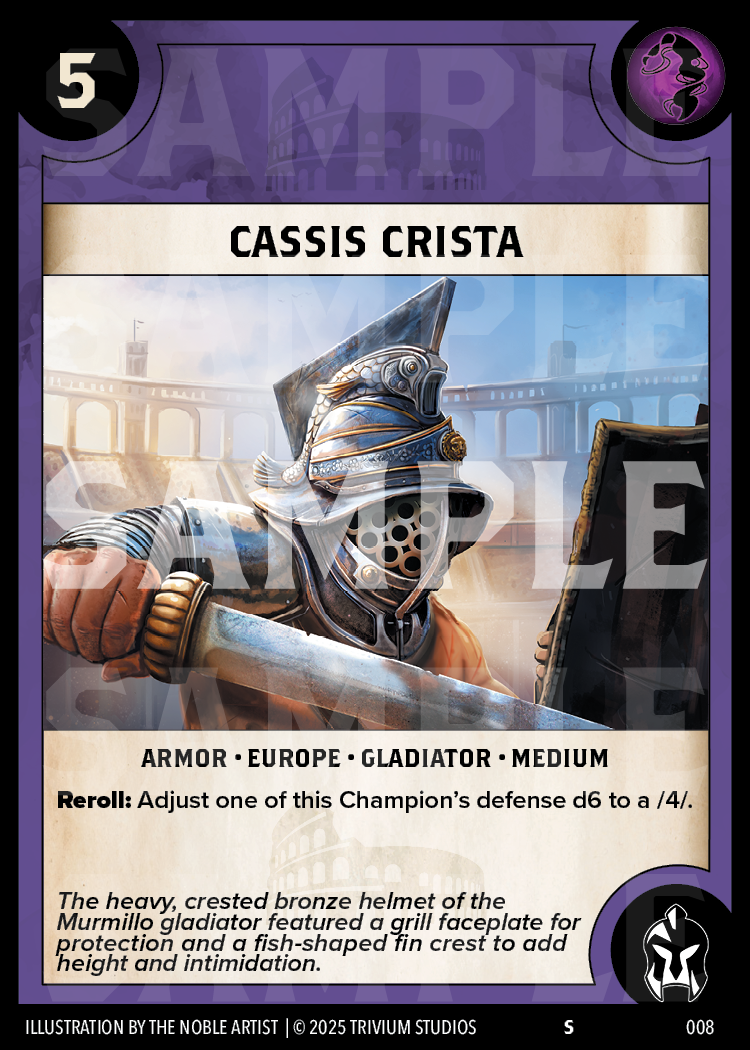
Standard
Armor
Europe
Gladiator
Medium
Reroll: Adjust one of this Champion's defense d6 to a /4/.
The heavy, crested bronze helmet of the Murmillo gladiator featured a grill faceplate for protection and a fish-shaped fin crest to add height and intimidation.
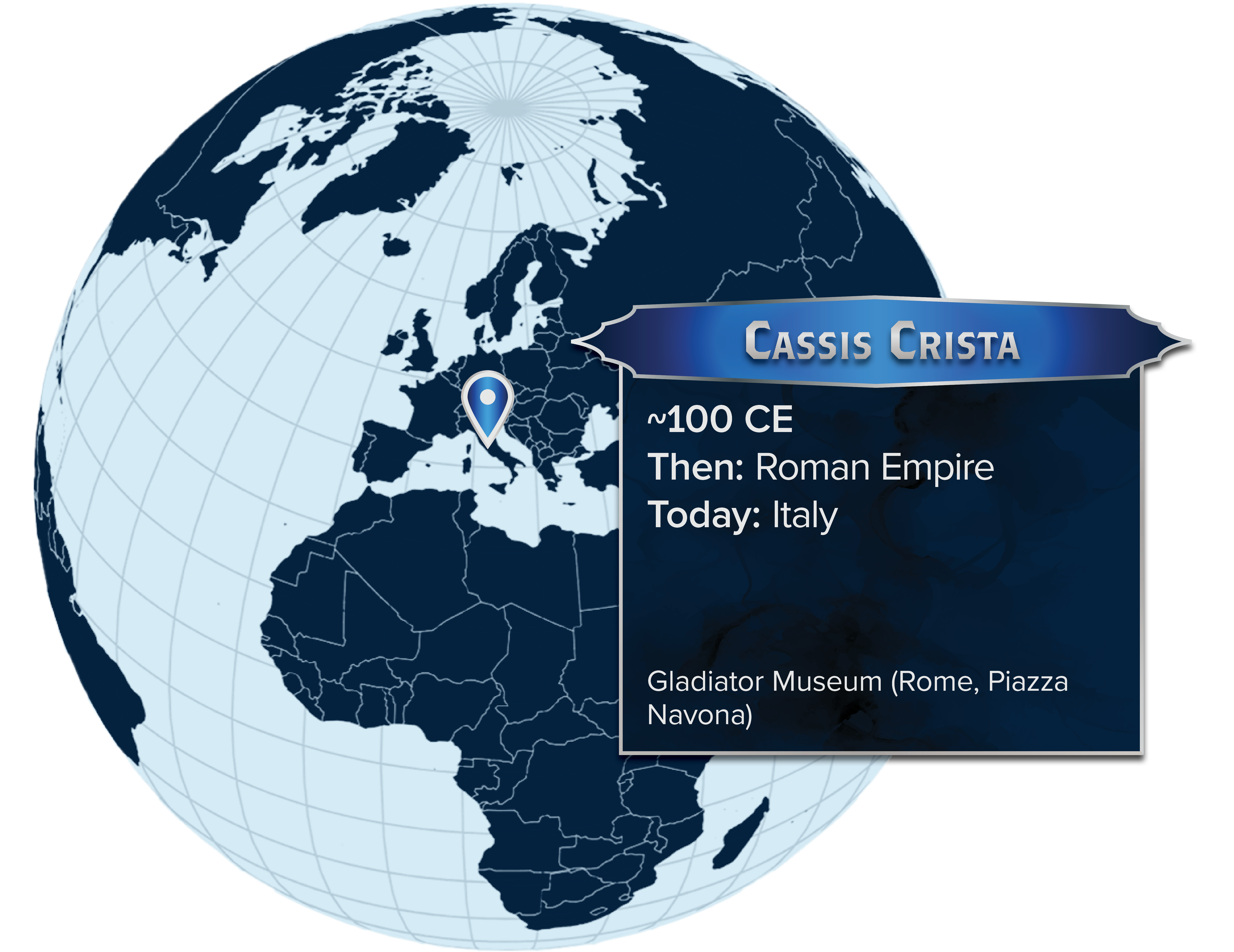
In the blood-soaked sand of Rome’s gladiatorial arenas, few symbols carried more weight than the cassis crista. This crested helmet wasn’t just protection—it was transformation. Forged from bronze or iron, shaped to encase the head in a shell of defiance, the cassis crista turned enslaved fighters into icons of power. Its sweeping crest—often made of horsehair or feathers—rose like a war plume, a visual roar before the first blow was struck.
The murmillo gladiator wore it with pride and burden. Modeled after Roman legionaries, the murmillo was a walking contradiction: a slave dressed as a soldier, a performer forced to mimic the empire’s might. The cassis crista completed the illusion. Its design limited vision and airflow, demanding brute strength and unwavering focus. Once the visor dropped, the world narrowed to survival and spectacle.
Among the murmillos, one name echoes louder than the rest—Spartacus. A Thracian warrior captured and trained to fight, Spartacus likely wore the cassis crista in his early battles. But he didn’t stay in the arena. He shattered it. In 73 BCE, Spartacus led a rebellion of enslaved gladiators and laborers, turning his training against the empire that sought to break him. His uprising became legend, his name a rallying cry for resistance across centuries. If he wore the cassis crista, it was not just armor—it was irony. A rebel crowned in the gear of Rome.
The helmet itself was a marvel of intimidation. Its broad faceplate and reinforced brow gave the murmillo a faceless, towering presence. Opponents—often the agile retiarius with net and trident—had to outmaneuver a walking fortress. The murmillo’s slow advance, shield raised, helmet gleaming, was a performance of inevitability. The cassis crista made sure the crowd saw it coming.
But beneath the metal and plume was a human being—trained, trapped, and tested. The helmet concealed fear, rage, and resilience. It turned individuals into archetypes, but it couldn’t erase their will. Every dent in the cassis crista told a story of survival. Every plume that rose above the crowd was a challenge: Watch me. Fear me. Remember me.
The cassis crista endures as a symbol of paradox—oppression and pride, spectacle and strength. It reminds us that even within systems built to dehumanize, identity can be reclaimed. Even when forced to wear the empire’s mask, some fighters found a way to make it their own.