Encyclopedia Anachronistica

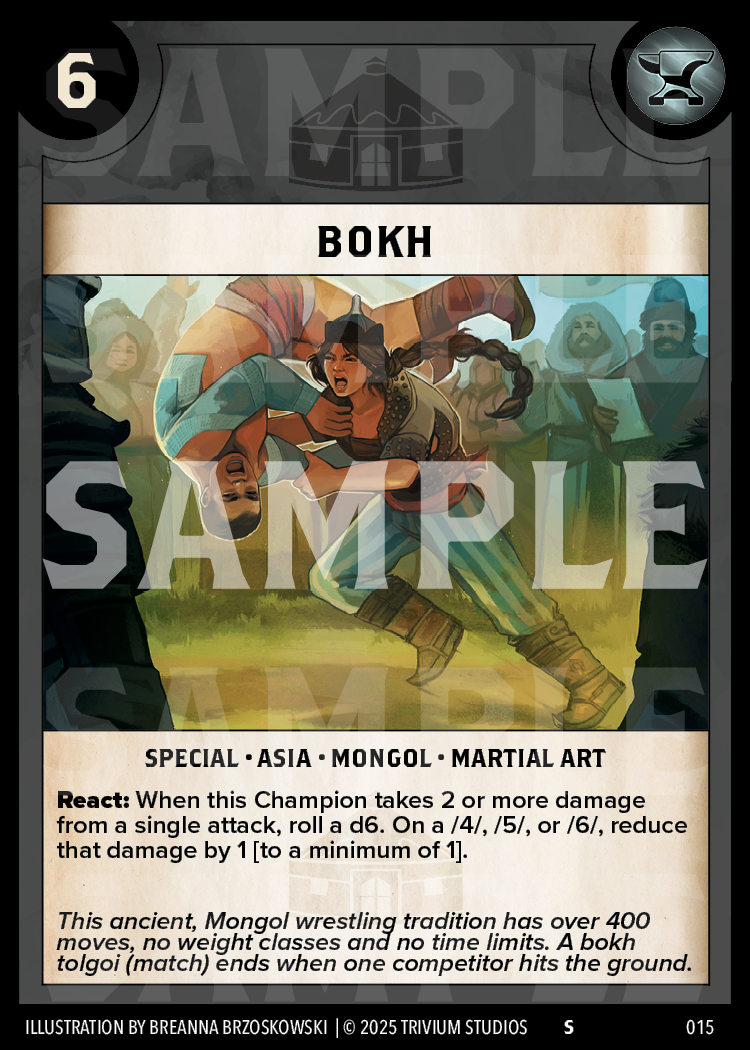
Standard
Special
Asia
Mongol
Martial Art
React: When this Champion takes 2 or more damage from a single attack, roll a d6. On a /4/, /5/, or /6/, reduce that damage by 1 [to a minimum of 1].
This ancient, Mongol wrestling tradition has over 400 moves, no weight classes and no time limits. A bokh tolgoi (match) ends when one competitor hits the ground.
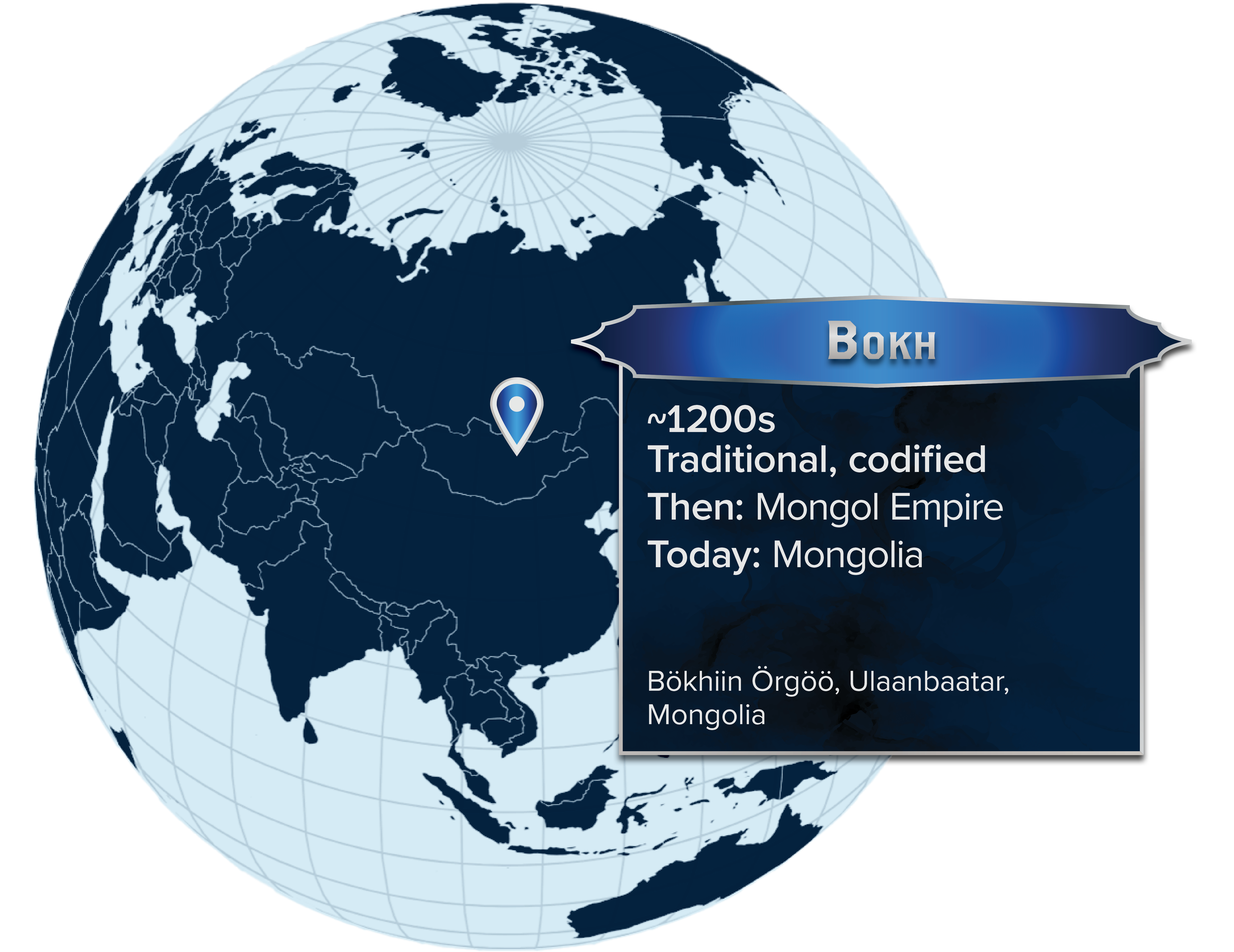
Before Mongolia had borders, before Genghis Khan ruled the world, there was bökh—a wrestling style so fierce, so respected, it became the backbone of an empire. Bökh isn’t just a sport. It’s a test of power, pride, and pure grit. If you could win in bökh, you weren’t just strong—you were unstoppable.
The word bökh means “durability” or “firmness,” and that’s exactly what it takes to survive in the Mongolian steppe. This wrestling style goes back thousands of years, with cave paintings showing grappling warriors long before written history. It became one of the “Three Manly Skills” of Mongolian culture, alongside archery and horsemanship. But don’t let the name fool you—bökh is for anyone with the heart of a fighter.
Genghis Khan didn’t just conquer continents—he built his army with wrestlers. Bökh trained warriors to be fast, balanced, and impossible to knock down. Matches were held at military camps and festivals, especially Naadam, Mongolia’s biggest celebration of strength and tradition. Winning wasn’t just about bragging rights—it could earn you a spot in the Khan’s inner circle.
Bökh has no weight classes, no time limits, and no fancy scoring system. You win when your opponent touches the ground with anything but their feet or hands. That means every move counts. Wrestlers wear traditional gear: a tight vest (zodog), shorts (shuudag), and boots (gutal). Before each match, they perform the eagle dance, spreading their arms like wings to honor the sky, the earth, and the spirit of competition.
And yes—there were legendary women in bökh too. One of the fiercest? Khutulun, cousin of Kublai Khan. She wrestled over a hundred men who wanted to marry her. She beat every single one. Her story became so famous, it inspired characters in plays and poems across the world.
Today, bökh is still the heart of Mongolia’s national identity. Wrestlers earn titles like lion, elephant, or falcon—not just nicknames, but badges of honor. Champions are celebrated like rock stars. And the moves they use? Passed down from generation to generation, like family treasure.
Bökh isn’t flashy. It’s not about showboating. It’s about strength, strategy, and soul. It’s the kind of wrestling that built empires, trained legends, and still makes the ground shake when two warriors lock up. In Mongolia, if you want to prove yourself, you don’t talk—you wrestle.