Encyclopedia Anachronistica

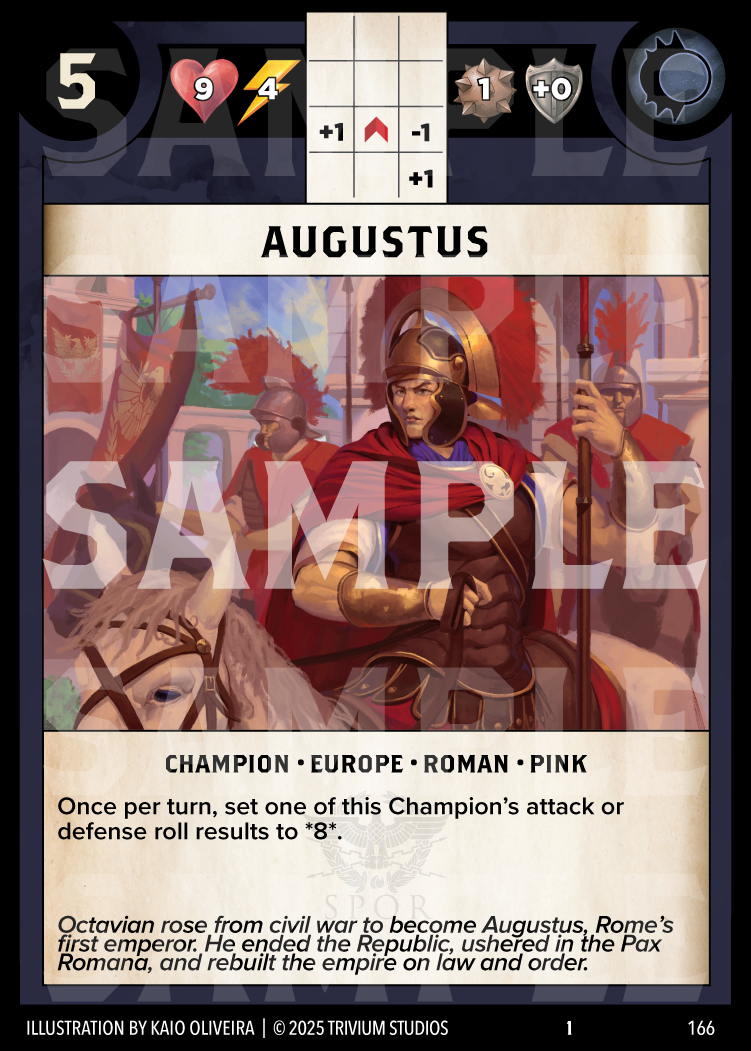
Standard
Champion
Europe
Roman
Pink
Once per turn, set one of this Champion's attack or defense roll results to *8 *.
Octavian rose from civil war to become Augustus, Rome's first emperor. He ended the Republic, ushered in the Pax Romana, and rebuilt the empire on law and order.
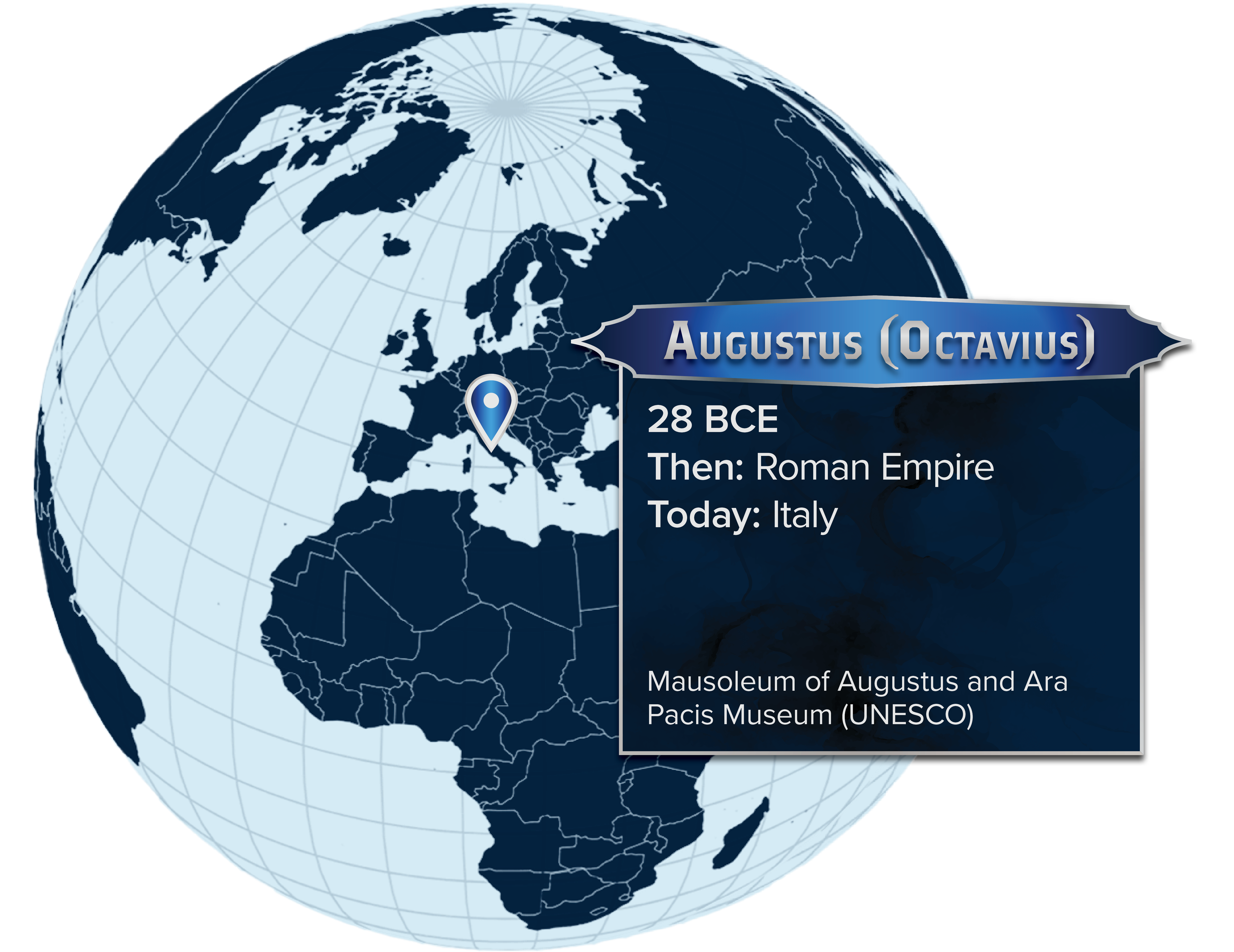
It’s been said this man is one of the five most significant people to have ever lived. Augustus Caesar, the first and greatest of the Roman Emperors, created the Roman Empire by destroying the Republic—and then went to great lengths to present himself as its savior. He followed the law, but only because he made sure he was the one writing it.
Before he took the name Augustus, he was Gaius Octavius—Julius Caesar’s great-nephew, adopted son, and designated heir. Which meant that as soon as the Senators assassinated Julius, Octavian needed allies fast. He found them in Marc Antony and Marcus Lepidus, forming the Second Triumvirate. If Caesar’s assassins thought Julius was dangerous, they barely lived long enough to regret it. Octavian, Antony, and Lepidus unleashed proscriptions—systematically hunting down and executing their enemies. Rome became a waist-deep bloodbath. And that was just the pre-game show.
Next came the infamous Brutus and Cassius. At the Battle of Philippi in 42 BCE, Octavian and Antony crushed them. Both conspirators committed suicide, and Octavian absorbed their armies after tens of thousands lay dead. Then Lepidus made the mistake of trying to order Octavian around. Octavian simply bought off his troops and shoved Lepidus into political obscurity—alive, but irrelevant.
Now the really insidious stuff began. Octavian played the role of champion of the Republic while quietly stacking the Senate with loyalists and eliminating rivals. That put Marc Antony and Cleopatra—and their children—squarely in his sights. The showdown came at the naval Battle of Actium in 31 BCE. Octavian’s fleet, commanded by Agrippa, smashed Antony and Cleopatra’s navy. Cornered in Alexandria, the doomed lovers committed suicide. Octavian, leaving no rival alive, ordered the execution of Caesarion, Julius Caesar’s son, declaring: “Two Caesars are one too many.”
With his enemies gone, Octavian took the name Augustus Caesar in 27 BCE. He cemented the new Roman Empire under the façade of the old Republic, and he did it so well that the system endured in one form or another for 1,500 years. He reigned for 41 years, ushering in the Pax Romana—an era of peace, prosperity, and cultural flourishing. Agriculture, trade, architecture, literature, and law all thrived. The Senate even declared him a god after his death. Love him or loathe him, Augustus laid the foundations of Western civilization as we know it.