Encyclopedia Anachronistica


Alt Art
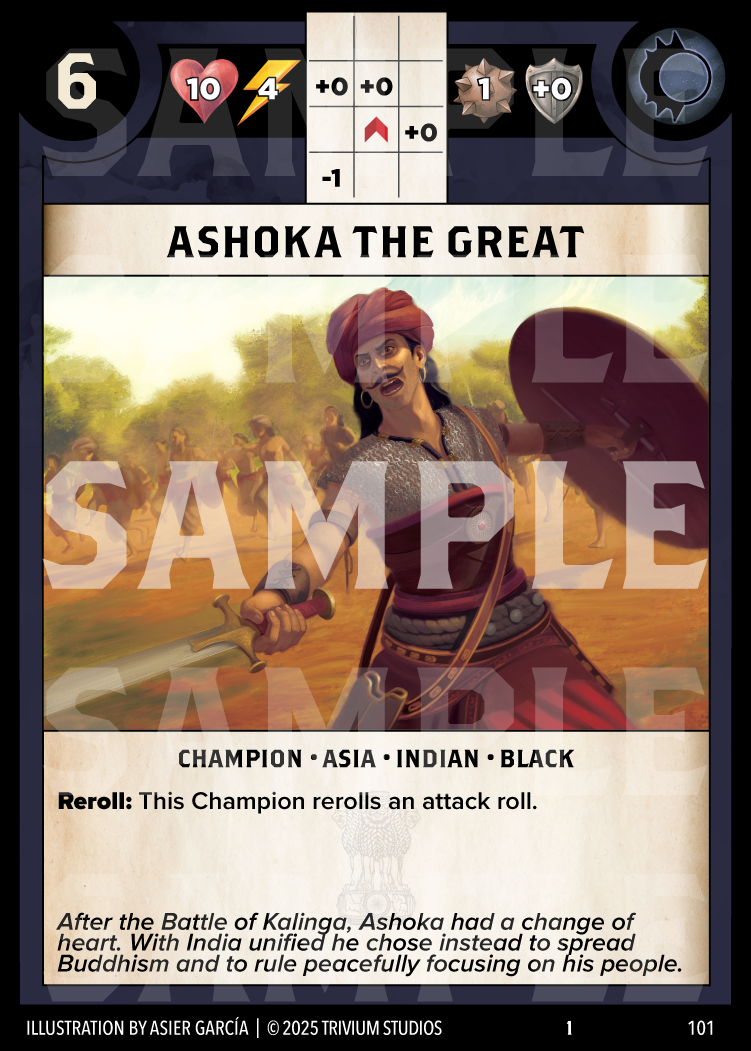
Champion
Asia
Indian
Black
Reroll: This Champion rerolls an attack roll.
After the Battle of Kalinga, Ashoka had a change of heart. With India unified he chose instead to spread Buddhism and to rule peacefully focusing on his people.
Every once in a very long while, history spits out a ruler so extreme, so transformative, that the world is forced to recalibrate. Ashoka was that ruler. Born the grandson of Chandragupta Maurya, founder of the Mauryan Empire, Ashoka didn’t just inherit power, he clawed his way to it through blood, fire, and ruthless precision. Starting as a political exile and the least favored son of King Bindusara, he was sent away by his mother to avoid assassination by his own father. While in exile, Ashoka allegedly crushed a rebellion in Taxila with a blitz of elephants, cavalry, chariots, and infantry—his first taste of war, and he liked it. Too much.
When Bindusara fell ill, Ashoka made his move. He seized the capital, tricked his brother Susima into a pit of burning coals, killing him, and systematically eliminated every other rival sibling. That earned him the name Chandashoka—Ashoka the Fierce. And he allegedly lived up to it. When ministers mocked him, he ordered every fruit-bearing tree cut down. When they failed, he personally beheaded them. His concubines refused to touch him due to a skin condition so he burned them alive. Tired of doing the dirty work himself, he hired a boy named Girika to run his personal torture palace, Ashoka’s Hell—a gilded death trap disguised as a paradise, where no one who entered ever came out alive.
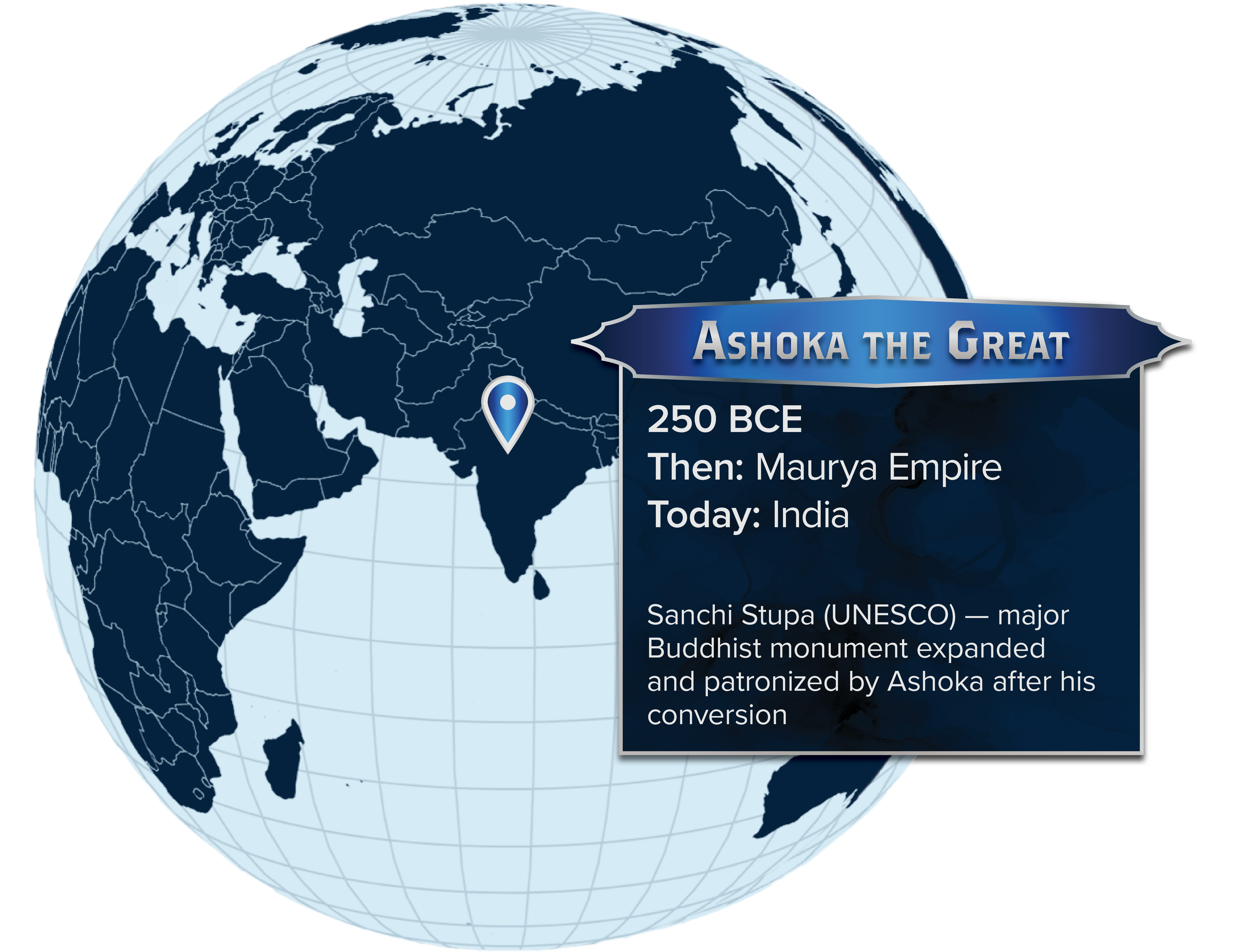
Then came a miraculous turning point. Eight years into his reign, Ashoka led a massive campaign east to conquer Kalinga. The battle was brutal: 100,000 Kalinga soldiers dead, 10,000 of his own, and countless civilians lost to famine, disease, and slavery. Walking the battlefield, Ashoka saw the carnage and cracked in shame and horror. He renounced conquest, embraced Buddhism, demolished the torture jail, and became the first king in history to make Buddhism a state religion. He inscribed his remorse on stone pillars across the empire, publicly apologizing and pledging to rule with compassion.
And he meant it. Ashoka pivoted from warlord to welfare king. He built hospitals, universities, canals, and roads. He planted mango groves for the hungry and water stations for travelers. He erected dozens of edicts preaching kindness, tolerance, and charity, and ordered officials to read them aloud to the illiterate. Anyone with a grievance could bring it directly to him—no gatekeepers, no delay.
Ashoka didn’t disband his army—he kept it sharp to defend his people, regardless of religion, caste, or creed. But conquest was off the table. His new motto? “The finest conquest is the conquest of right and not might.” He went from feared tyrant to beloved emperor, from Chandashoka (Ashoka the Fierce) to Ashoka the Great.