Encyclopedia Anachronistica


Chrono
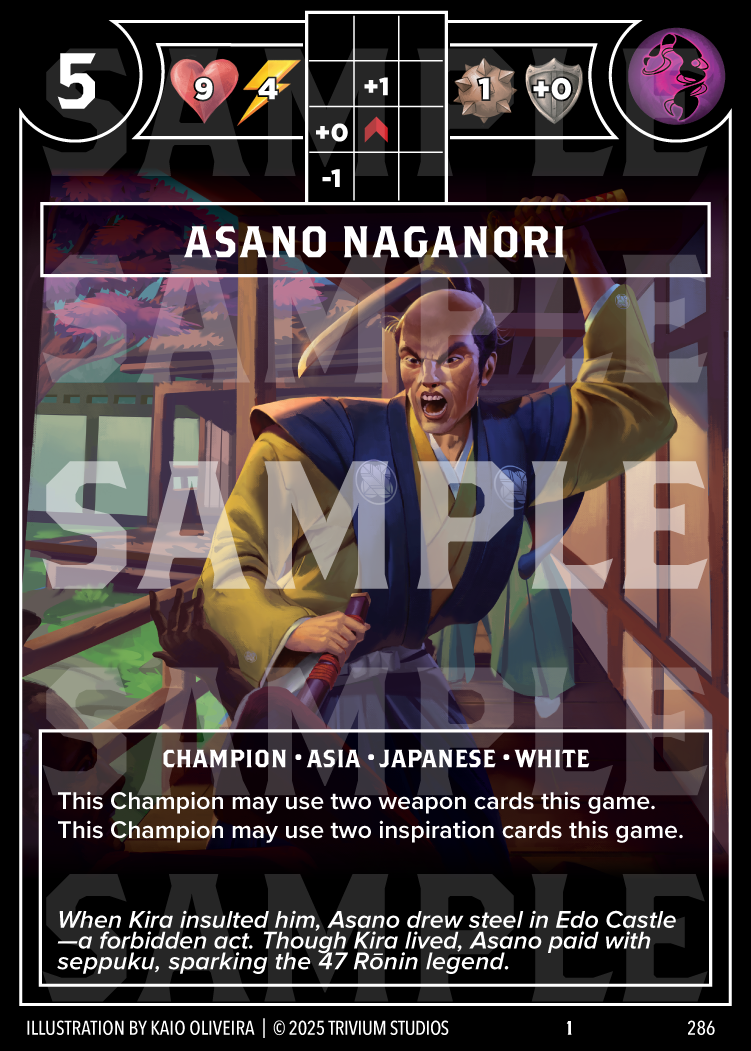
Champion
Asia
Japanese
White
This Champion may use two weapon cards this game. This Champion may use two inspiration cards this game.
When Kira insulted him, Asano drew steel in Edo Castle -a forbidden act. Though Kira lived, Asano paid with seppuku, sparking the 47 Ronin legend.
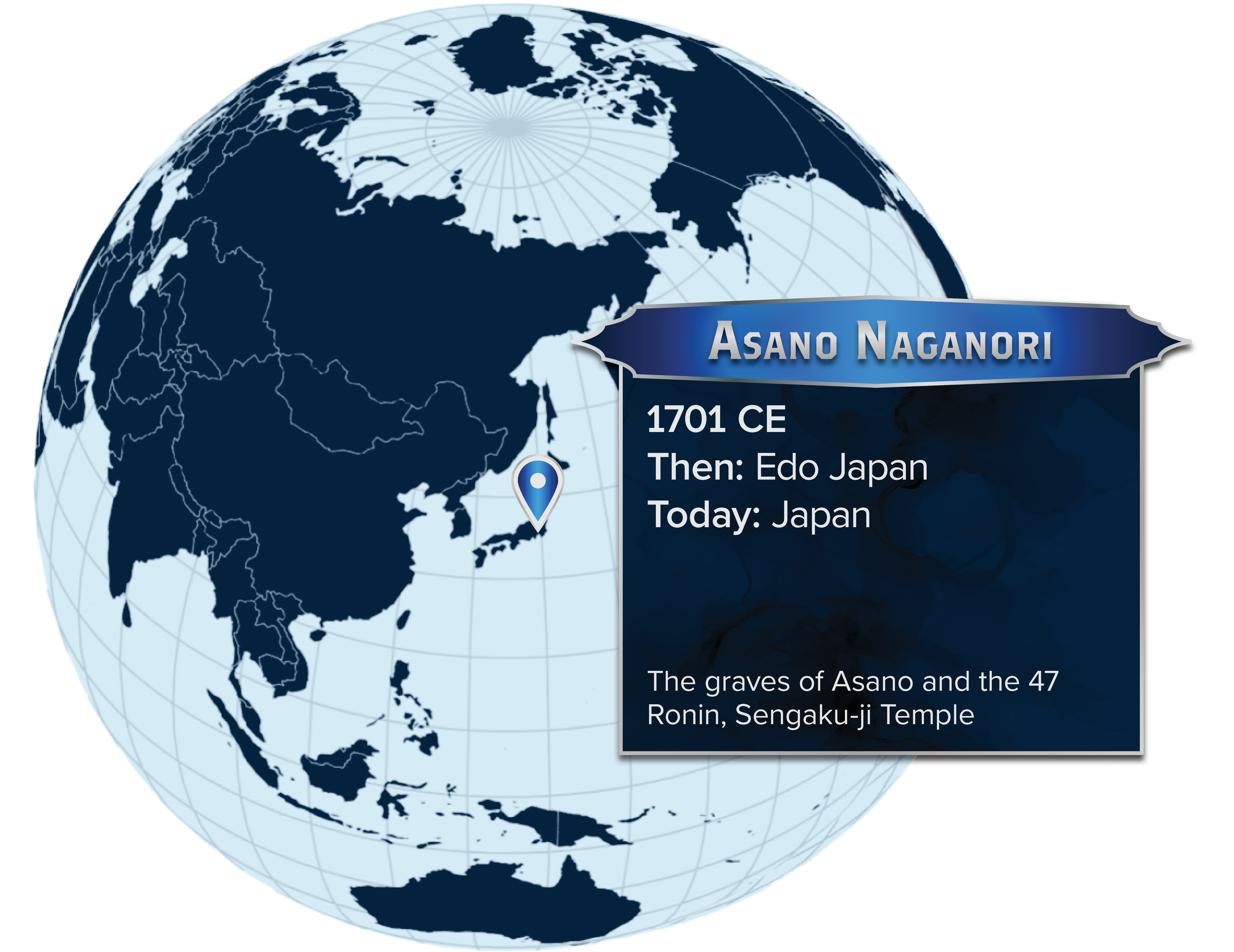
Before the blades were drawn and the vendetta began, Asano Naganori was a young daimyō caught in the gears of imperial ceremony and samurai honor. Born in Edo in 1667, Asano inherited the Akō Domain at just nine years old after the death of his father, Asano Nagatomo. His family was a branch of the powerful Asano clan, whose main lineage ruled Hiroshima.
Asano’s official title was Takumi no Kami—“Head of Carpentry”—a ceremonial post with little actual responsibility, but one that placed him within the orbit of the Tokugawa shogunate. In 1683, he was appointed to help host imperial envoys visiting Edo, a role that required him to learn court etiquette from Kira Yoshinaka, the shogunate’s master of protocol.
That’s where things unraveled. Kira reportedly expected lavish gifts and bribes from the young daimyōs under his instruction. Asano, either unaware of the custom or unwilling to play along, offered only a modest token. Kira took offense and began to insult Asano publicly, calling him a country bumpkin with no manners. The tension simmered for years.
In 1701, Asano was again appointed to receive imperial envoys. The insults escalated. On April 21, inside Edo Castle’s Great Corridor of Pines, Asano snapped. He drew his wakizashi and attacked Kira, wounding him in the face. But violence within the shogun’s palace was strictly forbidden. The punishment was immediate and absolute: Asano was ordered to commit seppuku that same day.
His death poem read:
“More than the cherry blossoms,
Inviting a wind to blow them away,
I am wondering what to do,
With the remaining springtime.”
With no heir in place, the Akō Domain was confiscated. His retainers became rōnin—masterless samurai. But they didn’t scatter. Led by Ōishi Kuranosuke, they spent nearly two years pretending to disband, taking jobs as merchants, monks, and laborers. All the while, they planned revenge.
On the night of January 30, 1703, forty-seven rōnin stormed Kira’s mansion in Edo. They killed him, took his head, and placed it at Asano’s grave in Sengaku-ji Temple. The shogunate, torn between sympathy and law, ordered the rōnin to commit seppuku. They did so with honor, and their story became legend.
Asano didn’t live to see the vendetta. But his death ignited one of Japan’s most enduring tales of loyalty, justice, and the samurai code. He wasn’t just a daimyō—he was the spark that lit the fire.