Encyclopedia Anachronistica


Alt Art
Champion
Europe
Greek
Orange
Combo: When this Champion hits with a weapon attack, make a base attack against the defender.
Artemisia led five ships for Xerxes, outwitting his own admirals. At Salamis, she sank a Persian ally to save herself. Xerxes praised her. Greeks had other thoughts.
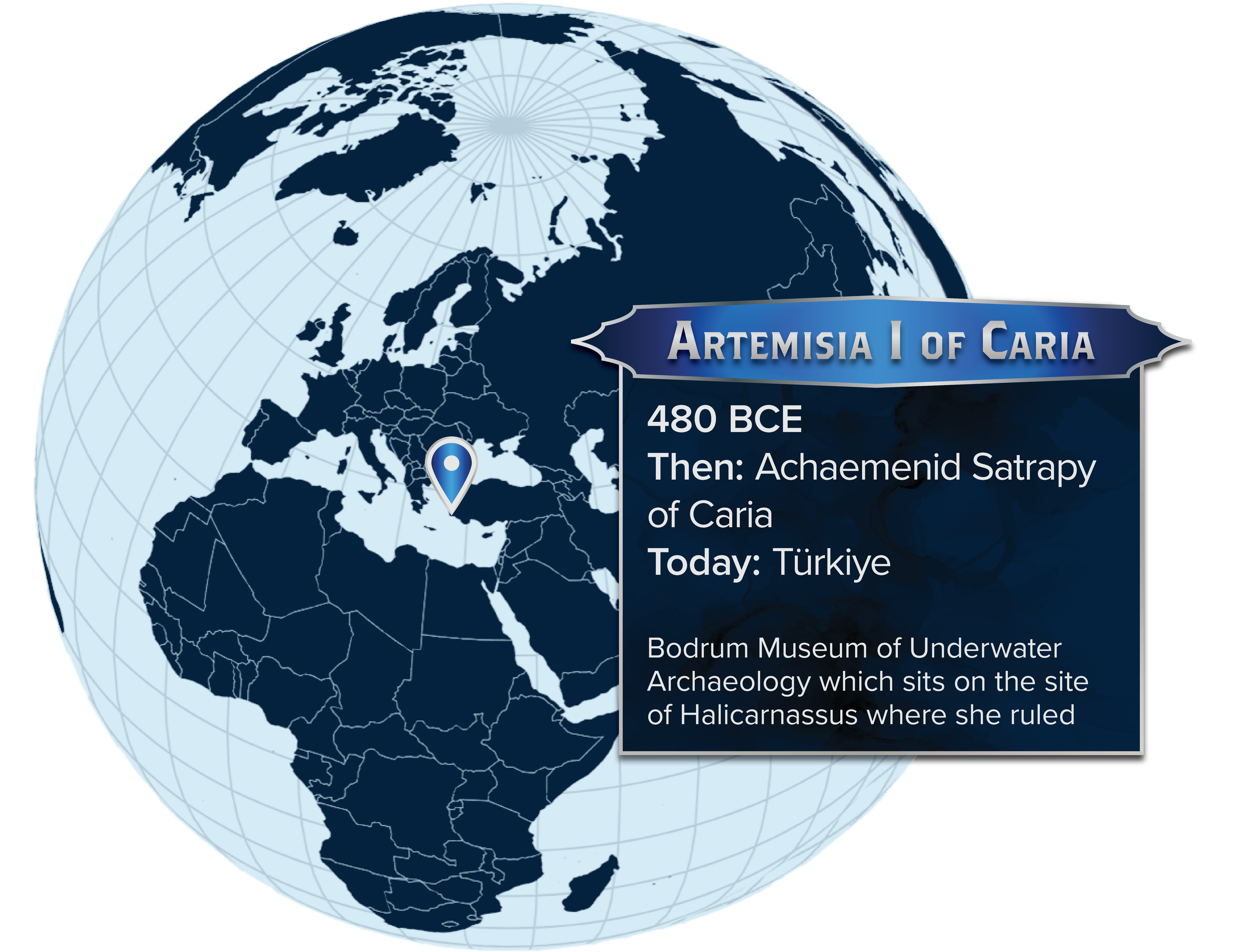
Before she was a legend, Artemisia I was a ruler, a mother, and a master of naval warfare. She didn’t inherit power through conquest—she earned it through grit, strategy, and sheer brilliance. Born in Halicarnassus around 480 BCE, she was the daughter of King Lygdamis and a Cretan mother. After her husband died, Artemisia took the throne as regent for her young son Pisindelis, becoming queen of Caria and commander of its fleet.
Herodotus, who was born in her city, couldn’t help but marvel: “That a woman should have gone with the armament against Hellas… of mere high-hearted valour”. Artemisia didn’t just join Xerxes’ invasion of Greece—she led five ships into battle, commanding forces from Halicarnassus, Cos, Nisyros, and Calyndos. Her ships were second only to Sidon’s in reputation, and her tactics were sharper than most of the men around her.
At the Battle of Artemisium, she fought alongside the Persian fleet in a brutal three-day clash. Though the battle ended in a draw, it gave the Persians time to regroup and prepare for the next engagement. But it was at Salamis where Artemisia truly made history. As Xerxes prepared for a full naval assault, she advised against it—warning that the Greeks would fight harder in their own waters. Xerxes ignored her. She fought anyway.
During the chaos of Salamis, Artemisia pulled off a legendary maneuver. To escape pursuit, she rammed and sank a friendly Persian ship—making it look like she was fighting for the Greeks. The Greek captain chasing her broke off, thinking she’d switched sides. Xerxes, watching from shore, saw her sink a ship and praised her courage, unaware it was one of his own. “My men have become women, and my women men,” he reportedly said.
After the battle, Artemisia was entrusted with escorting Xerxes’ sons to safety in Ephesus. Then she vanished from the historical record. No tomb, no final battle, no downfall. Just silence. But her legacy endured. She was the only woman commander in Xerxes’ fleet, and the only one whose advice he regretted ignoring.
Artemisia wasn’t just a queen—she was a tactician, a survivor, and a strategist who played both sides when needed. She didn’t fight for glory. She fought for survival, for her people, and for her place in a world that didn’t expect her to lead.
She didn’t just command ships. She commanded respect. She didn’t just sail into battle—she rewrote the rules of engagement. And when the sea turned red and the empire trembled, Artemisia stood firm.