Encyclopedia Anachronistica

Chrono
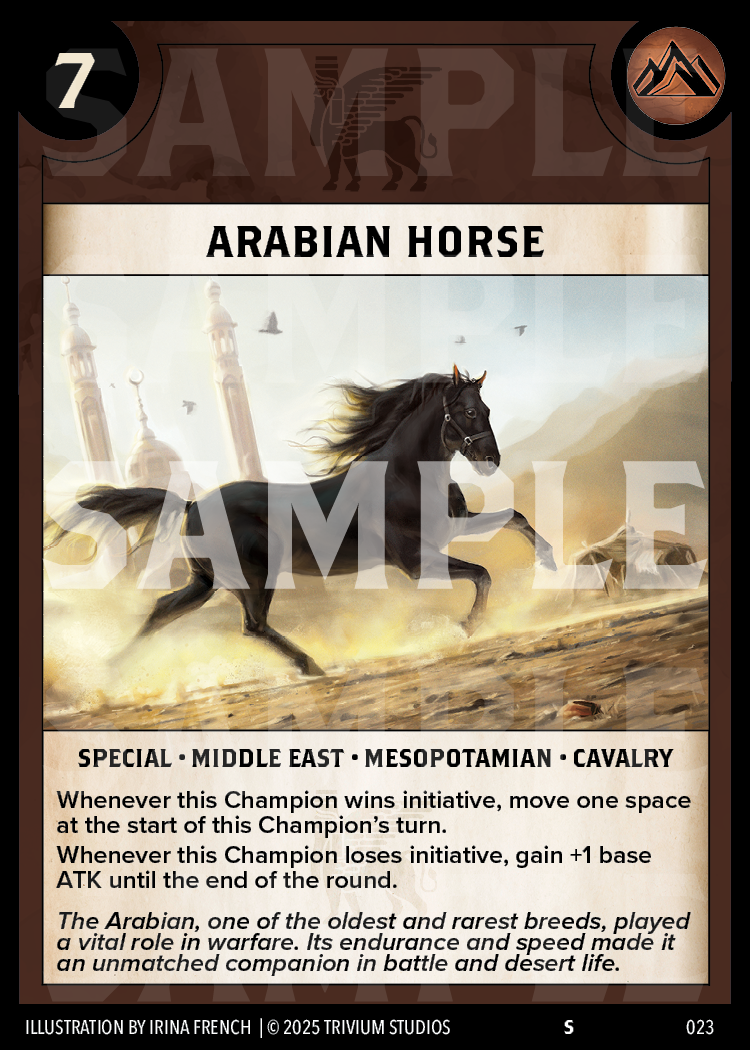
Special
Middle East
Mesopotamian
Cavalry
Whenever this Champion wins initiative, move one space at the start of this Champion's turn. Whenever this Champion loses initiative, gain +1 base ATK until the end of the round.
The Arabian, one of the oldest and rarest breeds, played a vital role in warfare. Its endurance and speed made it an unmatched companion in battle and desert life.
Before tanks, before warplanes, before horsepower was a metaphor, there was the Arabian horse—a living weapon forged in the furnace of the desert. This wasn’t some pampered palace pony. This was the original war machine: lean, fast, loyal, and terrifyingly smart. If you were riding one, you weren’t just moving—you were making a statement.
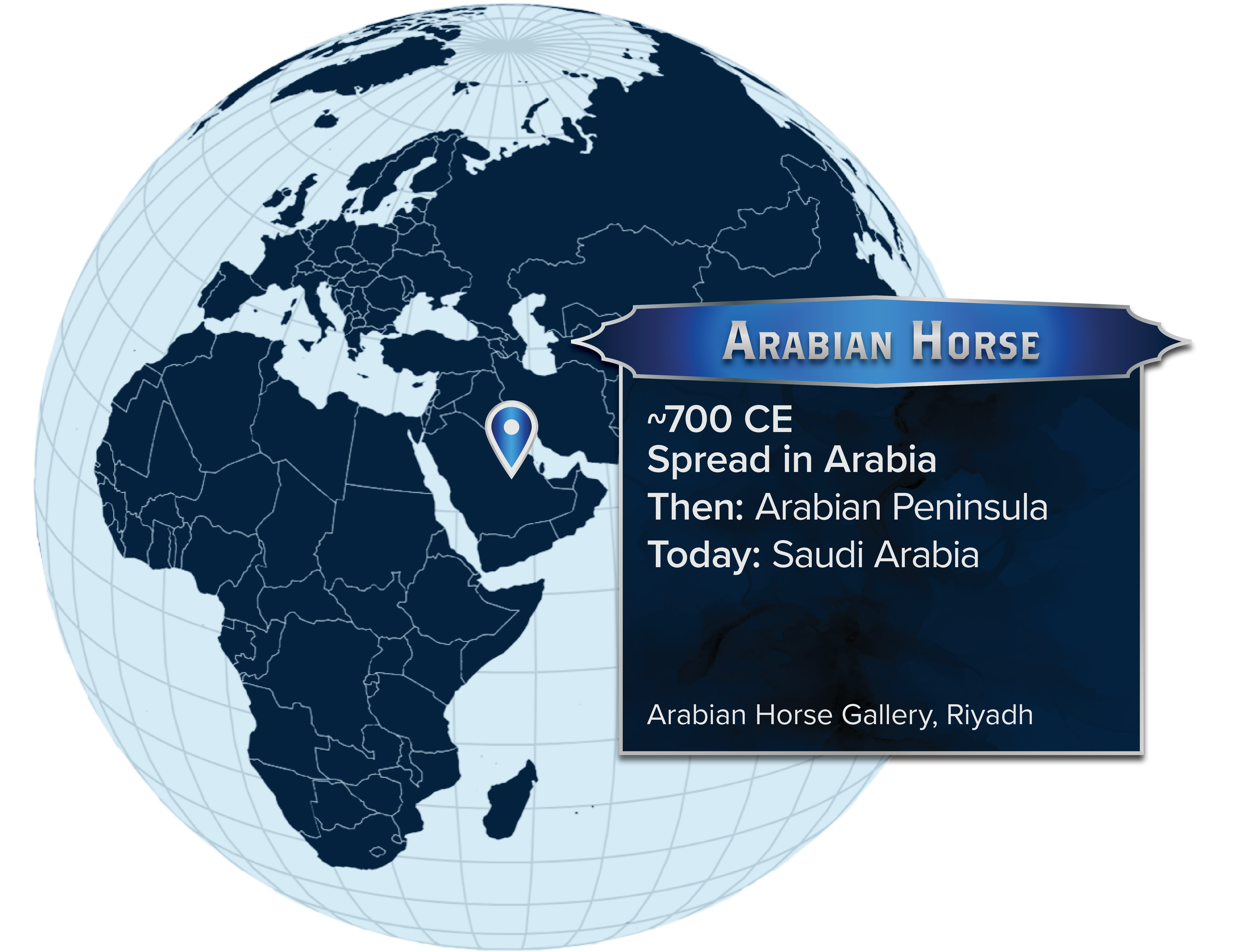
Born over 4,000 years ago in the brutal sands of the Arabian Peninsula, the Arabian horse was sculpted by survival. Bedouin tribes didn’t breed pets—they bred partners. These horses slept in tents, drank from the same water, and were trusted with the lives of warriors and families. Their lungs were built for endurance, their bones for speed, and their minds for loyalty. They weren’t just trained—they were chosen.
Legends say the Prophet Muhammad marked five mares as sacred after they returned from a test of loyalty and thirst. Those bloodlines became the foundation of the breed. And when Islam exploded across continents, the Arabian horse was the engine of conquest. These horses didn’t just carry warriors—they carried empires.
By the time Crusaders met them, it was too late. European knights were used to lumbering warhorses. Arabians were lightning. They danced around the battlefield, outmaneuvered heavy cavalry, and vanished into the dust. Crusaders brought them home, hoping some of that desert fire would rub off. It did. Arabian blood runs through the veins of the Thoroughbred, the Andalusian, the Lipizzaner, and nearly every modern light horse breed.
And they weren’t just fast—they were beautiful. That dished face, arched neck, and high tail carriage? That’s not vanity. That’s aerodynamic elegance. They were built to run, built to last, and built to look good doing it.
In the 19th century, European royals and American tycoons scrambled to get their hands on purebred Arabians. The Crabbet Stud in England and the Kellogg Ranch in California became temples to the breed. Today, Arabians dominate endurance racing, outlasting every other horse over 100-mile courses. They’re still the gold standard for stamina, intelligence, and sheer willpower.
The Arabian horse isn’t just a breed. It’s a legacy. It’s the reason cavalry became terrifying. It’s the reason beauty and brutality can coexist in one creature. And it’s the reason that when you see one gallop across the horizon, mane flying, tail raised, eyes blazing—you know you’re looking at history’s original hardcore equine.