Encyclopedia Anachronistica

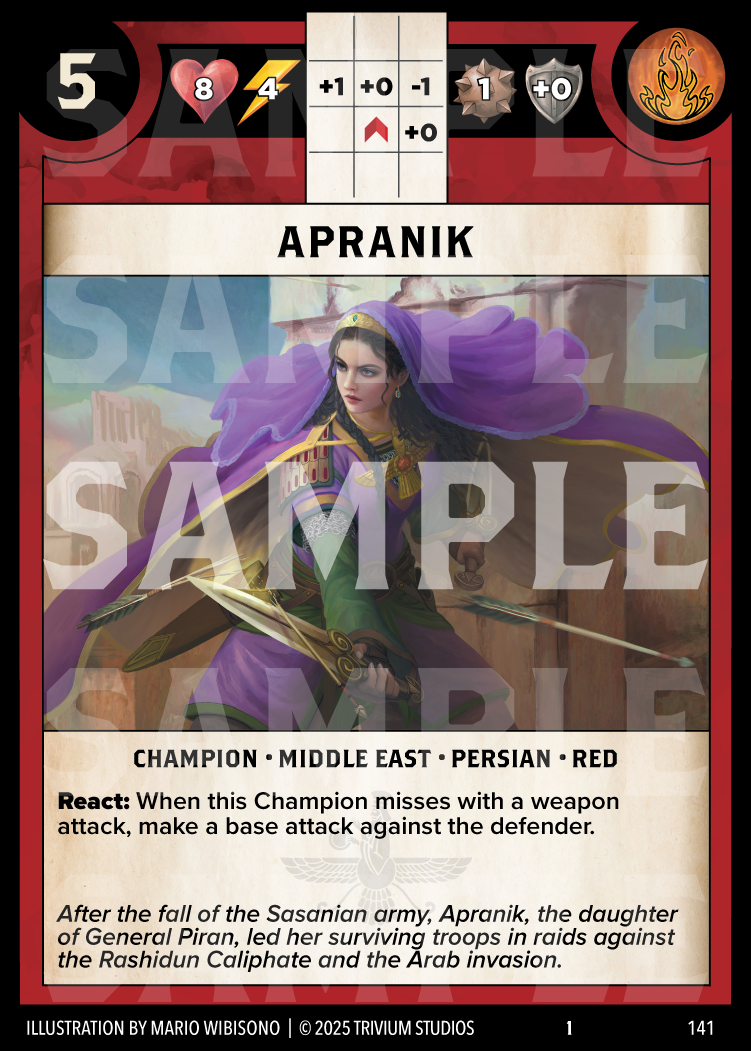
Standard
Champion
Middle East
Persian
Red
React: When this Champion misses with a weapon attack, make a base attack against the defender.
After the fall of the Sasanian army, Apranik, the daughter of General Piran, led her surviving troops in raids against the Rashidun Caliphate and the Arab invasion.
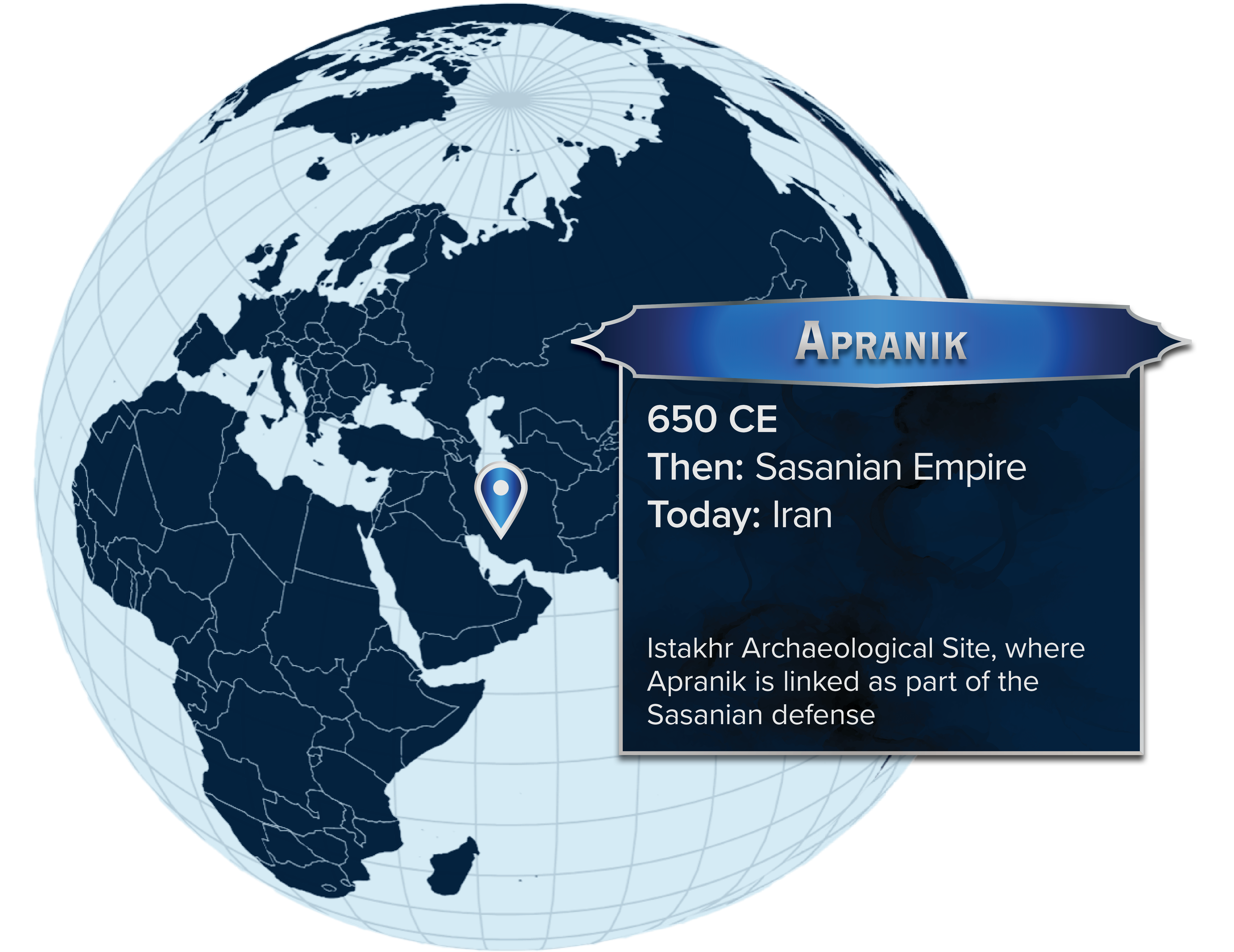
Nothing lasts forever—especially when it comes to ancient empires and the blood-soaked power shifts that wipe civilizations off the map. But when empires fall, legends rise. Enter Apranik, a high-ranking commander of the Sasanian army who carved her name into history with steel, fury, and a white horse that became a symbol of resistance.
You heard right—her.
By the mid-7th century, the Sasanian Empire had been running for nearly 400 years. Generations of war with the Byzantine Empire had drained its strength, and now Islamic forces from the Rashidun Caliphate were hammering the western borders. Apranik was born into a Persia that, at its height, honored women as governors, generals, and even monarchs. She was the daughter of a high-ranking general named Piran and served as his right-hand strategist. Raised in the capital’s elite circles, she was a firebrand nationalist—“Persia First!” wasn’t just a slogan, it was a war cry.
When the Rashidun forces began their hit-and-run raids, Apranik enlisted as a professional soldier. She rose through the ranks with speed and precision, her battle cry—“No retreat! No surrender!”—echoing across the front lines. At the Battle of Nahavand in 642 CE, the Sasanian army, numbering between 50,000 and 150,000, was crushed by 30,000 Arab warriors. It was a catastrophic defeat, marking the end of organized Sasanian resistance.
But Apranik didn’t fold. Astride her white horse, she rallied the shattered remnants of the army and led them into the mountains. There, she rewired the Persian playbook. The Rashidun Caliphate’s guerrilla tactics—invade, pillage, retreat—defied the structured warfare of the Sasanian military. Apranik adapted fast. She retrained her troops for ambushes, raids, and mobile warfare, turning her forces into a commando-style resistance that struck fear into the desert invaders.
Her campaigns were brutal, swift, and effective. Though the dream of restoring the Sasanian Empire faded, Apranik’s resistance became a symbol of defiance. Her white horse, seen charging into battle, became a rallying icon for freedom and resilience. Her name was so revered that female fighters who distinguished themselves were called “Apraniks,” and entire units of women warriors adopted the title.
Commander Apranik’s legacy is one of grit, loyalty, and relentless warfare. She didn’t just fight battles—she forged a movement. Her name reverberated through the mountains and deserts, a whisper of dread to the Rashidun occupiers and a roar of pride to the Persian people.