Encyclopedia Anachronistica


Chrono
Champion
N. America
American
Cyan
React: When an enemy attack misses this Champion, make a base attack against the attacker.
Six-foot-four and rail-strong, Lincoln thrashed New Salem's toughest brawler, Jack Armstrong. He lost only once in over 300 matches, then wrestled with a nation.
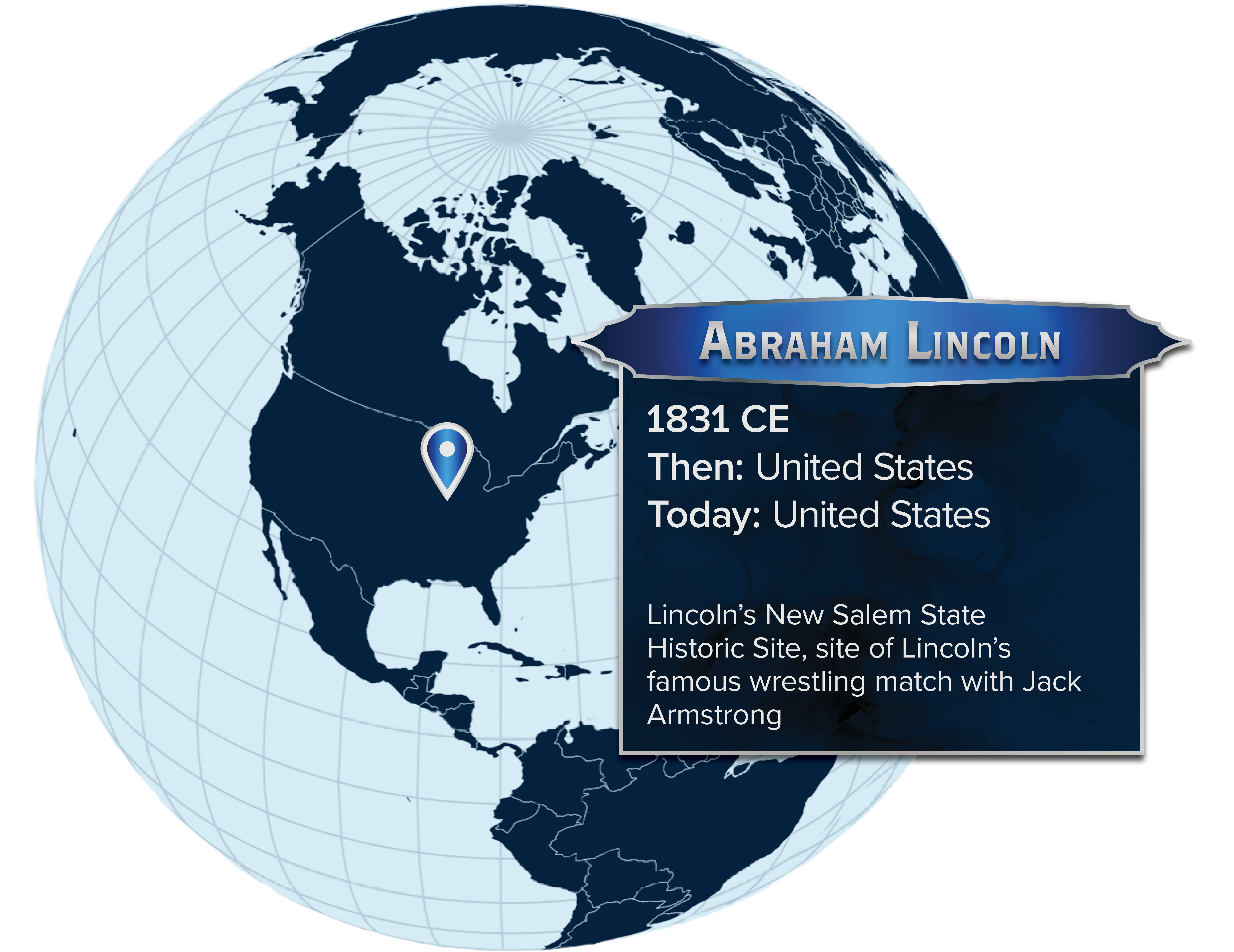
Long before the stovepipe hat and Gettysburg Address, Lincoln was known across the Illinois frontier as a monster of a brawler. Standing 6'4" (193 cm) and built like a barn beam, he earned his nickname “The Rail-Splitter” not just for his axe work, but for splitting opponents from their pride in the wrestling ring. And this wasn’t polite collegiate grappling—this was frontier-style catch-as-catch-can, where biting, gouging, and body-slamming were part of the fun.
Lincoln grew up working hard and fighting harder. In New Salem, Illinois, he became famous for his strength, humor, and ability to flatten anyone who challenged him. His most legendary match? Jack Armstrong, leader of the Clary’s Grove Boys—a gang of roughneck locals who used wrestling to test newcomers. Armstrong was tough, fast, and used to winning. Lincoln was taller, stronger, and absolutely not interested in losing.
The match was brutal. Armstrong tried dirty tricks. Lincoln responded with raw power and iron discipline. When Armstrong’s crew tried to interfere, Lincoln shut them down with a glare and a line: “I’ll fight every last one of you.” Armstrong called the match a draw, and the Clary’s Grove Boys made Lincoln their honorary leader. That’s how you earn respect in the wilds of Illinois.
Lincoln’s wrestling prowess wasn’t just local legend—it was backed by those who knew him best. His law partner and biographer, William Herndon, recalled Lincoln’s early years as a string of physical triumphs, where he “threw down” challengers with ease and earned a reputation as the strongest man in the region. Herndon noted that Lincoln’s physical dominance was matched by a deep sense of fairness—he never bullied, never bragged, and never backed down. His matches weren’t just entertainment; they were tests of character, and Lincoln surpassed everyone.
But Lincoln didn’t stop there. He wrestled in county fairs, lumber camps, and militia drills. He was known for his long reach, his unbreakable grip, and his ability to toss grown men like sacks of flour. According to local lore, Lincoln won nearly 300 matches and lost only once—though even that loss is disputed. He was eventually inducted into the National Wrestling Hall of Fame with the title “Outstanding American.”
Wrestling wasn’t just sport—it was survival. It taught Lincoln how to read people, how to stay calm under pressure, and how to win without cruelty. These were the same skills he’d use later in politics, in war, and in the fight to hold a fractured country together. His time in the ring shaped his character, his confidence, and his ability to lead with both strength and restraint.
He didn’t just wrestle for fun. He wrestled for respect. He wrestled for justice. And when the time came, he wrestled with a nation.